Wading through freezing thigh-deep river water multiple times doesn't sound like a standard Sunday afternoon, but that is exactly what it took to save a young buck in Michigan. For ten full days, a plastic orange Halloween pumpkin bucket remained wedged tightly over the animal's snout. Local residents tracked its movements across metro Detroit through frantic social media updates, wondering how long an animal could possibly survive without food or water.
The ordeal finally came to a head in the sprawling acreage of Hines Park. Members of the Detroit Animal Welfare Group (DAWG), alongside dedicated volunteers, chased the exhausted animal through thick brush, steep mud banks, and icy currents. It was a chaotic, exhausting pursuit that almost got called off as daylight faded.
The Anatomy of an Accidental Trap
Wildlife entanglements happen far more often than people think, but a rigid plastic bucket presents a uniquely dangerous hazard. When backyard decorations, trash, or seasonal props are left out unsecured, curious wildlife often investigate them looking for leftover food scents.
In this case, the young button buck managed to shove its snout straight into the plastic handle-opening or bowl cavity, sealing it tight. Once pushed past the jawline, the plastic rim locked in place. Because deer cannot use their hooves to grip and pull objects off their faces, the animal was completely helpless. For ten days, the bucket blocked its mouth and nose entirely.
Tracking Through Ice and Mud
Spotting a distressed animal across a major metropolitan area is one thing; catching it safely is another. The rescue effort turned into a massive community operation. Residents in Livonia and Westland flooded local groups with sightings, creating a patchwork trail of where the deer had wandered.
By Sunday evening, the search party caught up to the buck inside the 2,300-acre Hines Park. The terrain didn't cooperate. Rescuers had to wade through a twenty-foot-wide river four separate times in freezing water just to stay on the animal's tail.
Just as darkness began to fall and the team prepared to pack it in—knowing that darting an animal in the pitch dark is dangerous—another sighting report came through. That brief window of visibility was all the specialists needed to deploy a tranquilizer dart.
The Happy Ending and the Rules of Wildlife Recovery
Once the buck was safely sedated, the rescue team got to work immediately. They sliced off the plastic pumpkin bucket, revealing a severely dehydrated young animal. They administered subcutaneous fluids to combat the toll of ten days without water and treated him on the spot.
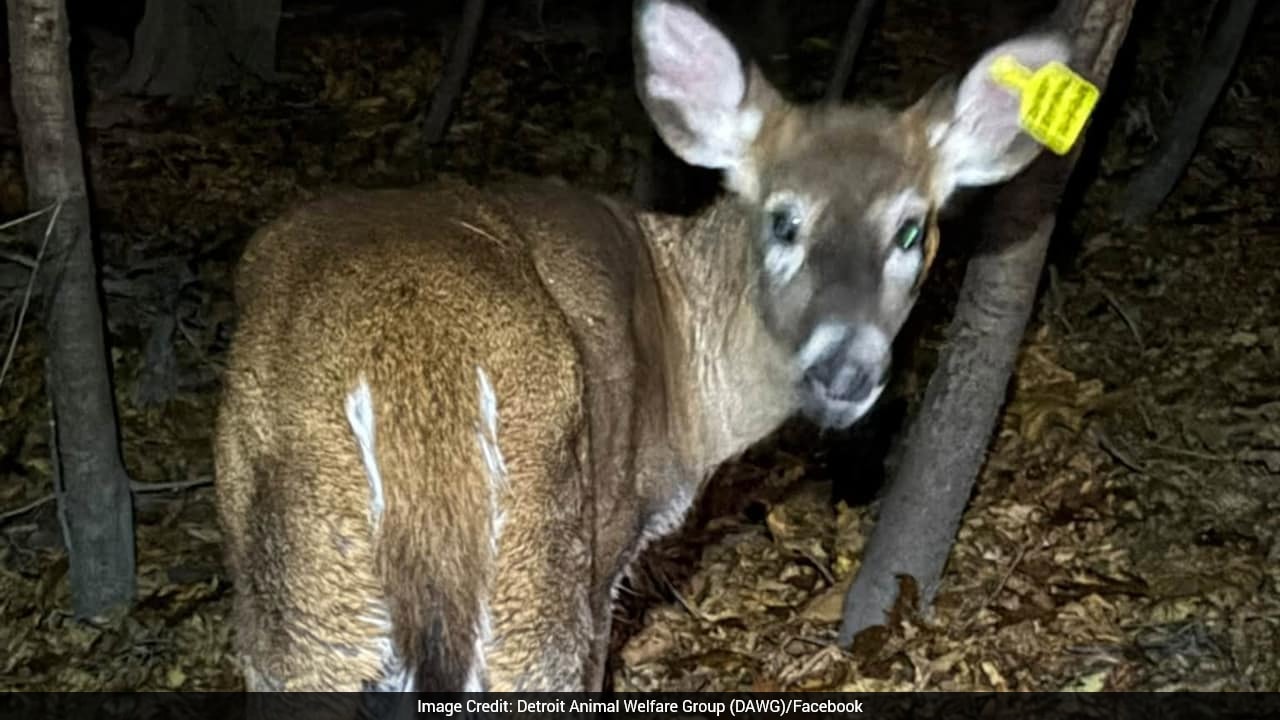
An interesting detail of wildlife protocol emerged during the release. Because the deer received a chemical tranquilizer, state regulations required the team to place an ear tag on the animal. The tag serves a very specific purpose: warning hunters that the meat is unsafe for human consumption until the medication clears the animal's system, stamped with a clear "Do Not Eat" date.
After reversing the sedative, the deer sprang back to life. Before disappearing back into the brush, the animal paused to groom itself and looked back at its rescuers, offering a brief moment of silent gratitude before returning to the wild.
This crazy ordeal highlights a simple responsibility for homeowners and neighborhoods. When holidays end, decorations shouldn't become outdoor traps. Storing seasonal items properly keeps local wildlife safe from preventable disasters.