Mount Shasta doesn't care about your summit goals. When things go wrong on California's iconic 14,179-foot stratovolcano, they go wrong fast. A climber from San Jose recently learned this lesson the hard way, enduring an overnight ordeal that tested human endurance to its absolute limits after a disastrous descent down Avalanche Gulch.
If you're wondering how someone manages to survive a terrifying 500-foot slide, severe foot injuries, a dead smartphone, and a grueling crawl through the pitch-black wilderness, you need to look past the basic headlines. This wasn't just luck. It's a masterclass in self-rescue and why preparation matters when you're miles away from civilization.
What Went Wrong on Avalanche Gulch
The climber reached the summit late, around 7:30 p.m. on a Thursday. That timing alone raises red flags for seasoned mountaineers. Descending a steep, technical route in the dark is inviting disaster.
Attempting to glissade—sliding down a snow or ice slope on your boots or a pack to save time—he lost control entirely. He plummeted roughly 500 feet down the mountain. The friction and impact shredded his footwear and caused severe lacerations and painful swelling in his feet.
To make matters worse, his cellphone died right after he topped out. No GPS. No emergency call button. Just him, the dark, and a massive mountain.
The Brutal Reality of the Overnight Crawl
With his feet swelling badly inside his boots, he made a desperate call: he took his boots off. Stripped of proper footwear, he began crawling down the remainder of Avalanche Gulch.
Think about that terrain. Below the snow line lies an unrelenting, jagged rocky scree slope stretching for miles. Crawling across sharp volcanic rock with injured feet sounds like torture. Yet, he kept moving through the night, relying entirely on his memory of the terrain to find the historic Horse Camp Cabin.
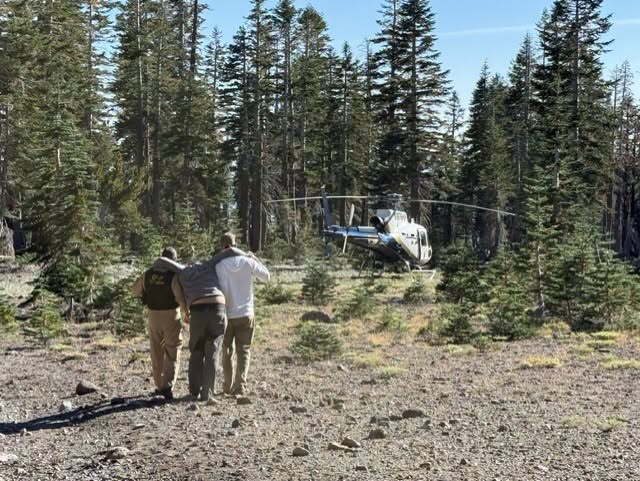
By Friday afternoon, his worried friends alerted the Siskiyou County Sheriff’s Office. Mount Shasta Climbing Rangers, search and rescue volunteers, and a California Highway Patrol helicopter launched a coordinated search around 2 p.m. Two hours later, a passing hiker walked into Horse Camp Cabin and found him inside. A CHP helicopter airlifted him to a local hospital.
Lessons Every Backcountry Visitor Should Learn
You can't rely on modern tech to save you on a peak like Shasta. Batteries die. Screens crack. When electronic navigation fails, old-school route-finding keeps you alive.
- Set a strict turnaround time: Never push for a late summit. Experienced climbers aim to turn around by noon, win or lose.
- Share your exact itinerary: This climber's saving grace started before he even hit the trail. He told his friends his plans and check-in times. When he went radio silent, they raised the alarm immediately.
- Carry analog backups: A paper map and compass don't run out of battery when temperatures plummet.
Self-reliance is your ultimate safety net. You've got to be ready to get yourself out of trouble because rescue teams can't always get to you instantly.
Check your gear, respect the mountain's timeline, and never assume you're too experienced for a catastrophic slip.
Mt. Shasta climber survives 500-foot fall, crawls to safety
This video provides a visual overview of the rescue operation and the grueling terrain the climber navigated on Mount Shasta.