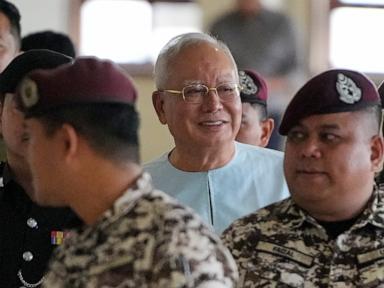
Former Malaysian Prime Minister Najib Razak is heading back to his Kuala Lumpur residence, leaving Kajang Prison behind for now. A fresh High Court order cleared the final administrative hurdle, putting an end to weeks of procedural ping-pong between defense teams and the Attorney General’s Chambers. If you've been trying to keep track of Malaysia's most scrutinized legal saga, the twists and turns can give you whiplash. But this latest development isn't just about one man—it highlights the messy intersection of royal pardons, state bureaucracy, and high-profile criminal accountability.
Clearing the Final Administrative Obstacle
The timeline leading up to this moment has been anything but smooth. Back in August 2022, the Federal Court upheld Najib's conviction on charges tied to the 1MDB subsidiary SRC International, landing him a 12-year prison sentence and a massive fine. Things shifted significantly when a royal pardon halved his prison term and slashed that financial penalty. Later, a conditional royal order opened the door for him to serve the remainder of his SRC sentence under house arrest.
Yet, getting the paperwork right proved harder than winning the initial legal argument. Last week, the High Court issued an initial discharge order after Najib settled his remaining RM50 million fine. Almost immediately, the Attorney General’s Chambers flagged issues with the wording, terminology, and legal provisions used in the document. That friction left prison directors caught in the middle, told to hold off on enforcement until the air was cleared.
The new High Court order resolved those ambiguities. Defense counsel Shafee Abdullah pointed out that the court holds sole authority over drafting criminal orders, smoothing out the technicalities that stalled the transfer. The Home Ministry confirmed they were fully prepared to execute the transition, allowing Najib to complete the remainder of his SRC sentence at his Jalan Langgak Duta home until August 23, 2028.
What This Means for the Broader 1MDB Fallout
People often assume a house arrest means freedom, but the reality is much more constrained. Najib isn't walking away scot-free. This specific arrangement applies strictly to the remnants of his SRC International conviction.
At the same time, the legal horizon remains packed with complications. Najib faces a separate 15-year prison term tied to other aspects of the massive 1MDB scandal, and appeals for that case are still winding through the courts. The current arrangement means he stays confined to his residence under strict monitoring until his scheduled prison return date in August 2028—assuming other pending judgments don't reshape his timeline first.
Public reaction has been swift and deeply polarized, reflecting how deeply the 1MDB scandal fractured public trust in political institutions. Prime Minister Anwar Ibrahim recently addressed the public mood, emphasizing the importance of impartial justice and equal application of the law regardless of political stature. For a nation that watched billions vanish through state investment funds, every legal adjustment for key figures is watched under a microscope.
Why This Case Still Sets a Massive Precedent
Legal observers across Southeast Asia are watching Malaysia closely because this case tests the limits of executive power, royal prerogatives, and judicial oversight. The interaction between royal pardons boards and statutory prison regulations doesn't happen in a vacuum. When a monarch issues a conditional pardon specifying home confinement, it forces administrative agencies to figure out how to implement non-traditional detention for high-profile political prisoners.
You won't find many clean cut precedents for this kind of high-level transition in modern Malaysian history. It exposes the friction points between executive mercy and the rigid machinery of the penal system. For the legal teams involved, getting the precise wording right on a court order isn't mere paperwork—it's the boundary between prison walls and residential confinement.
The immediate chapter closes with Najib arriving at his Taman Duta residence amid familiar chants from supporters. But with separate legal battles still active in the Court of Appeal, this multi-year legal drama is far from finished.