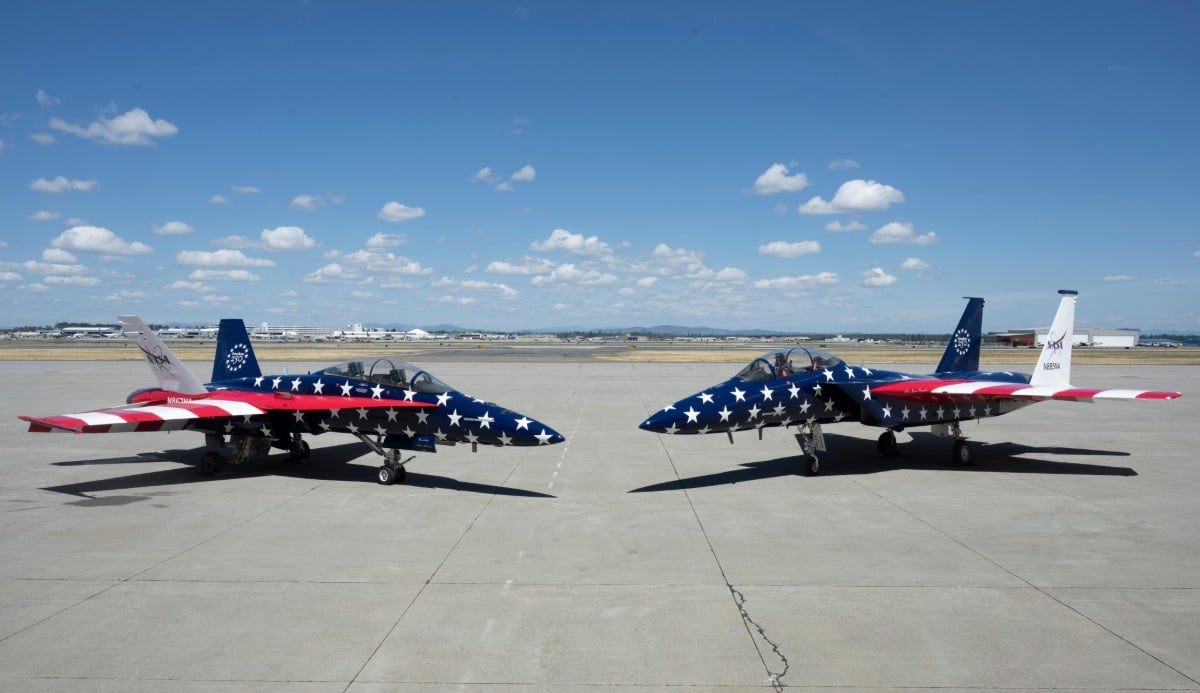
You don't typically look at a multi-million dollar supersonic research aircraft and think about aesthetic makeovers. Yet, NASA just rolled out a striking new visual identity for its high-speed test fleet. Headlining this update are specialized support jets and tactical workhorses getting a bold, red, white, and blue theme just as the agency pushes the limits of next-generation flight.
If you think this is purely for a photo op, you're missing the bigger picture. Building on this topic, you can find more in: Why The New Florida Keys Underwater Habitat Matters In 2026.
The aviation world is watching NASA's premier supersonic testbeds closely. It isn't just about showing off national pride, though timing it around major national milestones certainly helps. There is a deep operational reality behind how these aircraft are prepped, maintained, and visually tracked during high-stakes flight research.
The Real Strategy Behind the New Paint Scheme
Aviation enthusiasts noticed the "Freedom 250" emblems and star-spangled accents appearing on the fuselages of iconic research support craft, including NASA's T-38 Talon trainers, F-15D Eagle, and F/A-18B Hornet fleet. These twin-engine supersonic jets serve a brutal, non-stop role. They fly chase missions, tracking experimental vehicles like the quiet supersonic X-59 as it attempts to break the sound barrier without creating a window-shattering sonic boom. Analysts at Wired have provided expertise on this matter.
When an experimental jet is hauling across the desert at Mach 1.4, tracking pilots need split-second visual recognition.
The custom paint job uses highly visible white bodies, stark red accents, and deep sonic blue undersides. It is an intentional choice for optical tracking. High-altitude chase flights happen at 55,000 feet where the sky darkens and contrast becomes everything. Ground crews and chase pilots use these sharp geometric lines to gauge aircraft attitude and distance instantly.
Fighting the Invisible Enemies of Supersonic Fleets
Let's talk about the engineering reality. Airframe paint isn't there to look pretty. It's the first line of defense against atmospheric friction and structural degradation.
- Moisture sealing: Flying at high altitudes means transitioning through extreme temperature shifts. Condensation builds fast in specialized joints.
- Corrosion prevention: Advanced aluminum and composite structures face severe microscopic degradation if left exposed to the elements.
- Thermal management: Traveling past the speed of sound generates massive friction. Specialty coatings help distribute structural heat loads across the airframe.
Engineers at facilities like the Armstrong Flight Research Center use these paint overhauls to perform intensive structural health checks. Every time a jet enters the paint barn, the old layers are stripped away. This exposes the bare metal for non-destructive inspection like ultrasound scans. They look for tiny structural cracks or internal honeycomb delamination before the fresh layers are applied.
What This Means for the Future of Air Travel
This fleet update comes at a turning point for high-speed commercial aviation. Right now, international flight rules ban supersonic transport over land because sonic booms disrupt communities. NASA's ongoing tests aim to change those regulations by proving that aircraft geometry can reduce that loud explosion into a quiet "sonic thump"—roughly the volume of a car door shutting down the street.
The newly painted chase planes are the unsung heroes of this effort. They carry specialized instruments right alongside the experimental craft to measure shockwaves in real time. Without these updated, highly visible support platforms, validating the atmospheric data would be nearly impossible.
If you want to track how these supersonic platforms perform during upcoming community overflights, keep an eye on official NASA Armstrong flight logs and live research updates. The real test isn't how the aircraft looks on the tarmac, but how the data holds up when they push past the sound barrier.