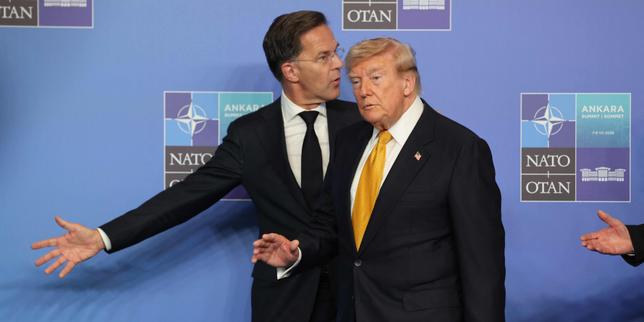
Donald Trump wanted Greenland. He threatened to cut off trade with Spain entirely, calling the country a lost cause over its defense spending. He openly complained that European allies failed to back his military maneuvers against Iran. Yet, against all odds, the 2026 NATO summit in Ankara just wrapped up with a signed declaration reaffirming an ironclad commitment to Article 5.
If you think the transatlantic alliance is perfectly stable because of a piece of paper, you're missing the real story.
The Ankara Summit Declaration looks clean on the surface. Leaders from all member states stood together on July 8, 2026, to repeat the old mantra that an attack on one is an attack on all. They talked about unity, solidarity, and a shared future for over a billion citizens. But underneath that diplomatic polish lies a radically altered, deeply transactional alliance where European nations are frantically paying up just to keep Washington at the table.
The Reaffirmation That Almost Didn't Happen
Before anyone sat down at the table in Turkey, the entire summit looked ready to spin out of control. Rumors swirled about deep rifts, fueled by the familiar America First rhetoric coming out of the White House.
The core of NATO is Article 5, the mutual assistance clause. It has only been triggered once in history, right after the September 11 attacks. For decades, it functioned as a psychological shield. If any adversary struck a NATO member, they knew they would face the combined might of the entire alliance, including the nuclear arsenal of the United States.
In Ankara, that promise was technically renewed. But the tone was totally different from the summits of the late twentieth century. It wasn't about shared democratic values or historical brotherhood. It was about hard numbers and defense budgets.
European allies and Canada had to prove their financial worth to secure that American signature. Secretary-General Mark Rutte had to play the diplomat, publicly praising Trump's leadership to smooth over some incredibly tense behind-the-scenes arguments.
The True Cost of the 5 Percent Target
To understand why the US signed the declaration, look back at what happened in 2025 at the Hague. That was where member states agreed to a massive shift, committing to spend at least 5% of their gross domestic product on defense.
Before that, many European nations struggled to hit even 2%. The sudden jump to 5% represents a wartime footing during a time of nominal peace in Western Europe.
The strategy worked to keep the alliance together for now. In 2025 alone, European allies and Canada injected an extra $139 billion into core defense spending. In Ankara, they doubled down by announcing $50 billion in brand-new procurements. They are expanding factories, trying to build an interoperable transatlantic warfighting cloud, and introducing complex intelligence models.
But this money isn't just sitting in vaults. It is a direct response to a changing security environment where Europe realizes it can no longer treat American protection as a free ride.
Spain and Greenland Show the Real Fracture Lines
You can't ignore the bizarre side plots that defined the Ankara summit. Trump’s sudden attack on Spain caught Madrid completely off guard. He claimed Spain was failing its defense obligations and threatened to halt all US trade with the nation.
Then came Denmark's turn to sweat. The American president revived his long-standing ambition for the United States to take control of Greenland, a semi-autonomous territory under the Danish crown.
These aren't just random outbursts. They show exactly how the current American administration views its allies. Security is treated like a subscription service. If you don't pay enough, your account gets suspended, or your territory gets eyed for acquisition.
While Spain scrambled to defend its defense record, other European leaders realized how vulnerable they really are. If a single bad spending report can lead to threats of a total trade embargo, the foundation of the alliance is far more fragile than the final text of the Ankara declaration suggests.
Funding Ukraine While Dodging the Iran Issue
The summit also laid out a massive funding package for Eastern Europe. Allies pledged €70 billion in military equipment, training, and assistance for Ukraine for 2026. They committed to matching that exact number in 2027, bringing the two-year total to €140 billion.
Significantly, European nations and Canada are now financing the vast majority of this assistance. They are using mechanisms like the European Union's Ukraine Support Loan to keep the pipeline open.
This financial shift tells you everything you need to know. Europe is taking on the burden of its own regional security because it knows American priorities can shift with a single tweet.
The alliance tried to present a united front on other global threats, but the cracks were obvious. The declaration mentioned that Iran must never acquire a nuclear weapon and called for freedom of navigation in the Strait of Hormuz. But behind closed doors, Trump slammed the Europeans for not sending troops or assets to support his recent military operations against Tehran.
The message from Washington is clear. If you want Article 5 protection against your threats, you better help fight ours.
Where Europe Goes From Here
The Ankara summit didn't break NATO, but it didn't heal it either. It proved that the alliance can still function as a corporate procurement syndicate, but the old sense of automatic trust is dead.
European policymakers cannot afford to sit back and celebrate the fact that they survived another rocky summit. If you run a business, manage supply chains, or advise on international risk, you must adapt to a world where defense structures are fluid.
Stop treating international treaties as permanent guarantees. Treat them as temporary contracts that require constant renegotiation.
Accelerate your domestic security plans. European nations must continue to build independent logistics networks and defense production lines that do not rely on American components.
Diversify your geopolitical risk. Do not assume the trade routes or alliances you rely on today will survive the next political cycle unchanged. Watch the actions of individual states, not the collective statements stamped with a NATO logo.
The alliance survived Ankara because Europe opened its wallet. Next time, the price will likely be even higher.