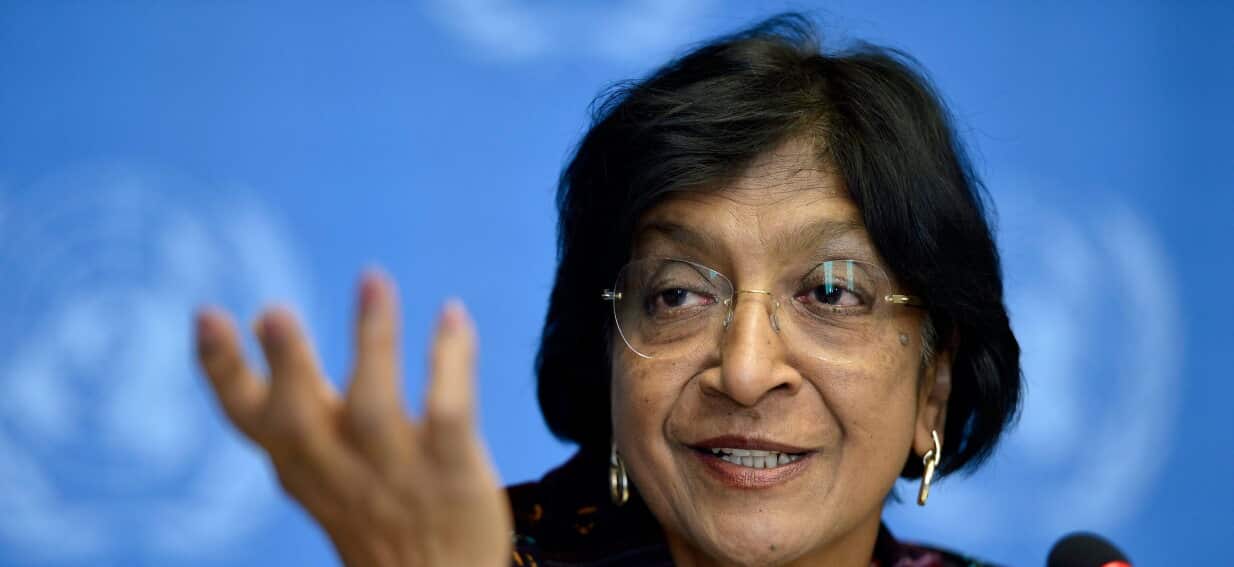
International law is taking heavy fire right now. Global institutions face relentless pressure, while war crimes and mass atrocities dominate headlines across continents. Enter Navanethem “Navi” Pillay. The Norwegian Nobel Committee awarded her the 2026 Nobel Peace Prize for defending the thin red line separating global order from absolute chaos.
If you think peace prizes only go to charismatic politicians who sign symbolic treaties, think again. Pillay spent decades quietly, fiercely prosecuting those who commit war crimes, crimes against humanity, and genocide. At eighty-five years old, this South African jurist proves that uncompromising commitment to the rule of law matters more than ever. You might also find this related story interesting: Why Pakistan Splitting Its Provinces Into Fifteen Is Actually About Control.
From Apartheid Durban to the Global Stage
Pillay’s fight didn't start in a pristine courtroom in The Hague. Born in Clairwood, Durban, in 1941, she grew up under the brutal thumb of South Africa’s apartheid regime. She faced systemic discrimination, racial segregation, and constant exclusion. Instead of backing down, she earned her degrees from the University of Natal and broke barriers in 1967 by becoming the first woman to open her own law practice in Natal Province.
She didn't just practice law; she weaponized it for justice. Pillay represented anti-apartheid activists, political detainees, and prisoners held on Robben Island—including icons who stood up against state-sanctioned terror. When you defend political prisoners under a hostile regime, you risk your career and your safety. Pillay took those risks daily. That foundation shaped a career spanning the UN High Commissioner for Human Rights and the International Court of Justice. As extensively documented in latest reports by Wikipedia, the implications are widespread.
Why This Nobel Win Is Different
Committee chair Jørgen Watne Frydnes noted that global legal systems are under coordinated attack. When powerful nations and authoritarian leaders shrug off international rulings, courts like the ICJ become vulnerable. Pillay’s Nobel win acts as a direct shield and a loud megaphone for the judiciary.
Judges don't command armies. They don't control economic sanctions or deploy peacekeepers. Their only power is credibility, moral authority, and the written word. Pillay built her reputation on refusing to blink when powerful actors demanded compliance or silence. She recently sat on the international court examining genocide accusations in Myanmar and addressed severe violations in Gaza. When asked about her courage, Pillay offered a characteristically sharp observation: why should anyone need courage simply to speak the truth?
The Reality Behind the Headlines
People often misunderstand what international jurists actually do. They imagine quiet judges reviewing dusty legal texts in comfortable European offices. The reality is messy, high-stakes, and intensely political. Pillay navigated hostile governments, institutional obstruction, and geopolitical bullying without losing her composure or her moral compass.
Her career offers clear lessons for modern human rights advocates:
- Never outsource your integrity. Institutions will compromise when political winds shift, but individual lawyers must hold the line.
- Precision beats rhetoric. Emotional appeals fade, but airtight legal briefs and documented war crimes endure across generations.
- Perseverance is a long game. Change doesn't happen overnight. Pillay fought systemic racism in the 1960s and still fights mass atrocities today.
What Happens Next for Global Justice
Winning the $1.2 million prize—to be presented in Oslo in December—capping off an extraordinary life won't magically stop ongoing wars. Dictators won't suddenly disband their militias because an octogenarian South African judge got a medal. But that misses the point entirely.
Pillay’s victory sends a clear signal to every prosecutor, investigator, and human rights defender working in the shadows of conflict zones: your work is seen, and it matters. International law isn't a luxury item to be discarded during a crisis. It's the only anchor holding global society together.
Support independent legal institutions. Demand accountability from leaders who flout global norms. Back the jurists who refuse to look away.