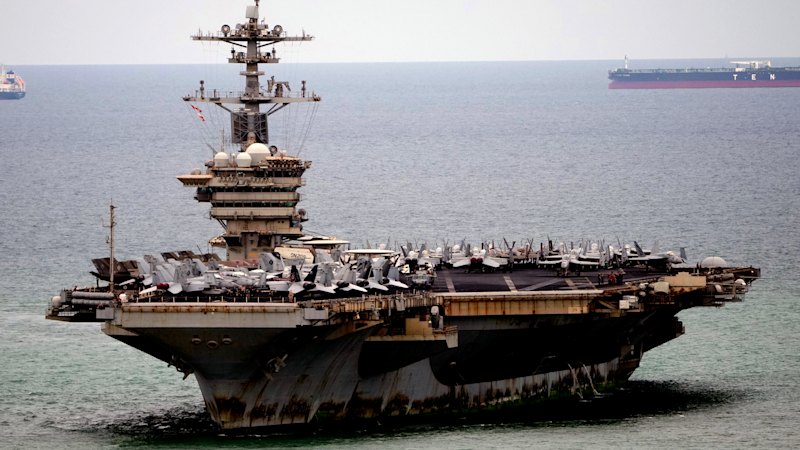
Eight sailors assigned to the USS Abraham Lincoln strike group attempted to take their lives during a brutal, record-shattering deployment. The US Navy confirmed these figures in an official letter released to Senator Kirsten Gillibrand, shattering months of dismissive rhetoric from top political and military leadership.
When you keep a crew of thousands at sea for more than 300 consecutive days without a port call, breaking records for endurance while supporting operations tied to the war against Iran, people break. Yet, leadership spent months pretending everything was fine. Don't forget to check out our recent post on this related article.
Let's look at the actual numbers and the stark reality behind the deployment.
The Reality on Board the USS Abraham Lincoln
The scale of the crisis became public only after intense pressure from lawmakers. According to correspondence from acting navy secretary Hung Cao, the incidents included severe actions. One sailor assigned to the Lincoln's air wing went overboard in early August and had to be rescued by a helicopter. Another sailor was physically stopped by alert shipmates from going overboard back in March. To read more about the context here, Reuters offers an in-depth breakdown.
Altogether, eight suicide attempts rippled through the strike group, which houses roughly 6,000 sailors across its vessels.
The Lincoln broke records for the longest time spent at sea without a port call, eclipsing 300 days before finally getting a reprieve with stops in Thailand and Guam. Living quarters on a Nimitz-class aircraft carrier are notoriously cramped, loud, and unrelenting. Throw in continuous combat readiness, sleep deprivation, and separation from family, and you have a recipe for psychological collapse.
Political Denial Versus Operational Reality
The response from Washington to early reports of declining morale was defensive denial.
When asked about the deteriorating mental health conditions aboard the carrier, President Donald Trump dismissed reporters directly, repeating "No. No. No" when questioned if the deployment had run too long. Defense Secretary Pete Hegseth echoed that stance, claiming the situation had been heavily misrepresented.
Senator Gillibrand called out those dismissals as open disrespect. She pointed out the glaring disconnect between finding endless funding for military hardware and failing to protect the fundamental well-being of active-duty service members.
Admiral Brad Cooper, overseeing Middle East operations, tried to spin the data in August by claiming the Lincoln had among the lowest number of mental health cases compared to the other 10 active aircraft carriers. Even so, Cooper admitted that a long deployment is uniquely challenging and that sailors react to intense stressors differently.
Why High-Stress Deployments Keep Breaking Crews
Military experts have long warned about the compounding effects of extended operational tempos. Rear Admiral Donald J. Guter, a former top judge advocate general for the navy, labeled the eight suicide attempts a disturbingly high indicator of severe stress levels.
When sailors are stretched past their limits:
- Sleep schedules get completely dismantled.
- Access to confidential, stigma-free mental health support onboard remains limited.
- Morale plummets as return dates get pushed back or remain entirely opaque.
If you or someone you know is struggling with mental health or distress, help is available. In Australia, contact Lifeline at 13 11 14 or Beyond Blue at 1300 22 4636. In the United States, veterans and service members can reach the Veterans Crisis Line by dialing 988 and pressing 1.