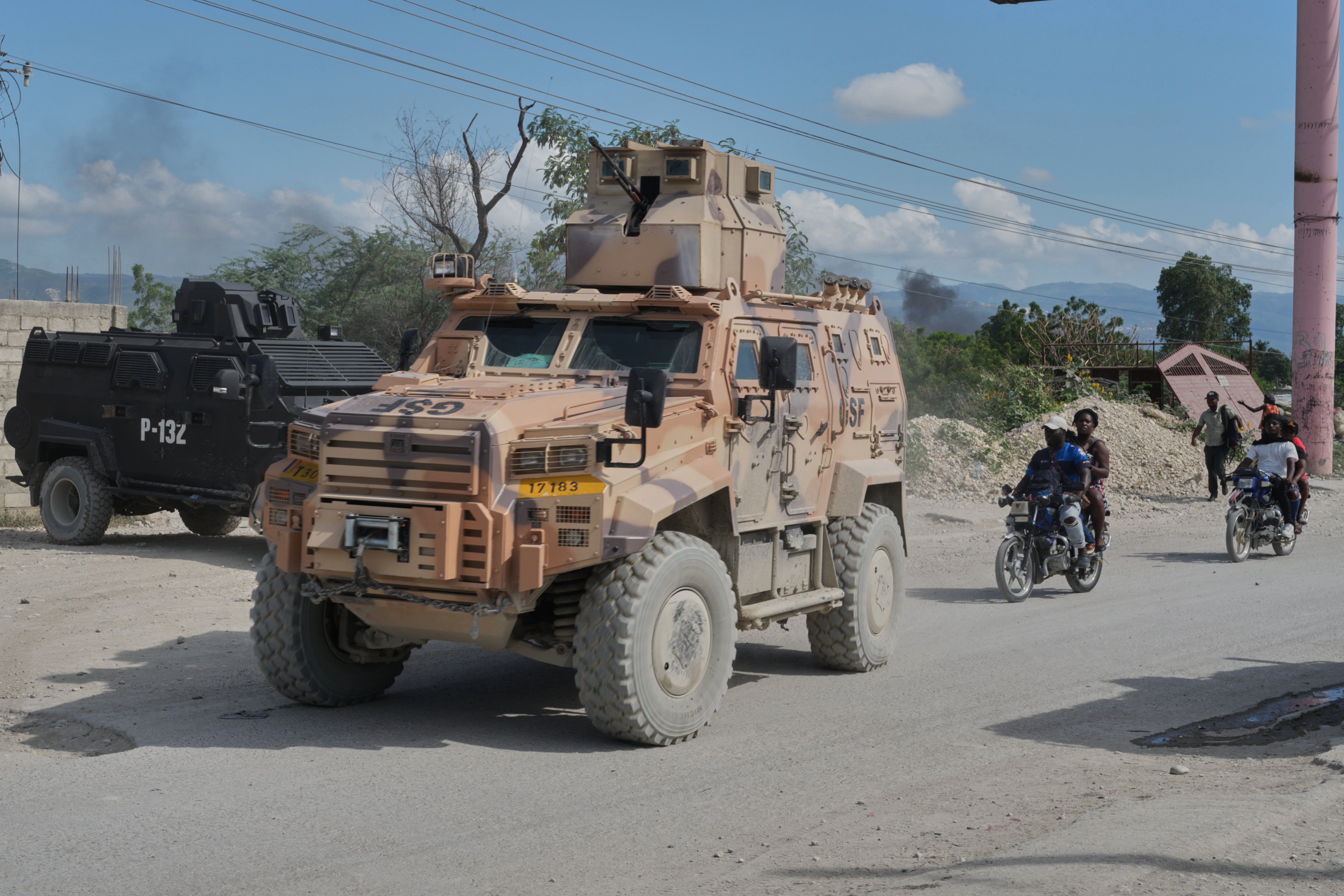
When an armored vehicle carrying international security personnel gets ambushed on the outskirts of Port-au-Prince, the diplomatic rulebook usually calls for closed-door meetings, urgent appeals, and slow-moving committee votes. Nayib Bukele doesn't play by those rules.
El Salvador's president announced that his government has launched a targeted military operation in Haiti after four Salvadoran aviation technicians were taken hostage by local gangs. The crisis exploded on a Sunday when armed groups ambushed their vehicle as the technicians returned from a local market to their base. Rather than waiting for the sluggish international security apparatus to negotiate, Bukele made his stance clear on social media. You might also find this similar story insightful: Why Pakistan Can No Longer Hide The Human Cost Of Enforced Disappearances In Balochistan.
The stakes couldn't be higher. The captured men aren't frontline combatants or infantry soldiers; they are technical personnel specializing in aviation and medical evacuations. Their core job is saving lives, not waging war. Yet, they found themselves trapped in the middle of Haiti's catastrophic security vacuum, where heavily armed gangs control vast swathes of the capital and surrounding regions.
Inside the Haiti Hostage Crisis
To understand why this situation escalated so fast, you have to look at the grinding reality on the ground in Port-au-Prince. International efforts to stabilize the nation have struggled with funding, equipment shortages, and institutional inertia. The UN-backed security force has operated at a fraction of its intended capacity, leaving major gang coalitions like Kraze Barye, 400 Mawozo, and Chèn Méchan running wild across the region. As extensively documented in recent articles by Reuters, the results are worth noting.
When the Salvadoran technicians leapt from their burning vehicle during Sunday's ambush, they became prime targets for criminal syndicates that routinely use kidnaping as leverage. Bukele's response was swift and uncompromising. He warned gang leaders that the rescue operation is just the beginning if the four men aren't returned alive and unharmed.
"Our mission consists only of pilots and technical personnel," Bukele stated, emphasizing that his team was never meant to engage in offensive combat.
The Broader Geopolitical Fallout
El Salvador's aggressive posture creates a fascinating friction point for international intervention in Haiti. For years, critics have argued that traditional peacekeeping missions lack the teeth or the will to dismantle entrenched criminal cartels. Bukele brings a radically different track record. Having famously waged an all-out domestic crackdown on gangs within his own borders, transforming El Salvador's murder rates, he now applies that same hardline philosophy internationally.
Haitian gang leaders have been formally warned. Both local kingpins and international observers know that San Salvador operates differently than traditional coalition partners. When Bukele says a rescue mission is underway, he is signaling a willingness to project force beyond national borders to protect Salvadoran citizens abroad.
What Happens Next
The immediate priority remains the safe recovery of the four technicians. But the ripple effects of this operation could redefine how smaller nations handle security failures in multinational coalitions. If the rescue succeeds, it cements Bukele's reputation as a leader who backs up his rhetoric with direct action. If it fails, or if the violence escalates, the fragile security framework in Haiti faces an unprecedented test.
You cannot ignore the stark reality here. Traditional diplomacy has failed to secure the streets of Port-au-Prince, and armed syndicates are testing the boundaries of foreign deployments. Bukele has drawn a hard red line. The coming days will show whether Haitian gangs heed his warning or face the full weight of a government that refuses to negotiate on its own terms.