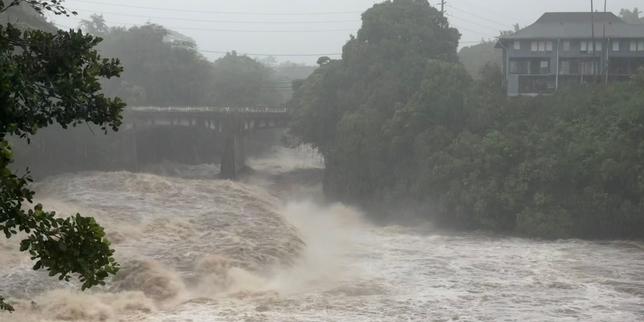
When a Pacific storm turns its sights on the islands, panic usually follows. Hurricane Lala is currently lashing Hawaii’s Big Island as a Category 1 storm, packing sustained winds of 75 miles per hour and dumping an incredible amount of water across the region. If you're watching the updates or trying to figure out how bad things actually are on the ground, here is the unvarnished reality of what is happening.
Governor Josh Green declared a state of emergency early to mobilize resources, clear debris, and secure vital infrastructure. But declarations don't stop flash floods. Forecasters warn that parts of the Big Island and Maui could see up to 20 or 25 inches of rain, creating a high-risk environment for life-threatening mudslides and severe coastal flooding.
The Immediate Danger on the Ground
Storms in the middle of the Pacific behave unpredictably, and Lala is no exception. The storm strengthened right on schedule, pushing hurricane warnings into full effect for Hawaii County while tropical storm warnings stretched across Maui, Oahu, and Kauai.
Power outages are already widespread. Reports indicate that over a third of customers on the Big Island lost electricity as tree limbs snapped and winds battered local power lines. Weak structures face serious damage, and transportation has taken a major hit. Authorities shut down major commercial hubs like Hilo International Airport and Ellison Onizuka Kona International Airport, alongside local commercial ports.
Why This Storm Feels Different
People living across the islands are all too familiar with heavy rain, but rare direct threats carry a psychological and physical weight that typical seasonal squalls miss. The last major hurricane to strike the state with severe intensity was Iniki back in 1992. While Lala is a Category 1 system, meteorologists emphasize that landfall isn't strictly required for a storm to wreak havoc. The sheer volume of moisture pulled in by atmospheric and oceanic conditions means the entire chain is dealing with hazardous surf nearing 20 feet and dangerous rip currents.
Residents in vulnerable zones have moved to emergency shelters, while ranchers and agricultural workers have scrambled to protect livestock in open pastures rather than risking collapsing barns.
Practical Steps If You Are in the Impact Zone
If you are currently anywhere near the warning zones, basic preparation dictates your immediate safety. Don't go outside to look at the surf or check out flooded roads.
- Stay put: Keep away from windows and glass doors if you're experiencing high gusts.
- Conserve power: Expect outages to linger until crews can safely clear downed trees and lines. Keep your phone battery charged and rely on battery-operated emergency radios for official civil defense updates.
- Avoid floodwaters: Just a few inches of moving water can sweep a vehicle away. Turn around, don't drown.
Monitor local emergency channels closely as Lala tracks west past the smaller islands. Stay indoors and wait for the all-clear from local authorities.