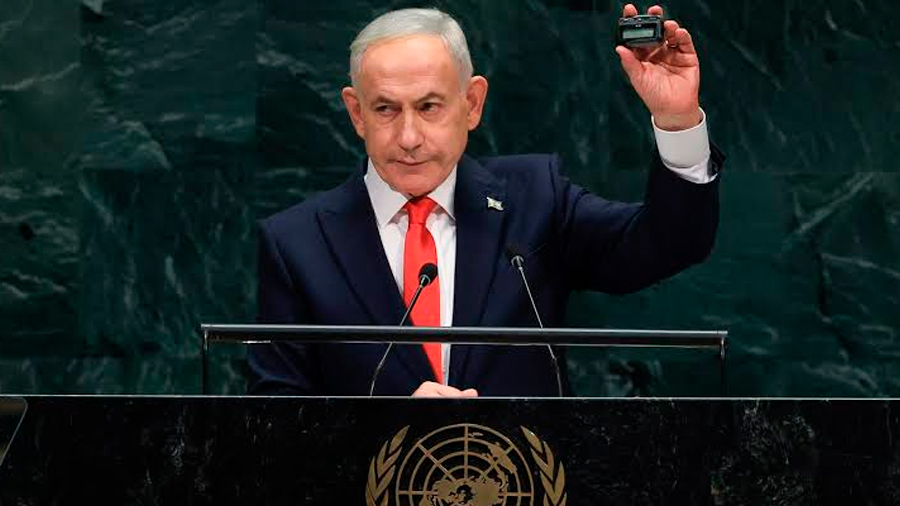
Climate disasters don't carry passports. When glacial lakes burst open and send walls of water crashing across mountain borders, political lines matter very little. Nepal's Prime Minister Balen Shah made this exact point clear during his address at the United Nations General Assembly. Standing on the global stage, he put forward a bold pitch for a tri-nation initiative involving his own country, India, and China to save the fragile Hindu Kush Himalayan region.
If you've been following South Asian geopolitics, you know that getting New Delhi and Beijing to agree on anything is an uphill battle. Yet, extreme weather leaves little room for stubborn diplomacy. Let's break down what this new climate proposal actually means, why Nepal is shaking up its foreign policy approach, and how disaster response is changing in real-time.
The Reality Behind the Himalayan Climate Crisis
The Hindu Kush Himalaya supports nearly two billion lives. It feeds major river systems, sustains agriculture, and dictates weather patterns across multiple countries. But as global temperatures tick upward, the roof of the world is melting too fast.
Last season's catastrophic flash floods along the Nepal-Tibet border left thousands displaced and caused massive infrastructural damage. A glacial collapse high up in the mountains triggered torrents that swallowed roads, bridges, and settlements before pushing downstream toward Indian plains.
PM Balen Shah didn't mince words at the UN. He highlighted that Nepal generates a tiny fraction of global greenhouse gas emissions, yet pays a devastating price for climate anomalies. When disaster strikes, pointing fingers doesn't rebuild homes or clear blocked riverbeds. Practical survival requires immediate cross-border tracking.
What is the Proposed Himalayan Climate Mechanism?
Shah's proposal at the UN calls for the establishment of a Himalayan Climate Resilience Mechanism. Instead of working in isolated silos, Nepal, India, and China would pool resources together.
Here is what the framework aims to achieve on the ground:
- Satellite Data Sharing: Real-time exchange of meteorological data to spot shifts before they turn catastrophic.
- Glacial Lake Monitoring: Joint tracking of unstable, swelling lakes perched dangerously high in the mountains.
- Early Warning Systems: Synchronized alerts that give downstream towns and villages crucial minutes or hours to evacuate.
- Cross-Border Rescue Coordination: Streamlining relief operations so emergency teams can move efficiently when disaster hits.
By bringing the two Asian giants into a collaborative fold, Nepal is trying to turn a shared ecological vulnerability into a diplomatic bridge.
Gratitude Amid Geopolitical Tightropes
You can't talk about Nepal without looking at its delicate geopolitical balancing act. Wedged tightly between India and China, Kathmandu has historically walked a tightrope to keep both economic partners content.
Following the recent floods, both neighbors stepped up. China extended emergency financial assistance worth $2.2 million. Meanwhile, India rushed over 140 tonnes of essential relief equipment and material to the disaster zones, cementing its reputation as a dependable first responder during regional crises.
Shah took a moment to express deep gratitude to both nations for their prompt rescue efforts. This public appreciation marks a pragmatic shift away from fiery rhetoric. Earlier, some officials in Kathmandu argued that disaster aid should be treated as a moral and financial liability of major greenhouse gas emitters. By pivoting toward a cooperative stance at the UN, Shah's administration is signaling that practical problem-solving outweighs ideological posturing.
What Happens Next on the Ground
Proposing a mechanism at the United Nations is the easy part. Building it requires deep institutional trust. India and China have overlapping security interests near the Himalayan borders, making any joint venture sensitive.
However, nature doesn't wait for diplomatic clearances. If regional authorities fail to establish shared monitoring networks, seasonal floods will continue to exact a heavy human toll across all three territories. Keep an eye on bilateral talks in the coming months to see if foreign ministries move past the rhetoric and start integrating satellite networks. Survival on the mountain slopes depends on it.