Donald Trump thought he had secured a breakthrough. Last month, the US president announced a 15-point roadmap designed to settle the future of Gaza, featuring a complete disarmament of Hamas paired with a phased Israeli military withdrawal.
It turns out Israeli Prime Minister Benjamin Netanyahu didn't get the memo, or at least he refuses to play along with the timeline.
During a cabinet meeting in Jerusalem, Netanyahu made it crystal clear that Israel is officially rejecting the 15-point document. His reasoning comes down to a fundamental disagreement over sequencing and what constitutes a real threat. Netanyahu stated flatly that Israeli forces aren't moving an inch out of the territory until every last piece of Hamas weaponry is gone. Not just the heavy rockets and the underground tunnels, but light weapons too. He called it "genuine disarmament, not fictitious disarmament".
The Core Clash Over Sequencing
The friction point isn't necessarily the ultimate goal of a disarmed Gaza. Everyone knows that's where things have to head for a lasting peace. The crisis is about who blinks first.
Trump's Board of Peace envisioned a parallel track or a staged withdrawal as disarmament kicked off. Netanyahu and his security chiefs view that as an unacceptable security risk. From their perspective, pulling back troops while Hamas still holds any form of military capability is inviting another October-style disaster. The Israeli military has set hard red lines, insisting on complete freedom of action to crush threats across the strip until the enclave is thoroughly sanitized of arms.
Right now, talks with Washington are grinding forward behind closed doors. Netanyahu acknowledged that American officials brought plenty of ideas to the table, noting that while some are workable, others are dead on arrival.
Political Pressure at Home
You can't separate Netanyahu's public defiance from his domestic political reality. His far-right coalition partners have been breathing down his neck, threatening to blow up the government if he signs off on any deal that looks like a premature retreat. With parliamentary elections looming in October and his coalition trailing in the polls, showing weakness on security is a luxury Netanyahu simply doesn't have.
On the other side of the equation, Hamas isn't sitting quietly either. Officials from the militant group have made it clear that any compliance with new disarmament terms depends entirely on Israel fulfilling prior obligations first, such as dramatically ramping up humanitarian aid and rolling back military positions to where they were when the initial truce took hold.
The Human Toll Beneath the Politics
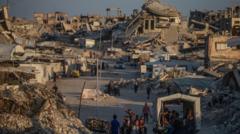
While politicians argue over the wording of a 15-point text, the reality on the ground remains grim. The conflict has ground much of Gaza into rubble over two years of brutal fighting. Even with recent lulls in major operations, hundreds of targeted strikes since last year's truce have pushed the Palestinian death toll past staggering numbers, leaving civilian infrastructure entirely shattered.
The White House hasn't issued a blistering counter-statement yet, preferring to keep diplomatic channels open. But public defiance from Jerusalem puts Trump's high-profile peace architecture under immediate strain. If Washington and Jerusalem can't align on whether withdrawal happens before or after total disarmament, the entire 15-point blueprint risks collapsing into diplomatic irrelevance.
The immediate future looks locked in place. Israeli troops are staying put, Hamas is refusing to hand over weapons under the current terms, and the political survival of Israel's leader remains tied to a hardline stance. Until someone blinks or a completely new compromise bridges the sequencing gap, the latest peace push is stalled.
Israel rejects Trump's Gaza peace plan, saying 'no withdrawal until Hamas disarms'
This news report covers the immediate reactions and breakdown of diplomatic talks following Benjamin Netanyahu's public rejection of the US-backed 15-point roadmap for Gaza.