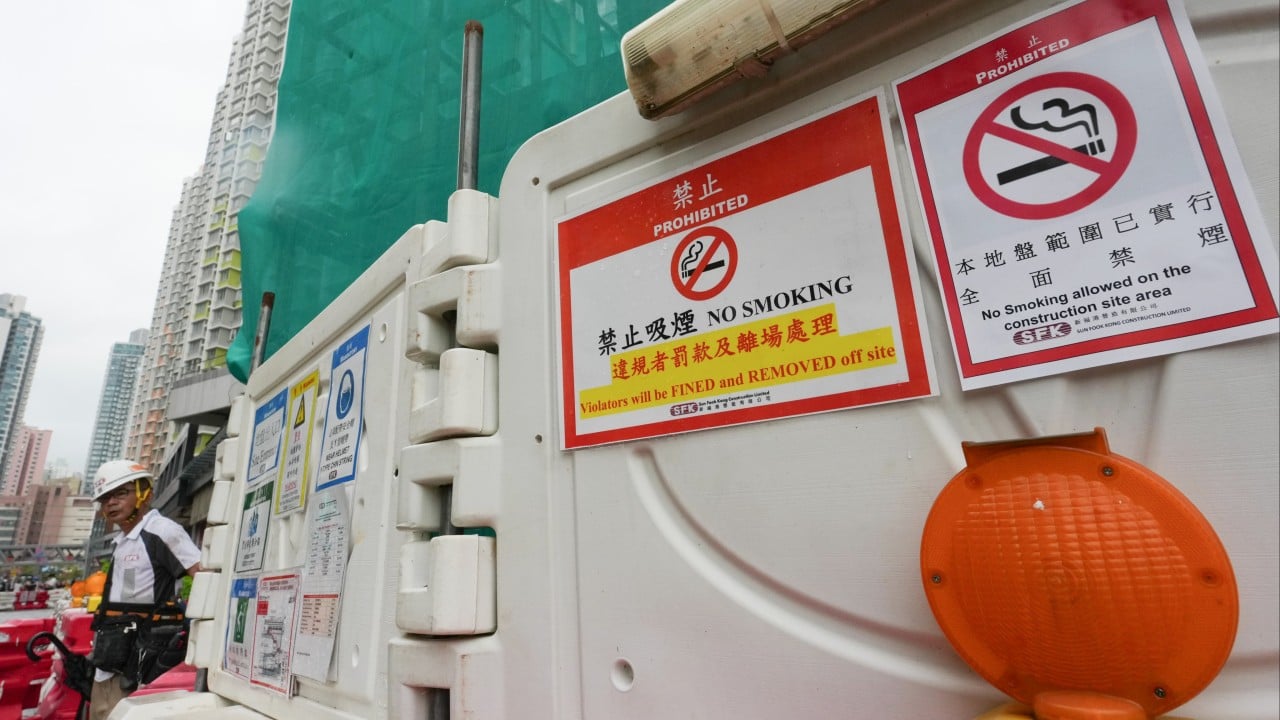
Starting Friday, July 17, 2026, lighting up a cigarette on a Hong Kong construction site is no longer just a bad habit. It is a criminal offense.
The industry is about to undergo its most aggressive cultural shift in decades. For generations, the mid-morning smoke break was a fixture of the local building trade. It was how workers coped with the brutal heat and intense physical labor of erecting skyscrapers. That era has ended. For a deeper dive into this area, we recommend: this related article.
This is not a soft roll-out. There is no transition window. If a worker gets caught smoking on site, they face an immediate HK$3,000 fine. If a contractor fails to prevent it, the company faces penalties of up to HK$400,000. In extreme scenarios where smoking causes severe fire risks, site proprietors can be jailed for six months and fined HK$3 million.
To survive this regulatory squeeze, nine major industry bodies led by the Hong Kong Construction Association (HKCA) have issued a unified operational blueprint. It is called the "Best Practice Guideline on Prohibition of Smoking in Construction Sites". It is a practical survival guide for contractors who suddenly find themselves legally responsible for the personal habits of hundreds of workers spread across massive, multi-story projects. For broader background on this development, extensive analysis can also be found at TIME.
The Tragedy Behind the Ban
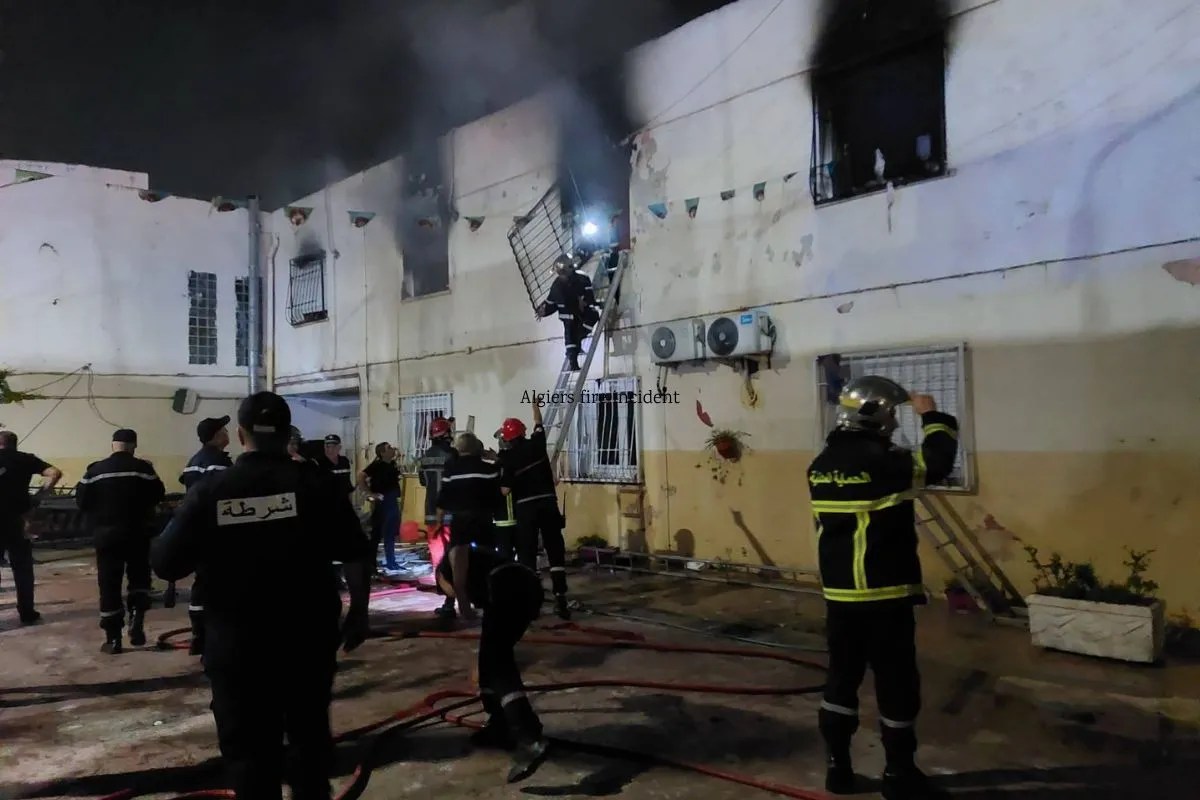
To understand why the government is taking such a hard line, we must look back to November 2025. The devastating fire at Wang Fuk Court in Tai Po claimed 168 lives and left thousands of families homeless. It was one of the worst urban tragedies in modern Hong Kong history.
Subsequent investigations and court hearings pointed to a single, devastatingly simple cause: a discarded cigarette butt from a worker on a refurbishment project. The fire spread rapidly through scaffolding materials, turning a standard residential tower into an absolute inferno.
Before this tragedy, the industry treated on-site smoking as a minor nuisance or a minor safety infraction. It was technically discouraged but widely tolerated. Site managers turned a blind eye because keeping sub-contractors happy and projects on schedule was the top priority. The Wang Fuk Court disaster changed that math permanently. The public outcry was immense, and the Legislative Council acted with unusual speed, passing the new amendments to the Construction Sites (Safety) Regulations.
The message from the government is unmistakable. Safe sites are non-negotiable, and the convenience of a smoke break will never again take precedence over public safety.
The Legal Teeth of the New Rules
The legal framework is designed to target both the individual smoker and the corporate entity running the site. Understanding the division of responsibility is vital for every manager, engineer, and foreman in the city.
The Individual Worker Fines
Any person caught smoking or carrying a lighted cigarette, cigar, or pipe on a construction site commits an offense. Occupational Safety Officers from the Labour Department have the power to patrol sites and issue HK$3,000 fixed penalty notices on the spot. This applies to all building and maintenance sites, with the sole exception of private, occupied residential quarters that happen to be within a wider construction zone.
The Contractor Penalties
The law places a massive burden of proof on contractors and subcontractors. They must take "all reasonable steps" to ensure that no one smokes on their premises. If the Labour Department determines that a contractor was negligent or took a lazy approach to enforcement, the firm can be prosecuted and fined up to HK$400,000.
The Catastrophic Risk Clauses
The true nightmare scenario for construction companies lies in the general duty provisions of the Occupational Safety and Health Ordinance. If smoking on a site creates an imminent, catastrophic fire risk—such as smoking near fuel depots, chemical storage, or active gas lines—the Labour Department can bypass the standard fines.
They can prosecute proprietors and employees directly under criminal statutes. A convicted site proprietor can face a fine of up to HK$3 million and six months in prison. An employee convicted under these terms faces a HK$150,000 fine and six months behind bars.
The financial and legal stakes have never been higher.
Breaking Down the Eight Pillar Industry Blueprint
The HKCA blueprint does not just repeat the law. It provides an operational manual to help contractors prove to the Labour Department that they are taking "all reasonable steps" to enforce the ban.
If you are running a site, this blueprint is your legal shield. It outlines an eight-pillar management framework designed to stamp out the smoking culture from top to bottom.
Mandatory Entrance Checkpoints
Under the new guidelines, workers cannot simply walk onto a site with their pockets full of cigarettes and lighters. Sites must establish dedicated security checkpoints at all main entry points.
Workers are required to deposit their tobacco products, matches, and lighters into labeled, transparent bags before crossing the site boundary. They can retrieve their personal property only when they sign out at the end of their shift. Anyone who refuses to comply with this deposit system will be denied entry or immediately removed from the premises.
Demarcating Clear Boundaries
One of the biggest headaches for site managers is defining exactly where the "site" ends and the public street begins. The guidelines state that contractors must use fencing, clear hoardings, and detailed site plans to draw unmistakable physical boundaries.
This is particularly critical for sites that lack permanent hoardings, such as minor roadworks or open-air maintenance projects. If a worker steps two feet away from their active work tool to smoke on a public pavement, they must be legally outside the designated construction zone. If the boundaries are blurry, the contractor is exposed to liability.
Multilingual Education and Pre Employment Inductions
Hong Kong’s construction sector relies heavily on ethnic minority workers, particularly Nepalese and Pakistani laborers. To ensure there are no communication gaps, the HKCA guidelines mandate that all safety signage and policy statements must be multilingual.
Furthermore, the smoking policy and the exact boundaries of the non-smoking zones must be explained during every worker's pre-employment safety induction. You cannot assume a worker knows the rules just because a sign is posted in Chinese and English.
Integrating Smoking Cessation Support
The industry leaders recognize that quitting cold turkey is incredibly difficult. Because of this, the blueprint encourages contractors to offer actual health support rather than just acting as security guards.
Contractors should integrate smoking cessation resources, government hotlines, and health information directly into their daily morning briefings and toolbox talks. Making help visible reduces the friction of compliance.
High Risk Areas Require High Intensity Patrols
Not all areas of a construction site are created equal. The blueprint singles out high-risk zones that require immediate, enhanced security patrols and zero-tolerance enforcement. These include:
- Fuel and chemical storage depots
- Active welding and hot-work zones
- Paint and solvent storage areas
- Temporary electrical installations and generator areas
In these zones, contractors must install highly visible, specialized warning signs. Safety officers must run frequent, randomized patrols to ensure no workers are sneaking a smoke in the shadows of volatile materials.
For smaller renovation works where permanent security guards are not feasible, the guidelines suggest implementing a mobile patrol strategy. Supervisors must visit the worksite multiple times a day specifically to inspect for evidence of smoking, such as discarded ash or butts.
Smart Tech is No Longer Optional
To keep up with the demands of the Labour Department, major contractors are rapidly deploying smart site technologies.
Relying on human safety officers to walk up and down 40 flights of stairs to catch smokers is inefficient. Progressive builders are installing high-definition CCTV networks equipped with thermal imaging and artificial intelligence. These systems can detect the heat signature of a lit cigarette or a lighter flame in real-time.
When the system flags a heat source in a restricted zone, it sends an instant alert to the site manager’s phone. This allows the supervisor to address the violation before a government inspector walks onto the site. Using smart tech is one of the strongest pieces of evidence a contractor can present to prove they are taking "all reasonable steps" to enforce the ban.
The Operational Headache No One Wants to Talk About
While industry leaders like Simon Liu Sing-pang express optimism that many sites have already banned smoking, the practical implementation will be messy.
Consider a worker operating on the 35th floor of a new high-rise building. Under the new rules, if they want a cigarette, they cannot just step onto a half-finished balcony. They must ride the construction hoist down 35 floors, walk past the security checkpoint, exit the site boundaries entirely, find a public smoking area, finish their cigarette, walk back, pass through security again, and ride the hoist back up.
That is easily a 30-minute journey for a single smoke break.
The immediate result will be a noticeable drop in productivity. Subcontractors, who are already squeezed by tight margins and strict deadlines, will face a tough choice. Do they strictly enforce the rules and watch their labor output drop, or do they risk the HK$400,000 fine by letting workers sneak quick smokes in unmonitored corners?
This is where the subcontracting system in Hong Kong complicates things. Main contractors are legally liable, but they rely on several tiers of smaller subcontractors to do the actual physical work. If a third-tier plasterer gets caught smoking, the main contractor faces the reputational damage and the potential fine.
To protect themselves, main contractors must write strict indemnity clauses into their subcontractor agreements. If a subcontractor's worker is caught smoking, the financial penalty must be passed directly down the chain.
Your Immediate Compliance Checklist
The ban is live. The inspectors are coming. If you run a construction site in Hong Kong, you need to take these steps immediately to protect your business and your workers:
- Establish a secure entrance checkpoint: Provide clear, numbered, transparent bags for workers to deposit their cigarettes and lighters before they enter the site.
- Review your subcontracting contracts: Ensure there is a clear legal mechanism to pass any government fines down to the specific subcontractor responsible for the offending worker.
- Map and sign your boundaries: Walk your site perimeter. Make sure there are no gray areas where your site ends and public space begins. Install multilingual signs at every major junction.
- Deploy thermal and smart monitoring: If you are running a medium-to-large site, install CCTV cameras with fire-detection AI in high-risk zones.
- Update your safety inductions: Every single worker who steps onto your site must receive explicit instruction on the smoking policy, the consequences of a violation, and the locations of the cigarette depositories.
- Implement zero-tolerance subcontractor penalties: Make it clear that a first smoking offense results in removal from the site, and a second offense results in a permanent ban of that worker.
The era of the casual on-site smoke is officially over. Contractors who adapt quickly and embrace smart monitoring will thrive under the new safety regime, while those who rely on outdated, relaxed habits will find themselves paying a very steep price.