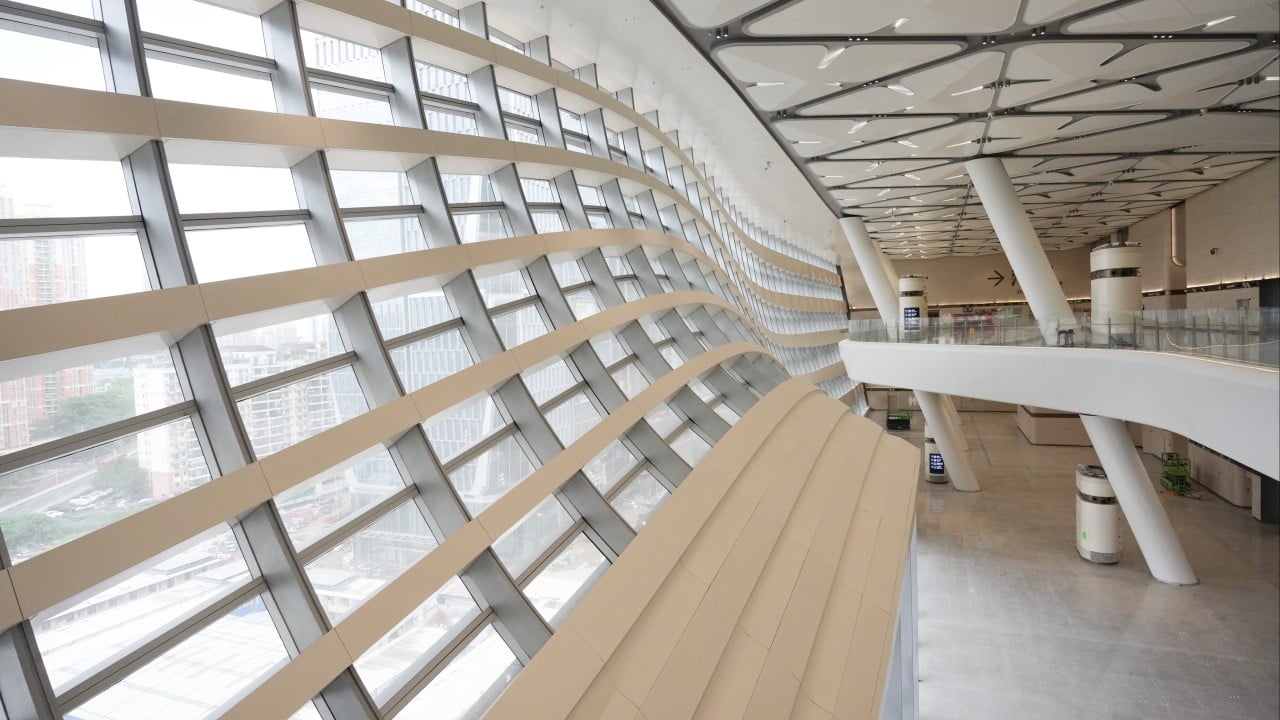
You don't open a multi-billion-dollar border crossing without testing whether the gates will actually hold when a stampede of humanity hits them. Hong Kong and Shenzhen authorities know this truth all too well. That's why the revamped Huanggang checkpoint isn't opening quietly. Instead, it's heading into a grueling gauntlet of over 100 separate trials, culminating in massive cross-boundary simulations featuring at least 10,000 participants.
Secretary for Security Chris Tang laid out the reality during a recent site inspection. Behind the sleek stone-like facade—architectural shorthand for rock-solid cross-border ties—lies a complex web of high-tech clearance systems, security protocols, and mechanical infrastructure that must function without a single glitch.
Breaking the System Before It Breaks You
Massive infrastructure projects in the region have a habit of looking great on paper while choking on opening day. Bureaucrats hate surprises. By deploying civil servants and recruited volunteers into large-scale stress tests, authorities are mimicking the exact playbook used prior to major venue launches like the Kai Tak Stadium.
These aren't gentle walkthroughs. The 10,000-person simulations are designed to push the facility to its absolute limits.
- Traffic Volume Overload: Simulating peak-hour surges to find where queues freeze.
- Anti-Terrorism and Security Drills: Testing rapid response times for law enforcement units.
- Mechanical and IT Failures: Pulling the plug on biometric scanners and automated gates to see how backup systems kick in.
If a bottleneck forms during these dry runs, engineers fix it before the public ever sets foot inside.
The Joint Inspection Experiment
The real story of the new Huanggang port isn't just concrete and glass. It's the operational philosophy. The checkpoint relies heavily on a streamlined "joint inspection" model. Travelers clear customs once instead of stopping twice at separate border controls.
Sounds efficient, right? In theory, yes. In practice, merging two distinct bureaucratic networks into a single digital handshake is a recipe for system crashes if the code isn't bulletproof. Shenzhen and Hong Kong officials signed the formal cooperation agreements to make the Hong Kong Port Area subject to local SAR jurisdiction, but operational harmony requires actual sweat.
Legislative Council President Starry Lee has already pressed departments to draft emergency contingency plans and nail down public transport connections well ahead of time. Commuters won't care whose fault a system failure is if they are stuck waiting in a hot bus terminal on opening morning.
What Happens Next
The timeline for opening remains tied strictly to performance data, not a fixed calendar date. Tang made it clear that public transport coordination and checkpoint activation will only happen once safety and smoothness metrics clear the threshold.
Keep an eye on the completion rates of these 100-plus drills over the coming weeks. When authorities stop running simulations and announce a firm launch day, you'll know the 10,000 guinea pigs did their job. Watch for final announcements regarding bus route integrations and connecting transit links so you aren't caught off guard when the doors finally swing open.