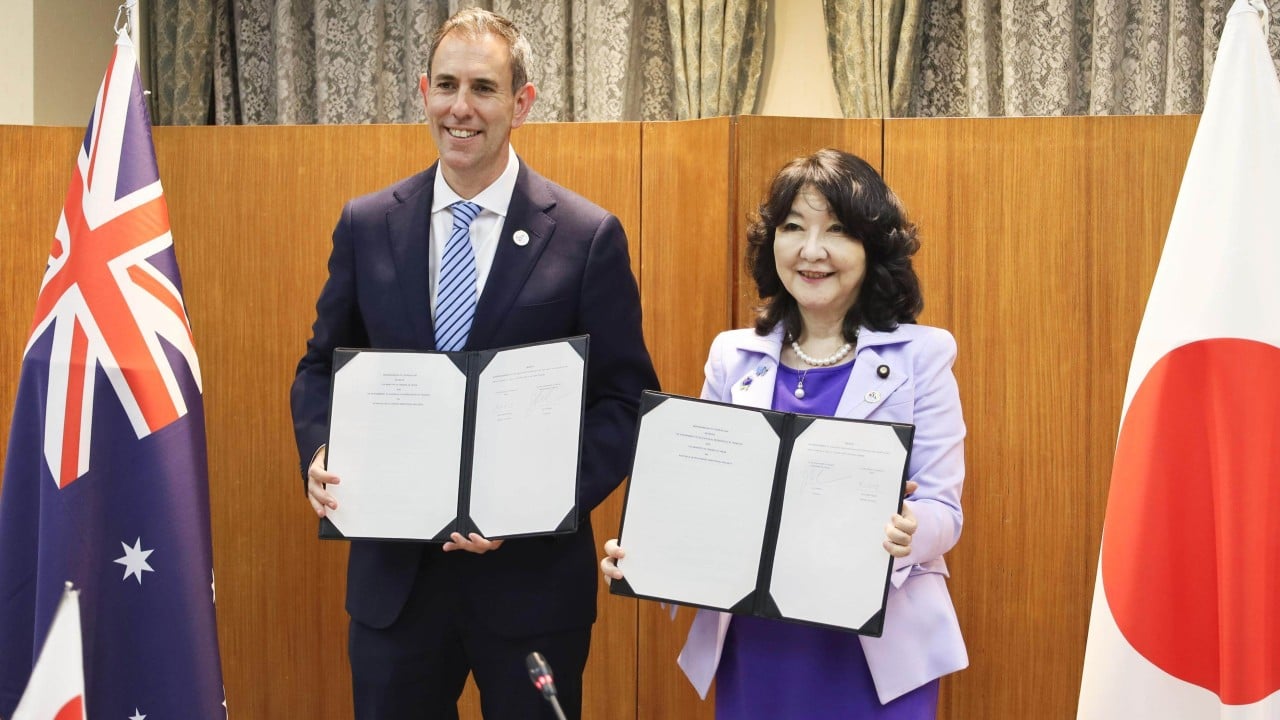
Geopolitics used to be about missiles and troop movements. Today, it is fought with supply chains, rare earth minerals, and energy contracts. That reality just hit overdrive in Tokyo, where Japanese Finance Minister Satsuki Katayama and Australian Treasurer Jim Chalmers signed a historic memorandum to establish a formal Finance Ministerial Dialogue.
Until now, economic cooperation between Tokyo and Canberra mostly happened at the vice-ministerial or bureaucrat level. Elevating this coordination directly to the finance minister tier changes the velocity of decisions. When money people take the wheel, strategic ambitions turn into funded projects. If you want to understand how middle powers are bulletproofing their economies against supply shocks and geopolitical friction, look right here.
Beyond Bureaucracy: Why This Ministerial Pact Matters
For decades, Japan and Australia have enjoyed a reliable trading relationship. Australia digs up the raw materials; Japan refines and manufactures industrial goods out of them. But a lot has changed globally. Supply chains are weaponized, trade routes face constant friction, and energy transitions require massive capital injections.
The newly minted dialogue is designed to bypass red tape. It targets four distinct pillars: critical minerals, energy security, resilient supply chains, and green industrial investment. Instead of separate agencies working in silos, the finance ministries of both nations will directly coordinate investment screening and public financial backing.
When Australian Treasurer Jim Chalmers met with Japanese banking titans from MUFG, Mizuho, and Sumitomo Mitsui, he wasn't just shaking hands for the cameras. He was locking down private and public capital alignment. Japan Bank for International Cooperation and Export Finance Australia are set to play massive roles in financing projects that ensure both countries control their own economic destinies.
Securing the Critical Minerals Lifeline
If your country builds batteries, defense equipment, or advanced electronics, you need critical minerals. Right now, global processing choke points pose a massive vulnerability. Australia possesses massive reserves of lithium, rare earths, and other critical inputs, while Japan boasts world-class technology and deep pockets for refining and manufacturing.
This new bilateral financial framework aims to streamline capital flow directly into joint mining and processing ventures. Instead of raw materials floating off to third-party processors where geopolitical leverage can be applied, Tokyo and Canberra want secure, transparent, and diversified pipelines.
Investors need to pay attention. Government-backed risk guarantees and institutional asset manager alignment mean that funding for critical mineral extraction in Western Australia will move faster. Japanese institutional investors, managing trillions of yen, are actively looking for secure assets outside volatile jurisdictions. Australia fits that bill perfectly.
Energy and Green Industry Alignment
Energy security is national security. Japan imports the vast majority of its energy, making it acutely sensitive to Middle Eastern disruptions or maritime trade bottlenecks. Australia remains a powerhouse exporter of liquefied natural gas and is aggressively scaling up green hydrogen and renewable energy infrastructure.
The finance dialogue establishes a direct pipeline for Japanese capital to fund Australian clean energy projects and fuel security initiatives. We are talking about joint investments in green industry supply chains and sustainable infrastructure across the Indo-Pacific.
This isn't charity. It is pure economic pragmatism. Japan secures guaranteed low-carbon energy and resource supplies for its industrial base, while Australia secures guaranteed buyers and project financing to build out its clean energy economy.
Pacific Stability and Regional Resilience
Neither Japan nor Australia operates in a vacuum. Both nations share a deep strategic interest in the stability of Pacific Island nations and the broader Indo-Pacific region. Financial institutions from both countries will increasingly leverage multilateral organizations and joint development funding to support regional partners.
When small island nations need infrastructure financing for digital networks, ports, or clean energy, they often have to look toward predatory lenders. Tokyo and Canberra are offering a viable, transparent alternative backed by secure capital and trusted governance.
What Comes Next for Investors and Businesses
This agreement signals a permanent shift in how international partnerships operate. Economic security is no longer an afterthought for diplomats. It is the primary lens through which finance ministers write fiscal and monetary policy.
If you run a business in tech, mining, or green energy, watch how these bilateral investment screenings and public financial institution subsidies roll out over the next twelve months. The capital is moving. The rules are changing. Align your strategy with secure, allied supply chains now or get left behind when the next bottleneck hits.