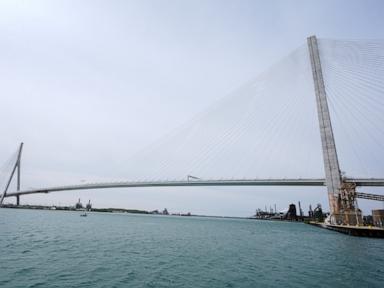
Building a 1.5-mile steel cable giant over the Detroit River was always going to be hard. What nobody expected was that after 12 years of political fights, court battles, and a $6.4 billion construction effort, the biggest headache on opening week wouldn't be engineering. It would be tariffs.
The Gordie Howe International Bridge connects Detroit, Michigan, and Windsor, Ontario. It stands as one of the largest infrastructure projects in North American history. Trucks are scheduled to start rolling across its six lanes on July 27, 2026. Yet, instead of a historic handshake in the middle of the span between leaders of both nations, Canada abruptly canceled the joint ribbon-cutting ceremony.
The immediate trigger was President Donald Trump announcing a 50% tariff on Canadian goods earlier in the week, slamming Canadian automobiles, dairy, and alcohol. Canadian Infrastructure Minister Gregor Robertson’s team made it clear that celebrating side-by-side during an active trade war felt completely inappropriate. Instead, Canada is holding its own solo celebration on July 24 in Windsor.
This sudden cancellation is just the final chapter in a project that has been caught in cross-border political crossfire for years.
The Bottleneck That Forced Canada to Build Its Own Bridge
To understand why this crossing matters so much, you have to look at the mess it was designed to fix.
For decades, the bulk of commercial truck traffic between Detroit and Windsor relied on a single point of failure: the Ambassador Bridge. Built in 1929, the Ambassador Bridge is privately owned by the Moroun family's Detroit International Bridge Company. That made it a rare anomaly. A massive chunk of international trade between two sovereign nations was controlled by one family business.
It was a terrible setup for supply chains.
When border security tightened following September 11, truck backups stretching for miles became standard. Auto parts manufactured in Ontario couldn't reach assembly plants in Michigan on time. A single accident or security scare on the Ambassador Bridge could freeze billions of dollars in daily trade.
Canadian officials realized relying on a private, aging span was a massive risk. They wanted a modern, public alternative that connected directly to major highways on both sides: Interstate 75 in Michigan and Highway 401 in Ontario.
When the Michigan legislature hesitated to fund the project years ago, Canada made a bold decision. Ottawa agreed to front the entire cost of construction itself under the Canada-Michigan Crossing Agreement. Canada took on the full financial risk, planning to recoup its billions strictly through future toll collection over five decades.
The Moroun Family Fought to the Death to Protect Their Monopoly
The project didn't just face bureaucratic slowdowns. It faced relentless warfare from the Ambassador Bridge owners.
The Moroun family saw the proposed public bridge as a direct threat to their lucrative toll monopoly. Over more than a decade, they filed dozens of legal challenges in federal and state courts to block construction. They spent millions buying television ads warning Michigan voters against the project. In 2012, they even funded a statewide ballot initiative in Michigan aimed at forcing a constitutional amendment to require public voter approval for any new international crossing.
Voters rejected the referendum. Courts threw out lawsuit after lawsuit.
By 2018, ground finally broke on the new span, named after hockey icon Gordie Howe—a legendary Canadian who spent 25 seasons wearing the sweater for the Detroit Red Wings. It was supposed to symbolise mutual economic benefit and shared cultural ties.
Instead, the political backdrop got weirder and much harsher.
Shifting Terms and Last Minute Revenue Pressure
As the bridge neared completion in early 2026, the political landscape shifted dramatically.
Washington began voicing strong objections to the original 2012 deal. President Trump criticized the arrangement on social media, complaining that Canada owned both sides of the bridge and claiming the project used minimal American steel—a claim Canadian Prime Minister Mark Carney and Canadian steel manufacturers disputed directly.
Tensions boiled over in early 2026, pushing back the planned June opening as negotiations stalled behind closed doors. Washington pushed for direct financial concessions and control before allowing traffic to flow.
In mid-July 2026, U.S. Commerce Secretary Howard Lutnick announced a modified arrangement. Under the updated terms, the U.S. government will receive 50% of the bridge's net revenues for 15 years, along with a vote in setting toll rates.
Canadian Prime Minister Mark Carney defended the concession to skeptical Canadian lawmakers, downplaying the actual financial impact. He emphasized that the word "net" carries heavy weight in the contract. Toll revenues must first cover operating expenses, maintenance, and the massive debt service required to pay back the $6.4 billion construction costs. As Carney put it, there won't be much net revenue left over to split for quite some time.
Why Truckers Care About Technology and Lane Counts
Politics aside, freight operators don't care about diplomatic feuds. They care about transit times.
The new crossing completely alters how freight moves across the border. Here is what changes the day the bridge opens:
Direct Highway Connections.
Trucks currently taking the Ambassador Bridge have to crawl through dozens of stoplights on Windsor city streets before reaching Highway 401. The Gordie Howe bridge connects Highway 401 directly to I-75 with seamless highway ramps. That alone eliminates up to 30 minutes of idling per trip.
Modern Inspection Plazas.
The bridge features massive customs plazas on both ends. The U.S. port of entry covers 130 acres, making it one of the largest border facilities in North America. It includes modern inspection lanes built specifically for fast, automated processing.
Six Dedicated Lanes.
With three lanes running in each direction, traffic incidents won't completely stall movement. One lane can handle oversized cargo without shutting down commercial traffic flow entirely.
Pedestrian and Bicycle Access.
Starting August 5, 2026, a dedicated toll-free multi-use path will open, allowing cyclists and pedestrians to cross the Detroit River between Canada and the U.S. for the first time in decades.
Windsor Mayor Drew Dilkens pointed out that this structure represents the most technologically advanced border crossing in North America the minute it opens. For automotive manufacturers operating on strict just-in-time inventory schedules, predictability matters far more than political speeches.
High Tariffs Threaten the Trade the Bridge Was Built to Carry
There is an obvious irony staring everyone in the face.
Canada built a high-tech trade pipe designed to speed up cross-border supply chains right at the moment Washington is trying to choke off those exact supply chains with tariffs.
More than 70% of Canadian exports head straight to the United States. Detroit stands as the busiest truck crossing on the northern border. Tens of billions of dollars in auto parts, machinery, agricultural products, and consumer goods cross the Detroit River every single month. The auto industry operates as a single integrated ecosystem across the border; an engine block might cross between Michigan and Ontario six times during assembly before finishing in a completed vehicle.
Imposing 50% tariffs on Canadian auto parts and raw materials threatens to disrupt that entire network. If factories cut back production or shuffle supply chains to avoid cross-border trade, truck volume over the new bridge will drop.
Ontario Premier Doug Ford warned openly about the risks of a full trade war, while Canadian trade negotiators are scrambling to work out agreements before tariff enforcement takes full effect.
The physical structure is ready. The concrete is poured, the cables are tensioned, and the toll booths are staffed. But the political goodwill that launched the project a decade ago has largely evaporated.
What Comes Next for Drivers and Fleet Managers
If you operate trucks, manage supply chains, or plan to drive across the border, here is the immediate operational reality:
- Watch the Opening Dates. Commercial trucks and passenger vehicles get access starting Monday, July 27, 2026. Pedestrian and bike lanes open August 5.
- Prepare for Initial Toll Structures. Toll rates are set by the Windsor-Detroit Bridge Authority. Make sure your transponders and cross-border customs paperwork (FAST/E-MANIFEST) are updated specifically for the new port of entry routing.
- Factor in Route Time Savings. Adjust driver schedules to account for the direct highway-to-highway connection between I-75 and Highway 401. You will save significant fuel and driver hours by bypassing Windsor local street traffic.
- Monitor Tariff Regulatory Updates. Keep a close eye on U.S. Customs and Border Protection bulletins regarding the 50% tariff implementation timeline, as classification codes for automotive components and raw materials may face extra documentation checks at the new plaza.