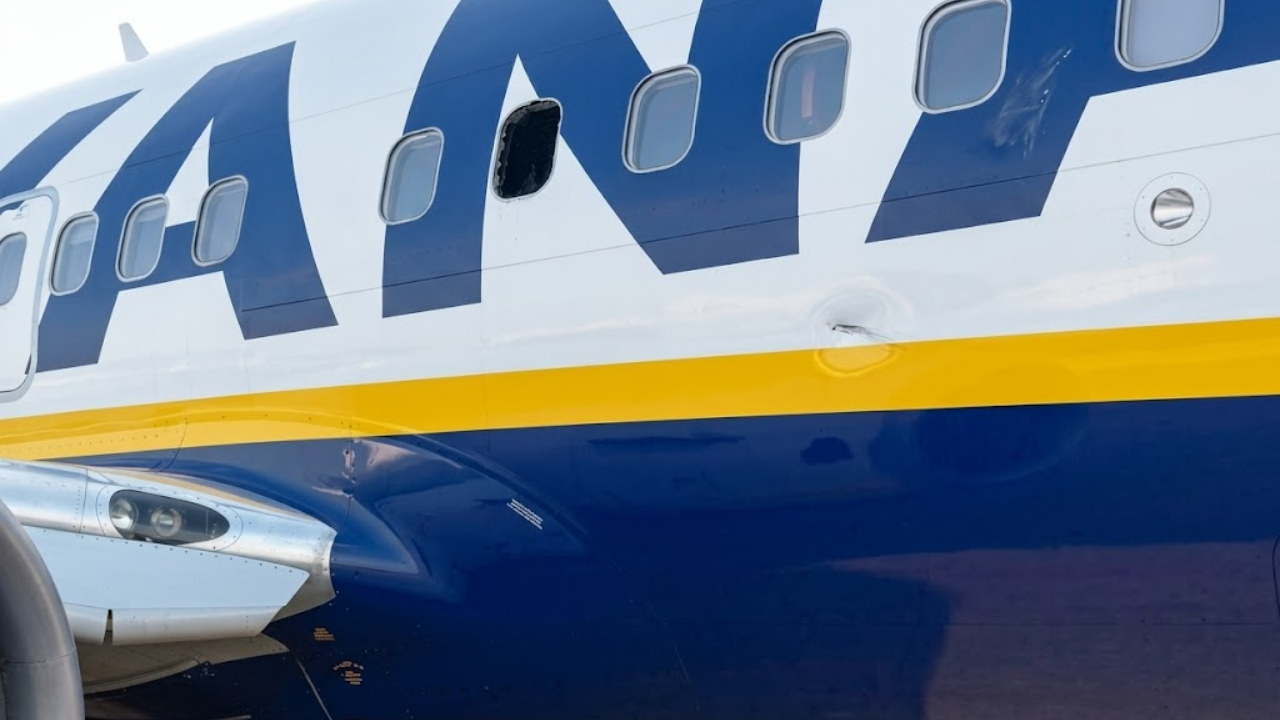
Air travel feels routine until a piece of titanium traveling at hundreds of miles per hour shatters your window. Imagine sitting in seat 11F, looking out at a standard flight climb, and suddenly finding yourself staring into open air with half your body pulled outside the cabin. That nightmare became reality for 61-year-old Serbian passenger Ljubisa Karović on a July flight out of Greece.
A preliminary report from the US National Transportation Safety Board (NTSB) has finally pulled back the curtain on what went wrong. It wasn't just a random window malfunction. It was a violent uncontained engine failure that sent shrapnel tearing through the fuselage. Building on this theme, you can find more in: Why That Viral Indonesian Soldier Video Hit So Hard.
Inside the NTSB Findings on the Ryanair Engine Failure
The flight was barely ten minutes old. Operating as a Malta Air flight for Ryanair, the Boeing 737-800 was climbing away from Thessaloniki International Airport toward Memmingen, Germany. Seven and a half minutes into the flight, the cockpit lit up with high vibration warnings on the right engine.
Then came the bang. Experts at Al Jazeera have also weighed in on this situation.
An internal fan blade inside the CFM56-7B26 engine fractured due to fatigue cracking. Pieces of that blade didn't just stay inside the housing. They tore through the metal casing, slammed into the fuselage, battered the right horizontal stabilizer, and struck the window right at row 11.
The cabin instantly depressurized. Oxygen masks dropped. The window at seat 11F vanished completely, creating suction that pulled Karović's head and right arm straight out into the slipstream.
The Heroic Fight Inside Cabin 11
Airplanes cruising at climb altitude feature immense pressure differentials. When a hole opens up at thousands of feet, the air inside rushes out violently.
Karović was saved by physics and human intervention. Because his seatbelt remained fastened, his lower body stayed anchored to the seat, keeping him from being completely ejected into the sky. Meanwhile, his wife and fellow passengers leaped into action. They grabbed his legs and fought against the rushing wind to drag him back inside the cabin.
Once pulled back, a doctor on board tended to his injuries while flight attendants and passengers tried to block the gaping window frame with a metal box until the flight deck completed an emergency landing back in Thessaloniki. Karović walked away with severe shoulder injuries, friction burns, and a story that defies belief.
The Controversy Over Maintenance and Bird Strikes
The NTSB report stirred up immediate friction with airline leadership. Early on, Ryanair CEO Michael O'Leary publicly dismissed reports that anyone had been sucked halfway out of a window, pointing fingers at potential foreign object damage before federal investigators could finish their work. The NTSB formally reprimanded O'Leary for breaking international protocol by sharing premature opinions on an active safety inquiry.
Investigators uncovered another troubling detail. Maintenance records proved the engine's fan blades had passed ultrasonic inspections just weeks prior in May. Yet, the engine had logged four suspected bird strikes over the preceding twelve months. While investigators found feather and bird remains inside the damaged engine components, they haven't officially confirmed whether those previous animal impacts caused the internal fatigue cracks.
What This Means for Commercial Aviation
This terrifying event mirrors historical disasters, most notably the tragic 2018 Southwest Airlines accident where a similar engine failure shattered a window and proved fatal for a passenger. Following that older tragedy, safety regulators mandated structural reinforcements for aircraft windows. The NTSB noted that those specific safety modifications had not yet been finalized on this particular Boeing frame, which operates under a timeline giving carriers years to comply.
Air travel remains statistically safe, but structural margins during uncontained engine failures leave very little room for error. Airlines and manufacturers face intense pressure to review how past bird strikes are evaluated during routine maintenance checks. If microscopic fatigue cracks can bypass ultrasonic testing and lead to catastrophic cabin penetration, maintenance protocols need an immediate upgrade.
Check your airline's safety records, pay attention to the safety briefing, and always keep your seatbelt fastened even when the sign turns off.