Most high school science projects end up in a recycling bin right after the final grading period. Katelyn Liu looked at that predictable cycle and decided to build an international nonprofit instead.
Back in 2022, Liu started running modest, free science workshops at a local library in California. She noticed a glaring gap in her community. Under-resourced students and young girls often felt alienated by STEM subjects long before middle school even wrapped up. Textbooks didn't cut it. Abstract theories on a whiteboard failed to spark genuine curiosity. Kids needed to touch, build, and break things to realize science belonged to them, too.
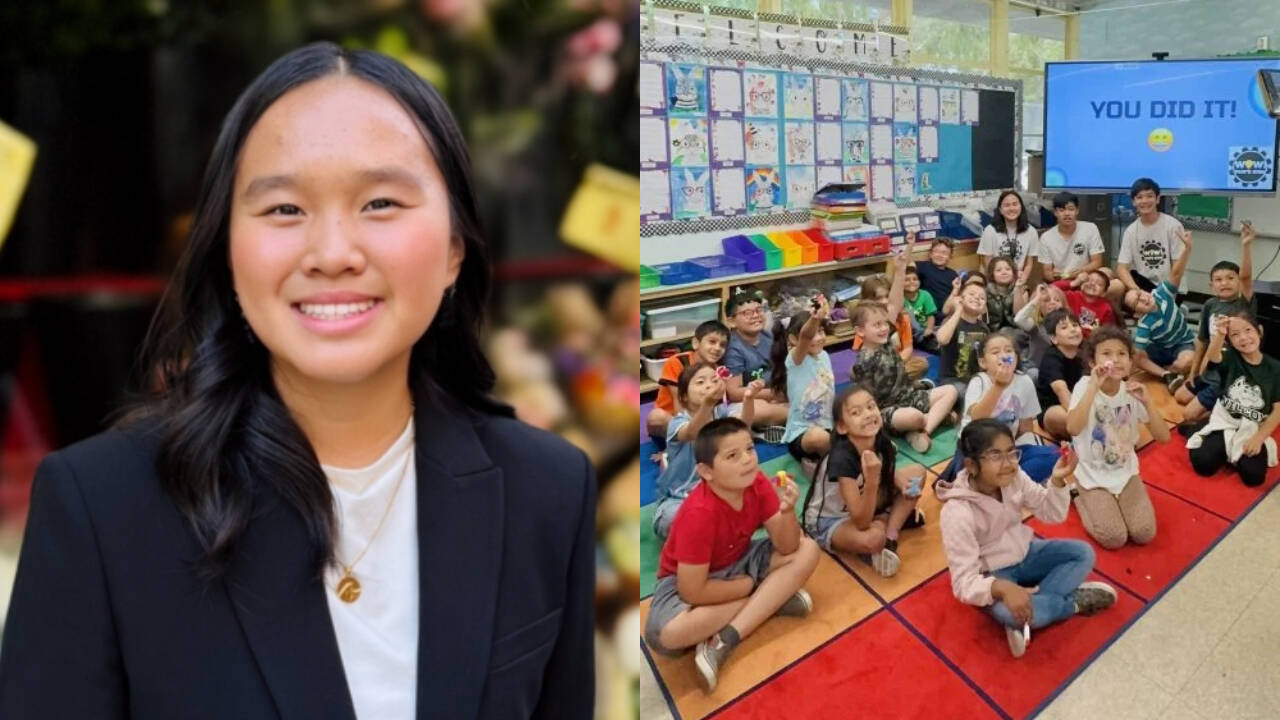
What started as a handful of weekend library sessions turned into WOW! That's STEM, a youth-led organization operating 21 active chapters across six American states and seven countries. The numbers behind the movement are staggering. Over 15,000 young people have participated, backed by nearly 6,000 hours of volunteer work and 18,500 physical STEM kits shipped worldwide.
The Blueprint For Grassroots Expansion
Scaling an educational initiative from a single room to an international network requires more than wishful thinking. Liu didn't wait for institutional funding or corporate sponsorships to hand her a grant. She built partnerships through direct, boots-on-the-ground outreach.
She started by cold-emailing local libraries, community centers, and YMCAs. When emails failed to get traction, she showed up in person with lesson prototypes in hand. She walked administrators through her hands-on curriculum, demonstrating how a simple homemade catapult, a miniature wind turbine, or a basic robotics kit could captivate a room of restless kids.
That persistence paid off. The nonprofit now collaborates with 48 distinct community partners, including Title I elementary schools. Crucially, the operational model relies on teen mentors. The organization has trained over 60 student volunteers to design lesson plans and lead workshops themselves. This peer-to-peer approach changes the dynamic entirely. A ten-year-old watching a seventeen-year-old code a robot doesn't see an unreachable academic expert. They see someone who looks like an older sibling, making the entire field feel attainable.
Tying Engineering to Environmental Action
Technical skills alone won't solve the systemic barriers facing urban youth. Liu recognized early on that children growing up in densely paved metropolitan environments often lack direct access to natural ecosystems. Urban heat islands and concrete jungles create a disconnect between students and the physical world around them.
To bridge that gap, the curriculum expands far beyond indoor engineering challenges. Students participate in guided wildlife hikes, hands-on community science projects, and local habitat restoration initiatives. Liu secured a microgrant from Roots & Shoots USA to weave biodiversity research directly into Los Angeles classrooms. Her dedication to environmental stewardship also earned her formal Eagle Scout recognition.
Science isn't just about building gadgets in a vacuum. It's about understanding how local ecosystems function and realizing that young people have the power to protect them.
Funding and Scaling Real-World Impact
Running a global nonprofit with zero entry fees for participants sounds like a financial nightmare on paper. There's no tuition. There are no corporate venture funds footing the bill from day one.
Instead, the operation stays afloat through scrappy, community-driven fundraising. Restaurant nights, local festival booths, targeted grants, and material donations keep the engine running. Teen volunteers spend their weekends packing components into custom science kits, ensuring that children who can't attend physical workshops still receive materials at home.
The core philosophy remains straightforward: give kids physical tools, remove the intimidation factor, and watch them figure out solutions on their own. When you hand a child a kit and let them build a working circuit or construct a bridge, you aren't just teaching physics. You're building the kind of stubborn resilience that textbooks can't manufacture.
Liu's trajectory proves that young people don't need to wait for adulthood to make a structural dent in educational inequality. Stop treating youth-led initiatives as cute resume builders. When driven by clear execution and genuine community need, they can completely rewrite how the next generation learns.