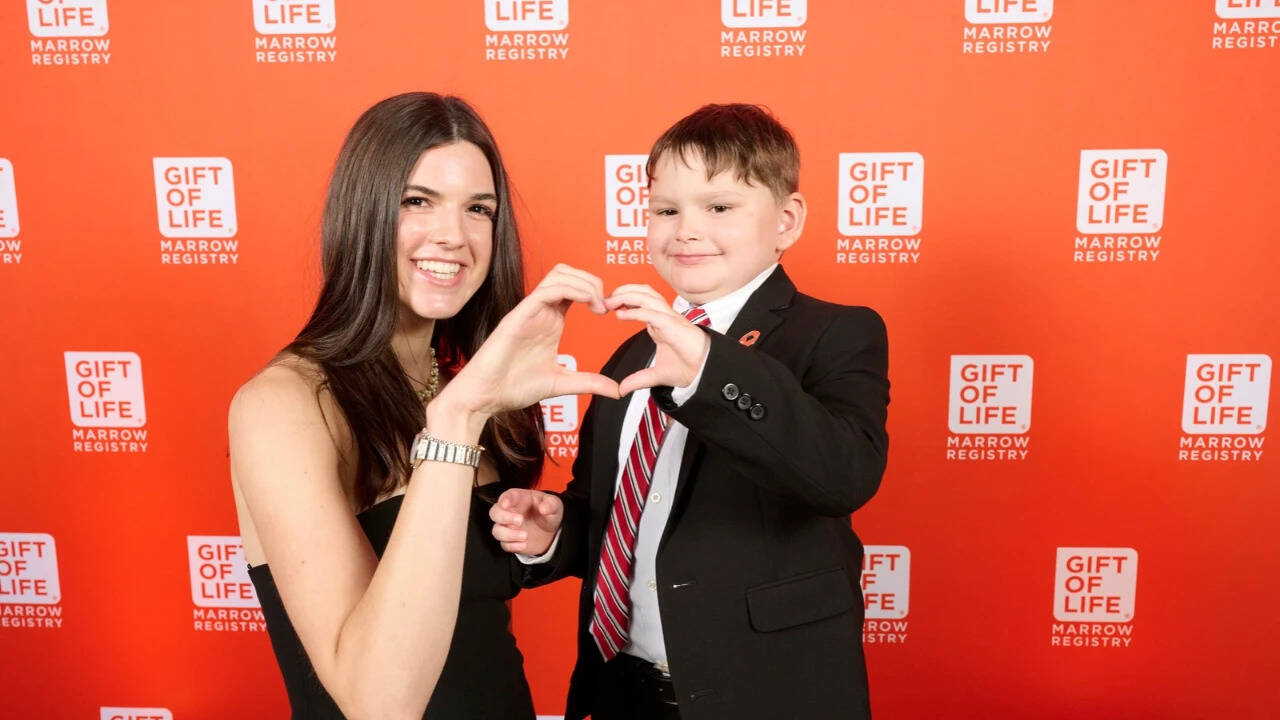
A campus cheek swab in 2019 turned into a second life for a seven-year-old boy named Samuel Moore. Hope Miller, who signed up while attending Florida State University, matched with Samuel after he was diagnosed at age three with DOCK8 deficiency, a rare inherited immune disorder. Seven years after that campus drive, 27-year-old Hope and Samuel finally met face-to-face on November 16, 2026, at the Gift of Life Marrow Registry's One Huge Night gala at the Beverly Wilshire Hotel in Los Angeles.
News outlets love a tearjerker reunion. They give you the hug at the gala, the mom's relief, and a quick nod to cheek swabs.
That's fine as a starting point, yet it skips the part that actually decides whether a kid like Samuel gets a shot at growing up. Finding a stranger whose human leukocyte antigen (HLA) tissue markers line up closely enough not to trigger fatal graft-versus-host disease is brutal math. Even when a donor is in the database, getting from "potential match" to an actual transplant bag takes screening, medical clearance, time, and a stranger saying yes when the call comes.
What DOCK8 Deficiency Actually Does to a Child's Body
Most people reading about a bone marrow transplant picture leukemia. That makes sense—blood cancers are the most common reason doctors search a registry.
Samuel's diagnosis is different. DOCK8 deficiency comes from mutations in the dedicator of cytokinesis 8 gene, a type of combined immunodeficiency often linked with hyper-IgE syndrome. Without working DOCK8 protein, immune cells struggle to hold their shape and squeeze through dense tissue to patrol skin, lungs, and other organs.
In real life, that molecular glitch looks terrifying for a family. Kids with DOCK8 deficiency deal with severe eczema, stubborn viral skin infections like molluscum or herpesviruses, recurring respiratory and ear infections, and steep food allergies. Worse, untreated patients face a high risk of life-threatening infections and malignancies such as lymphoma later in life.
His mother, Christy Moore, has spoken about the weight of waiting on an unknown donor to step up. You can manage symptoms with antibiotics, antivirals, or immunoglobulin therapy for a while, yet those measures don't fix the root genetic defect in the blood-forming cells.
Why Timing Matters So Much With Rare Immunodeficiencies
Allogeneic hematopoietic stem cell transplantation (HSCT) is the only established cure for DOCK8 deficiency. When donor stem cells engraft, they build a new immune system carrying a working copy of the gene.
Clinical research backs up acting before severe organ damage sets in. A 2026 retrospective study in Frontiers in Immunology of 47 patients with genetically confirmed DOCK8 deficiency who underwent HSCT reported 91.5% overall and event-free survival at a median follow-up of seven years, with 100% survival among the small matched unrelated donor group in that cohort. Earlier multicenter data from the European Society for Blood and Marrow Transplantation and European Society for Blood and Marrow Transplantation registry work similarly showed stronger survival when patients received transplants younger—96% under age eight versus 78% at age eight or older in that analysis—and using reduced-toxicity conditioning regimens.
Those numbers aren't a guarantee for every child, because every transplant carries risks like graft-versus-host disease, infection, or pre-existing lung or liver damage. Still, the clinical pattern is clear: waiting years while infections pile up narrows the margin for error.
Why Joining a Bone Marrow Registry Is Harder Than Swabbing a Cheek
Signing up takes maybe five minutes. You swab the inside of your cheek, fill out a health form, and mail it back.
Then, usually, nothing happens.
According to the National Marrow Donor Program (NMDP), roughly 70% of patients who need a stem cell or marrow transplant don't have a matched donor inside their own family. That means doctors have to search millions of unrelated volunteers worldwide. Because HLA markers are inherited and come in countless combinations, matching odds are steep—often cited as exceeding 1 in 20,000 for two random people, though exact odds depend heavily on your specific HLA profile and ancestry.
People also confuse joining the registry with donating right away. Joining just puts your tissue type in the search pool. You might get a call six months later, six years later, or never.
There's another uncomfortable truth recruiters don't always highlight at shiny campus tables: signing up doesn't mean everyone follows through. Registries spend real money typing swabs and maintaining records, and late drop-outs when a patient is already being prepped for transplant can put a patient's life in serious jeopardy. If you aren't willing to take time off work or school and go through medical screening when called, wait until you're ready to commit.
Marrow vs. Blood Stem Cells: What Actually Happens
Another big misconception is that every donation involves painful surgery into the hip bone. In the news story, Hope donated bone marrow, while another donor at the same gala, Max Mandel—who joined in 2015 while studying in Jerusalem and helped 32-year-old Juan Santoyo of Wasco, California, who had non-Hodgkin lymphoma—donated peripheral blood stem cells.
Doctors choose the cell source based on the patient's disease and age, not donor preference. Here's how the two routes differ in practice:
- Peripheral blood stem cell (PBSC) donation is used for the majority of donations today. For about five days beforehand, you get injections of filgrastim (a growth factor) to push stem cells out of your bone marrow into your bloodstream. Then, over one or two outpatient sessions, blood is drawn from one arm, run through an apheresis machine to collect stem cells, and returned through the other arm. Expect bone aches, fatigue, or headaches during prep, usually fading within days after collection.
- Bone marrow donation is a surgical procedure done in a hospital operating room under anesthesia, typically taking liquid marrow from the back of the pelvic (iliac) bone rather than the spine. Most donors go home the same day or after an overnight stay. Soreness, bruising, or stiffness in the lower back or hips is common for a week or two, and full energy recovery can take a few weeks.
Neither option is effortless, and both involve real medical evaluation first. Anyone telling you it's "totally painless" is sugarcoating it, just like anyone telling you it's an automatic multi-week bedridden ordeal is exaggerating.
What a Gala Reunion Gets Right—and What It Leaves Out
Events like the Gift of Life Marrow Registry gala in Los Angeles do something vital: they make an abstract medical supply chain feel human. Hope said she thought about how she'd feel if someone in her own family needed help, and having brothers made matching with a little boy hit closer to home. For Samuel's family, seeing the person behind that life-saving graft turns gratitude from a name on a card into a real human being.
At the same time, reunions are a tiny slice of registry life. Most donor-recipient pairs never meet, either because privacy rules and timelines vary or because one side prefers distance. A quiet donation that never makes a gala stage still saves a life.
Also, diversity in the registry remains a real bottleneck. Because HLA types cluster along ancestral lines, patients from underrepresented or mixed racial and ethnic backgrounds often face tougher odds finding an exact match on registries that skew heavily toward European ancestry. Growing the pool isn't just about raw headcount—it's about variety.
Practical Next Steps If You Want to Help
If reading Samuel and Hope's story nudged you to do more than just hit "like" on a post, here is how to take concrete action right now:
- Check eligibility and order a swab kit. Look up Gift of Life Marrow Registry or the National Marrow Donor Program (NMDP) to see current age and health guidelines—typically ages 18 to 40 for new registrants, since younger donors tend to have better transplant outcomes.
- Talk it through with your household first. If you get called as a match, you'll need flexible time off, a ride to appointments or hospital collection, and backup support for family or work duties. Getting your people on board early avoids last-minute panic.
- Keep your contact info current. Registries lose track of thousands of people after college moves, name changes, or old email addresses. Update your profile so you don't miss the one call that matters.
- Donate whole blood or platelets if marrow isn't right for you. Not everyone can join a marrow registry or pass health screening, and blood banks constantly need regular donors for trauma, surgery, and cancer patients.