Most people outgrow their childhood train sets by the time they reach middle school. They pack up the plastic tracks, donate the miniature locomotives, and move on to mortgages and career stress. But Cory Mohl looked at his suburban West Valley City yard in 2015 and decided adulthood was vastly overrated.
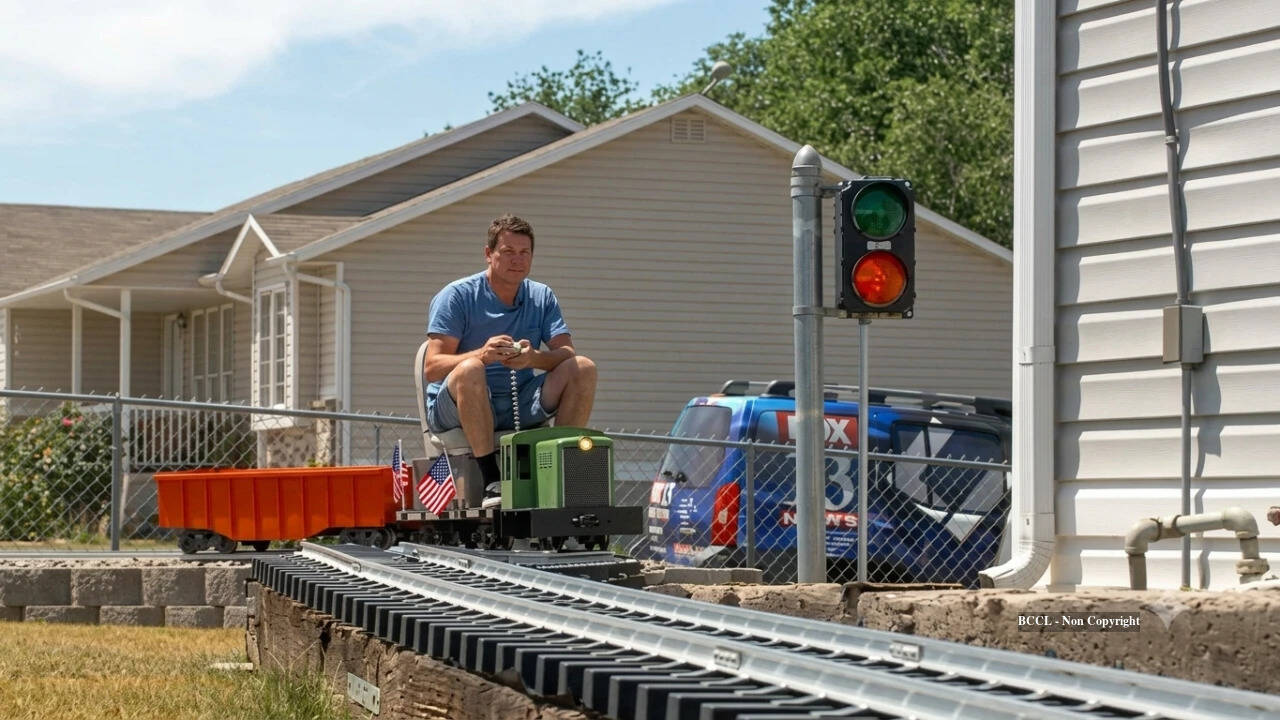
Instead of putting in a standard patio or planting prize-winning tomatoes, Mohl built a fully operational, rideable railroad right outside his back door. It is a massive engineering feat that required hauling 40,000 pounds of gravel, laying roughly 400 feet of track, and sinking hundreds of hours of manual labor into the dirt.
If you have ever wondered what it takes to turn a backyard hobby into a neighborhood transit system, you are looking at the ultimate test of dedication, heavy lifting, and backyard civil engineering.
The Reality of Moving 40,000 Pounds of Gravel
You cannot just lay steel tracks directly onto suburban turf and expect a multi-hundred-pound engine to roll smoothly over it. Ground movement, weather shifts, and settling earth will wreck an amateur track layout in a single season.
Mohl learned this the hard way by hauling roughly 40,000 pounds of gravel to build a stable roadbed. That is twenty tons of crushed rock moved by hand, wheelbarrow by wheelbarrow, to grade the landscape. Every inch of track requires precise leveling. If your base gives way, your locomotive derails, and clearing heavy rolling stock off the grass is back-breaking work.
Beyond the gravel, sourcing the equipment is its own hurdle. Mohl did not custom-build his engine from raw metal in a garage forge. He connected with a local enthusiast living just half a mile away who already operated a residential rail line. Buying a pre-existing backyard locomotive and rolling stock saved him from years of specialized mechanical fabrication, though it still drove total projected costs to nearly $18,000.
When a Private Hobby Becomes a Neighborhood Attraction
A backyard setup of this scale does not stay a secret for long. Once the tracks looped around his property and even threaded through a backyard shed, local kids and neighbors started taking notice.
What started as a quiet personal outlet transformed into a community hotspot. Neighborhood children began lining up for rides, turning Mohl into an unofficial weekend transit operator. Parents would watch from the sidelines while kids climbed aboard the tiny cars for a loop around the yard.
This is where backyard railroading differs completely from tabletop model railroading. A model layout sits behind glass or on plywood in a basement where nobody touches it. A 15-inch or dual-gauge backyard line is physical, loud, and communal. It forces you to interact with the people living next door, whether they love the sound of steel wheels on track or occasionally wonder what you are building now.
What It Actually Costs to Build a Backyard Train Line
People often ask if building a home railroad is a smart investment or just an expensive whim. Honestly, it is a money pit, but an exceptionally fun one.
When you tally up twenty tons of roadbed gravel, railroad ties, steel rail sections, switches, hardware, and a motorized locomotive, the bills add up fast. Mohl estimated his final expenses would land right around $17,500 to $18,000.
That price tag shocks casual observers, but compared to putting in an in-ground swimming pool or a high-end deck, it offers a distinct kind of utility. You are not just buying lumber; you are building an interactive piece of operational machinery that demands ongoing maintenance, seasonal decoration, and constant track adjustments.
The Upkeep No One Talks About
Laying the track is only half the battle. Owning a backyard railroad means signing up for endless maintenance.
You have to inspect fishplates and bolts after major freeze-thaw cycles. Weed control is a constant war, because stray grass and roots will warp alignment or short-circuit your patience. Lubricating axle bearings, charging heavy-duty batteries or managing fuel systems, and clearing debris off the right-of-way take up entire weekends.
If you are not willing to spend your Saturdays kneeling in the dirt with a wrench and a bucket of ballast, do not attempt a project like this.
Building Your Own Line
If you are crazy enough to try building your own residential rail system, skip the guesswork and follow a realistic sequence:
- Check local zoning laws and property lines before buying a single foot of track. Your city code enforcement officer might have very specific opinions about commercial-grade noise or residential transit loops.
- Consult local steam or live-steam hobby clubs. Experienced builders will save you from catastrophic grading mistakes and help you find used equipment.
- Start small with a simple oval. Do not try to weave through sheds and gardens on your first try. Master a basic fifty-foot loop before expanding your empire.
Cory Mohl proved that a childhood obsession does not have to die in a dusty attic. With enough gravel, heavy lifting, and stubborn determination, you can bring a full-scale railway to your own backyard.