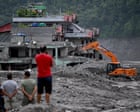
When dozens of Australians went missing following catastrophic flash floods in the Himalayas, families faced an immediate nightmare. They spent hours refreshing feeds, desperately looking for signs of life. Instead, they found something else entirely. Major news platforms covering the Nepal-Tibet disaster were instantly flooded with vile, racially motivated abuse. Comment sections filled up with trolls claiming that citizens who weren't white weren't genuinely Australian.
It is a grim reality that highlights how toxic online discourse has become. Tragedy no longer pauses bigotry. Instead, it acts as an amplifier.
The Anatomy of Digital Hate During a Crisis
When 43 Australians were reported missing following glacier collapses and severe flooding in late August, mainstream outlets like News Corp, Channel 7, Channel 9, and Guardian Australia rushed to share updates. Many of the missing tourists were on spiritual pilgrimages to sacred sites like Mount Kailash. They included members of Sydney’s Indian diaspora, long-standing community members, and families simply trying to explore the world.
Yet, as stories circulated, Facebook and X threads devolved quickly. Commenters posted remarks mocking the disaster, questioning the citizenship of the victims, and treating human lives as political collateral. Editors at major publications had no choice. They locked down comment sections entirely because automated moderation filters completely failed to catch coded, dog-whistled racism.
Why does this keep happening? Because hate travels fast, and social media algorithms are built to reward engagement, no matter how toxic that engagement looks.
Connecting the Dots to Domestic Politics
This vitriol didn't happen in a vacuum. Australia has spent months wrestling with heated public debates over immigration, housing, and national identity. Far-right populist movements and groups have successfully mainstreamed anti-immigrant rhetoric, pushing the narrative that a true Australian must fit a very specific, narrow demographic.
Race Discrimination Commissioner Giridharan Sivaraman pointed out the obvious: these online abusers are trying to strip people of their national identity based purely on their appearance. When someone looks at a missing person poster of a non-white Australian and types out a cruel dismissal, they are echoing talking points heard on political stages and fringe forums. Words have consequences. They normalize casual cruelty and embolden extremists who used to hide in the shadows.
The Failure of Platform Accountability
Social media giants love to talk about community standards. They issue polished corporate statements whenever a public relations crisis hits. But behind the scenes, moderation budgets are slashed, and algorithms continue to boost rage-bait because anger keeps users glued to screens.
Leaders across Australia's multicultural communities are speaking out, demanding a shift away from division. Chiran Tiwari, president of the Nepalese Australian Welfare Society, put it bluntly: people need to look past nationalities and remember basic humanity. Families dealing with the unimaginable agony of a missing loved one shouldn't have to fight off online bigots at the same time.
If major tech companies refuse to clean up their platforms voluntarily, governments must enforce strict digital duties of care. Until there are real legal and financial penalties for hosting targeted hate speech during a national tragedy, the comment sections will remain cesspools.
Report abusive content immediately when you see it, support independent moderation efforts, and refuse to engage with accounts that weaponize human suffering for clicks.