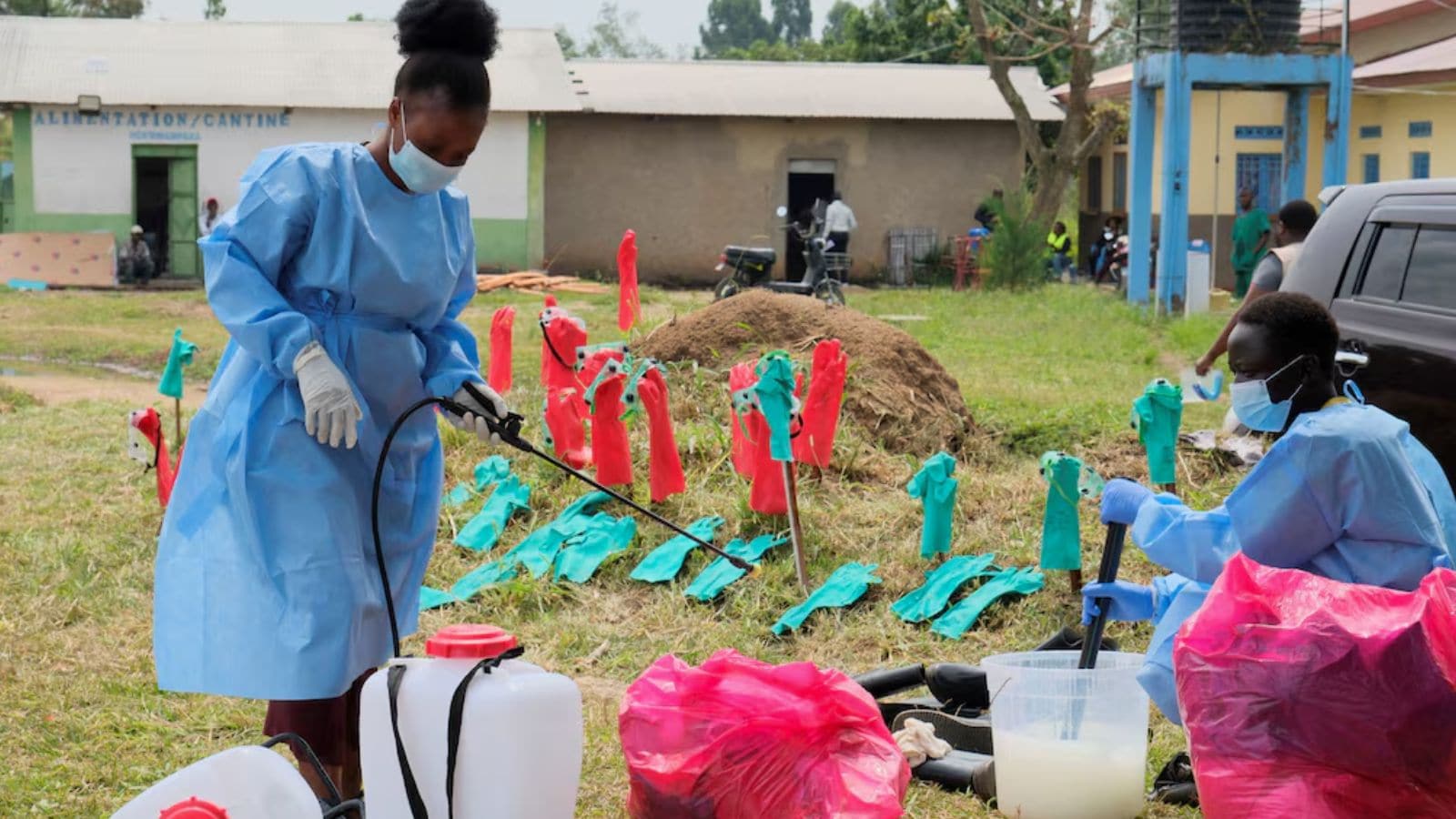
An aggressive outbreak of the Bundibugyo ebolavirus is tearing through the Democratic Republic of the Congo and crossing into Uganda. Total cases in the DRC have climbed to 1,926, with 702 recorded deaths. The virus has just breached two new provinces, Haut-Uele and Tshopo. Right on cue, a major scientific response just kicked off in the UK. The Oxford Vaccine Group has officially launched the world’s first Phase I clinical trial for a vaccine targeting this specific strain.
The trial is called BD-Ebov. It will test an experimental shot known as ChAdOx1 BDBV on 50 healthy adults aged 18 to 55 in Oxford. While news feeds are flooded with updates on general health emergencies, this trial represents a fascinating, high-stakes sprint in medical history. Scientists built this vaccine in a staggering eight weeks. Meanwhile, you can read related events here: Why Local Medical Training Changes Everything For Future Nurse Practitioners.
The Ebola Strain Everyone Forgot About
Most people think of Ebola as a single, uniform monster. It isn't. Scientists have identified six distinct species of the virus. The one you usually hear about is the Zaire strain, which caused the horrific West African epidemic between 2014 and 2016 and has multiple approved vaccines and treatments. Bundibugyo is entirely different. It's a rarer, neglected variant that kills roughly one-third of the people it infects.
Because it happens less frequently, pharmaceutical giants haven't rushed to create a commercial market for it. Right now, there are exactly zero licensed vaccines or approved antiviral drugs specifically for the Bundibugyo strain. When an outbreak hits, doctors on the ground are essentially left with supportive care, balancing fluids and hoping the patient's immune system wins the fight. To explore the full picture, check out the recent report by World Health Organization.
The current outbreak was declared a public health emergency back on May 17. Since then, the virus has moved faster than traditional bureaucratic drug development could ever dream of keeping up with. This isn't just a local crisis in Central Africa anymore either. A United States citizen working for a humanitarian organization in the DRC recently tested positive for the Bundibugyo strain and was just evacuated to Frankfurt University Hospital in Germany for treatment in a specialized isolation unit. Another American was treated in Berlin back in June. The geographical barriers we like to imagine simply don't exist.
Inside the Eight Week Vaccine Sprint
How do you go from an outbreak declaration to a human clinical trial in under two months? You don't start from scratch. The team at Oxford’s Pandemic Sciences Institute and the Oxford Vaccine Group didn't invent a new technology for this crisis. They repurposed an old, reliable workhorse.
The ChAdOx1 BDBV vaccine relies on the exact same viral vector platform that powered the Oxford/AstraZeneca COVID-19 vaccine. That shot saved an estimated six million lives in its first year of deployment alone. By utilizing a platform with a well-documented history, researchers bypassed years of foundational safety testing.
The science behind it is straightforward. Researchers take a common cold virus that infects chimpanzees and genetically alter it so it can't replicate or cause illness in humans. This harmless virus acts as a microscopic delivery truck. It carries a tiny piece of genetic material from the Bundibugyo Ebola virus into the human body. Once inside, your cells read these instructions and produce a single, harmless Ebola protein. Your immune system spots this foreign protein, throws a red flag, and builds defenses against it. If a vaccinated person ever encounters the real, wild Bundibugyo virus later, their immune system already has the blueprints to fight back.
Professor Katrina Pollock, an MRC Clinician Scientist in Vaccinology and the Chief Investigator of the trial, noted that running early-stage trials for new vaccines is precisely how teams prepare for sudden outbreaks. The goal here is speed without cutting corners on human safety.
The Logistics Miracle in India
A brilliant vaccine design is completely useless if it only exists inside an Oxford laboratory flask. This is where global manufacturing partnerships come into play. The Coalition for Epidemic Preparedness Innovations stepped in with an immediate $8.6 million funding package to advance this research. But the real heavy lifting on the production side happened in Pune, India.
The Serum Institute of India, led by CEO Adar Poonawalla, teamed up with Oxford to scale production at a dizzying pace. In a matter of just two weeks, the facility manufactured and stockpiled roughly 620,000 doses of the ChAdOx1 BDBV vaccine candidate. They also shipped 4,000 investigational doses directly to the UK to get the clinical trial off the ground.
Think about that timeline. Manufacturing over half a million doses of an experimental vaccine to strict clinical standards in 14 days is nearly unprecedented. It means that if this Phase I trial in Oxford shows positive safety and immune data over the coming weeks, a massive stockpile is already waiting to be deployed for late-stage field trials in Africa.
What Happens in the Trial
The 50 volunteers currently being recruited in Oxford are the vanguard for this entire strategy. Over the next few weeks, these individuals will receive their doses and undergo intense medical monitoring. Because Phase I trials focus purely on safety and tolerability rather than whether the vaccine stops a live infection, researchers will be looking closely for adverse side effects.
Naturally, there are risks. The original Oxford/AstraZeneca COVID-19 vaccine faced restrictions in several countries after a tiny fraction of recipients—roughly one in 100,000—developed rare blood clotting issues. Because the new Ebola vaccine uses the same underlying platform, it could theoretically carry a similar risk. However, context is vital here. A one-in-a-hundred-thousand risk of a treatable side effect looks very different when contrasted against a wild virus that boasts a 33% mortality rate. Professor Pollock has stressed that the platform has been given to millions of people safely, and every potential volunteer is fully briefed on what they are stepping into.
Participants will be monitored closely for a full year, but the Oxford Vaccine Group expects to see preliminary blood data much sooner. They want to see if the volunteers develop the specific antibodies needed to neutralize the Bundibugyo virus.
The Bigger Picture in the Democratic Republic of the Congo
While Oxford watches its volunteers in the UK, a parallel medical effort is launching directly inside the conflict-threatened zones of the DRC. The World Health Organization has helped launch a record-breaking treatment trial named Partners, which is testing two experimental drugs on infected patients.
One drug is remdesivir, an antiviral developed by Gilead Sciences. The other is MBP134, a highly specialized monoclonal antibody cocktail created by Mapp Biopharmaceutical that uses two engineered proteins to bind to and neutralize the virus. Both treatments have successfully saved animal models infected with Bundibugyo, and health workers are racing to see if they can replicate those results in humans.
This dual track of testing vaccines in the UK and therapeutics in the DRC shows how the global health infrastructure has evolved. During the catastrophic 2014 West African outbreak, it took over a year just to get clinical trials organized on the ground. This time, teams managed to set up treatment protocols and enroll the first patients within six weeks of the emergency declaration.
What Comes Next
If you want to track the progress of this medical intervention, look out for these specific milestones over the next few months.
- Trial Screening: Keep an eye on the recruitment completion for the 50 UK volunteers. Vaccinations are slated to begin within weeks once final regulatory sign-offs clear.
- Data Release: Watch for early antibody response data from the Oxford Vaccine Group. This preliminary data will prove whether the shot triggers the expected immune response.
- African Field Studies: Look for announcements from the Medical Research Council/Uganda Virus Research Institute and the London School of Hygiene and Tropical Medicine. They are already laying the groundwork for clinical studies in Uganda to test the vaccine in real-world environments.
- Stockpile Deployment: If late-stage data looks solid, CEPI and the Serum Institute of India will look to clear their 620,000-dose stockpile for emergency use authorization, allowing frontline healthcare workers in the DRC and Uganda to get immunized.
This isn't just about stopping one outbreak in Central Africa. It's a live test of a rapid-response system designed to prevent the next global health disaster before it starts.