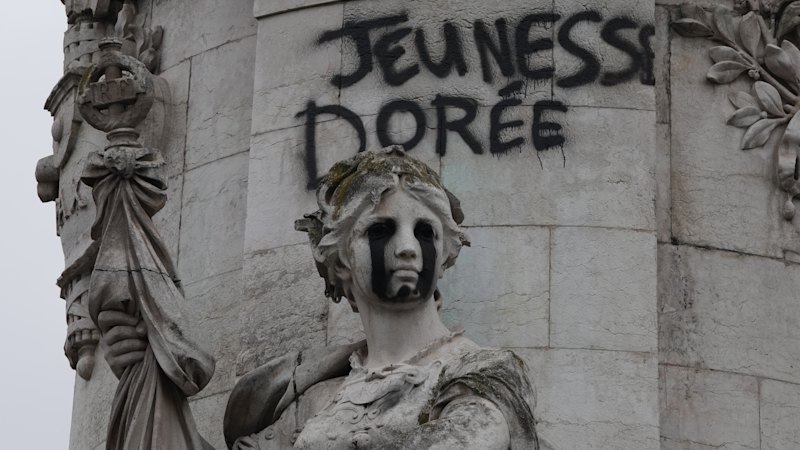
When military boots hit the pavement in Paris, you know a political crisis has crossed a line. The French government didn't deploy troops just to manage rowdy crowds. They did it because downtown Paris resembled a war zone after a weekend of extreme looting, arson, and violent clashes that caught local law enforcement completely off guard.
If you're wondering how France reached this breaking point, look past the burning cars and shattered storefront windows. The chaos on the streets isn't random. It’s the explosive collision of opportunistic criminality, deep-seated economic frustration, and a political establishment that's losing its grip.
The Reality on the Ground Around Place de la Republique
Walk down Rue Voltaire or near the Place de la Republique right now, and you'll see shop owners boarding up windows with plywood. Store managers like Kevin, who runs a local manga shop, spent their week counting losses after thieves made off with high-end collectibles like rare Pokémon cards worth up to three thousand euros. These weren't confused teenagers throwing rocks. They were organized groups operating with chilling precision, targeting luxury brand stores, footwear outlets, and specialty shops while police resources were stretched thin across the capital.
Meanwhile, local authorities in cities like Limoges confirmed that an arson attack destroying the historic town hall was tied to radical ultra-left actors on security watch lists. At the same time, hard-left figures like Jean-Luc Mélenchon face harsh backlash from political rivals for allegedly encouraging anti-police sentiment, symbolized by the ubiquitous "ACAB" graffiti splashed across Parisian walls.
Why the Political Fallout Benefits Marine Le Pen
Every major crisis creates a political winner, and right-wing leader Marine Le Pen is capitalizing heavily on the current instability. Fresh polling data from Ifop for Le Figaro shows the National Rally stretching its lead, pulling between 34 and 38 percent support ahead of next year's presidential election.
Voters are furious. When riots break out, people want strength and visible security. While President Emmanuel Macron faced heavy public criticism for maintaining an international state visit to Qatar while the capital burned, figures like Le Pen and National Rally president Jordan Bardella hammered the administration for a weak, delayed response.
The political math is simple. If centrist and left-wing factions can't restore public trust and address the legitimate anxieties fueling public anger, the path to the Élysée Palace becomes wide open for the right.
What Happens Next on French Streets
Protest organizers aren't stopping. Left-wing groups and elements echoing the 2018 "yellow vest" frustrations over soaring fuel prices and household living costs are planning fresh demonstrations. Prime Minister Sébastien Lecornu has promised a massive security deployment to lock down the city for the upcoming weekend, but business owners remain terrified that more protests will simply invite another wave of destruction.
France is staring down a volatile mix of genuine economic hardship and weaponized violence. Until Paris can bridge the widening chasm between its citizens and political leaders, the peace on the streets will remain fragile at best.