If you think Día de los Muertos is just the Mexican version of Halloween, you've got it completely backward. While Halloween leans into fear, ghosts, and things that go bump in the night, the annual Day of the Dead celebrations are a vibrant, unapologetic rejection of grief. It is a family reunion across the veil.
Every year between October 31 and November 2, millions across Mexico transform public squares, quiet family homes, and ancient cemeteries into glowing oceans of orange. Skulls grin from storefront windows, brass bands echo through midnight graveyards, and the sharp, unmistakable scent of marigolds hangs thick in the air. But if you show up expecting a somber funeral procession, you're in for a massive shock.
The Reality Behind the Marigold Petals
Those bright orange flowers—known locally as cempasúchil—aren't just there to look pretty. Tradition dictates that their pungent aroma and vivid color act as a literal compass for wandering souls. Families lay down thick trails of petals from the front door straight to the household altar, ensuring the spirits of their ancestors don't get lost on their annual trip back home.
You'll see elaborate ofrendas (altars) set up everywhere from grand museums in Mexico City to tiny kitchen tables in Oaxaca. These aren't shrines of worship; they're welcoming stations. They are stacked high with the favorite foods, mezcal, sweet pan de muerto, and photographs of the departed. If Uncle Mateo loved strong coffee and sweet tamales while he was alive, you bet his photo will be sitting right next to a steaming mug of it on November 2nd.
Beyond the Hollywood Myth
Pop culture loves to paint Día de Muertos as an ancient, unchanged Aztec ritual. The truth is much more interesting. Modern Day of the Dead is a fascinating collision of indigenous Mesoamerican beliefs and Spanish Catholic imposition.
Centuries ago, Aztec festivals honoring death and the underworld were shifted by colonizers to align with All Saints' Day and All Souls' Day. What survived wasn't pure Aztec tradition or pure Catholicism, but a resilient hybrid.
And that massive, cinematic skeleton parade winding down Paseo de la Reforma in Mexico City? It hasn't been celebrated for centuries. It was actually invented in 2016, heavily inspired by the James Bond film Spectre. Purists sometimes scoff at it, but locals embraced it. It turned a private, domestic tradition into a roaring global spectacle that draws millions of international travelers.
Where to Experience the Real Celebration
If you want to dodge the commercialized noise of downtown capital parades, you have to look elsewhere.
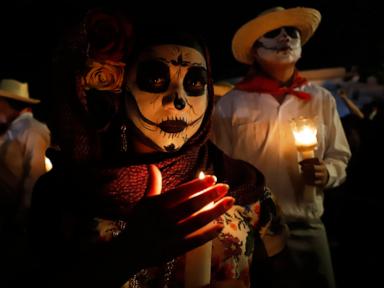
Head down to Mixquic, a historic neighborhood in the southern part of Mexico City. When the sun dips below the horizon on November 2nd, the local cemetery transforms during the alumbrada. Thousands of candles flicker over thousands of graves while families sit quietly among the headstones, sharing stories, whispering prayers, and listening to local musicians strumming guitars well into the freezing early morning hours.
Oaxaca offers another layer entirely. Markets like the Mercado de Abastos overflow with mountains of dried chiles, chocolate blocks, and intricate sugar skulls weeks before November arrives. The air buzzes with an energy that feels completely detached from ordinary calendar time.
How to Participate Without Being Tone-Deaf
If you plan on visiting Mexico for the festivities, leave your assumptions at home. This isn't a theme park. It's a deeply personal cultural practice built on remembrance and love.
- Ask before snapping photos: Never stick a camera lens into someone's face while they're grieving at a graveside vigil. Always check if photography is welcome.
- Support local artisans: Buy your sugar skulls and handmade skeleton art directly from markets like Mercado de Jamaica rather than cheap plastic imports.
- Dress respectfully: Face painting as La Catrina is widely welcomed and loved by locals, but keep your outfits culturally aware rather than treating the holiday as a cheap excuse to wear a Halloween costume.
Death isn't treated as an absolute end in Mexico. It's treated as the second act. Pack a warm jacket for the chilly November nights, grab a piece of sweet bread from a street vendor, and go witness how a country chooses to remember its dead with a massive party instead of tears.