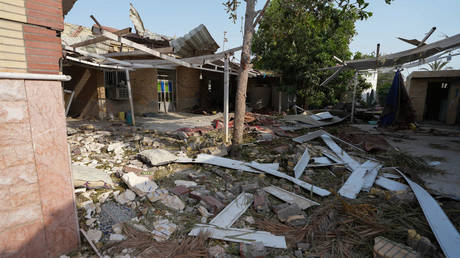
You’ve seen the footage. A fast-moving wildfire sweeps through a neighborhood, leaving a hellish moonscape of gray ash, charred vehicles, and blackened foundations. But right in the middle of the devastation, a single house stands completely untouched, its green lawn and white trim pristine.
It looks like a miracle. It isn’t.
When a wildfire turns into an urban inferno, firefighters face a brutal mathematical equation: they don’t have enough trucks, water, or time to protect every structure. In the worst scenarios, crews have to make a counterintuitive, gut-wrenching choice. They intentionally burn down select properties—or let them go up in flames—to create a buffer that saves the rest of the community.
This isn't about giving up. It's about strategic survival. If you think the local fire department is a guarantee that your roof won't ignite, you're missing the reality of modern firefighting.
The Brutal Logic of Tactical Sacrifices
Wildland firefighting relies heavily on fuel management. To stop a fire, you take away its food. In an open forest, crews do this by cutting fire lines, using bulldozers, or setting intentional backfires to burn out brush before the main fire front arrives.
But when a wildfire crosses the wildland-urban interface—the zone where houses meet nature—the houses themselves become the fuel.
A wood-framed home packed with furniture, synthetic materials, and a dry roof is basically a massive block of highly concentrated fuel. Once a house ignites, it radiates intense heat, often reaching over 1,000 degrees Celsius. This heat is more than enough to shatter the windows of the house next door, ignite its siding, and start a chain reaction down the street.
When a neighborhood begins to feed the fire, structural firefighters are forced into a defensive posture. If a specific house is already partially involved, has heavy fuel loads surrounding it, or sits in a dangerous choke point where the wind is funneling heat, commanders will write it off.
Sometimes, they’ll even use drip torches to burn out combustible materials around a structurally sound home, sacrificing a deck, a shed, or an adjacent property to stop the fire’s momentum. It’s cold, fast triage. They choose to lose one to save ten.
Why Your Home Survives or Dies Before the Fire Arrives
Most people think a house burns down because a massive wall of roaring flames rolls over it. Jack Cohen, a retired researcher with the U.S. Forest Service who spent decades studying home ignitions, proved that this rarely happens.
Instead, houses die from ember blizzards.
High winds can carry millions of tiny, burning pinecones, bark chips, and embers miles ahead of the actual fire front. These embers act like heat-seeking missiles. They bounce across your yard, land in your gutters, and wedge themselves into the plastic vents under your roof.
If those embers find dry leaves, plastic trash cans, or firewood piled against the wall, they start a small, slow-burning fire. By the time the main wildfire actually arrives, the house is already burning from the inside out.
The lone houses that survive aren't saved by luck or a last-minute stand by a fire crew. They survive because they were hardened long before the smoke appeared.
How to Harden Your Property Right Now
If you live anywhere near a fire-prone area, you can't rely on a fire truck parked in your driveway. You have to make your home inherently unburnable.
- Clean the gutters: This is the single most common ignition point. Dry leaves and pine needles in a gutter turn a metal or asphalt roof into a giant tinderbox.
- Swap your vents: Standard attic and crawlspace vents are made of cheap plastic or wide mesh. Replace them with ember-resistant vents featuring 1/8-inch or finer metal mesh. This keeps the embers out of your attic.
- Create a zero-ignition zone: Take a hard look at the first five feet around your foundation. Remove wood mulch, bushes, and wooden fences. Replace them with gravel, concrete patios, or stone walkways. If an ember lands next to your house, it should hit dirt or stone, not fuel.
- Move the woodpile: Never stack firewood against your house or under a deck. Move it at least 30 feet away.
Stop Waiting for a Miracle
The policy of sacrificing structures to break a fire's path highlights a harsh truth: the climate is changing faster than our firefighting infrastructure can keep up. Expecting emergency services to pull off a miracle for every single property is unrealistic and dangerous.
Take a Saturday to clear your roof, swap out your vents, and pull back the brush. Make your house the one that stands alone when the smoke finally clears.