You can love the smell of incense, the quiet solemnity of a high altar, and centuries of tradition without wanting to overthrow the Vatican. That shouldn't be a radical statement. Yet, in the polarized world of modern Catholicism, simply preferring the Latin Mass puts a target on your back. People assume you're an ultraconservative rebel plotting a schism in your basement. They're wrong.
The toxic narrative around the Traditional Latin Mass reached a boiling point in July 2026. Pope Leo XIV officially declared that the Society of St. Pius X broke away from the Church after ordaining bishops without papal approval. It made global headlines. Mainstream commentators quickly painted the entire traditional movement as a fringe political cult. They love a good culture war story. But if you step away from the internet and look at real parishes, you see a completely different reality.
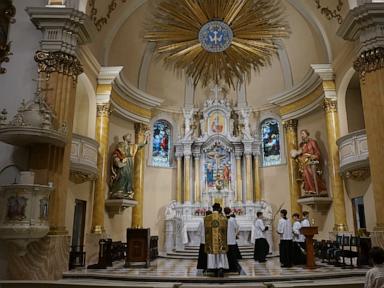
Look at the Church of Saint Agnes in St. Paul, Minnesota. It's a historic inner-city parish originally built by German immigrants. Every Sunday, incense rises to an elevated pulpit while thirteen altar boys assist the priest. The liturgy looks and sounds exactly like the ancient rites. But there's a crucial difference here. This community is fiercely loyal to Rome. They don't see tradition as a weapon. They see it as a home.
The Reality of Liturgical Coexistence
Saint Agnes doesn't look like a battleground because it isn't one. The parish doesn't just offer the old rite. They offer one traditional Latin Mass every weekend, a modern version of the Mass in Latin, and four regular English services. They all exist under the same roof.
This flies in the face of the popular narrative that traditionalists can't get along with the rest of the Church. The pastor, Reverend John Ubel, made this clear during his recent homilies. He reminded his congregation that the Catholic faith is a living tradition. Being rooted is great. Being stuck is something else entirely.
When you look at who actually sits in these pews, the political stereotypes fall apart. Sociological data shows that most people aren't there to make a political statement. Stephen Cranney, a lecturer at the Catholic University of America, has spent years researching American Catholics who attend the old rite. His data reveals that the vast majority are drawn to the aesthetic beauty, the deep sense of reverence, and the historical continuity. Only a tiny fraction oppose the reforms of the Second Vatican Council or want to defy the Pope.
Why Families Choose the Ancient Rite
For parents, the choice is often about giving their kids something solid. The modern world is chaotic. It's noisy and disposable. The ancient liturgy offers an antidote to that constant buzz.
- Radical Silence: The old rite builds in long stretches of quiet prayer where the priest speaks inaudibly.
- Visual Focus: The priest faces the altar, not the crowd, directing everyone's attention toward the tabernacle.
- Historical Anchoring: Worshiping with the exact same words used by saints across centuries creates a sense of permanence.
Parishioners like Nell O'Leary Alt, a mother of five who grew up at Saint Agnes, admit the silence can be terrifying at first. When you have toddlers who giggle and fuss, quiet moments feel exposed. But her family stuck with it because they fell in love with the depth of the worship. They also attend the English Masses. For them, it isn't an all-or-nothing game.
The Shadow of Real Schism
We can't ignore the real tension that triggered this conversation. The Society of St. Pius X, or SSPX, was founded decades ago specifically to reject the modernizing reforms of Vatican II. They operated in a canonical gray area for a long time. That ended when they proceeded with unauthorized episcopal consecrations, echoing the infamous 1988 schism under Archbishop Marcel Lefebvre.
Pope Leo XIV tried to stop them. He pleaded for unity. When they ignored him, the Vatican had to enforce canon law. Prominent Church leaders, including Cardinal Gerhard Müller, pointed out that the split isn't actually about Latin or liturgy. It's about authority. You can't have a global Church if local groups decide they can mint their own bishops whenever they please.
This formal rupture leaves thousands of well-meaning Catholics in a difficult spot. Many had been attending SSPX chapels simply because they wanted the traditional Mass, not because they wanted to leave the Catholic Church. Now, those people face a choice. Archbishop Bernard Hebda of St. Paul and Minneapolis immediately reached out to them, pointing out that the archdiocese offers approved, loyal Latin Masses in six different locations. The message was clear. You don't have to choose between tradition and the Pope.
The Problem With Papal Restrictions
Part of the reason people end up at unapproved chapels is that the official options have shrunk. Pope Francis heavily restricted the traditional Mass between 2021 and 2023. He argued that the old rite was being used to divide parishes and undermine Vatican II. He stripped local bishops of their automatic authority to permit it, forcing them to get explicit permission from Rome.
That decision backfired in many places. It alienated young, devout families who had nothing to do with online political feuds. Interestingly, leaked Vatican documents revealed that most bishops around the world were actually perfectly happy with how the Latin Mass was coexisting in their dioceses before the crackdown.
When you ban something beautiful, you don't make people love the alternative. You just make them resentful. Parishes like Saint Agnes prove that the best way to handle liturgical preferences is through pastoral charity, not heavy-handed bureaucratic bans.
Moving Past Liturgical Tribalism
The biggest mistake Catholics make right now is falling into liturgical tribalism. One side claims the modern Mass is irreverent banality. The other side claims the Latin Mass is an outdated museum piece for rigid extremists. Both sides are wrong.
Tom Graff, a lifelong Catholic who sings in the choir at Saint Agnes, refuses to buy into the binary. He loves Schubert’s Tantum Ergo just as much as modern hymns like On Eagle’s Wings. He teaches his four children that the value of the Mass doesn't change based on the language spoken at the altar. It’s about the sacrifice of Christ. Period.
Father Ubel sums it up perfectly. It isn't a competition to see who is more Catholic. Inclusion shouldn't just be a buzzword for progressive causes. It has to apply to traditionalists too.
How to Navigate the Current Crisis
If you love the traditional liturgy but want to stay firmly within the Church, you need a strategy. Don't let online commentators or schismatic groups dictate your faith.
- Seek Regularized Parishes: Look for diocesan Latin Masses or communities run by orders like the Priestly Fraternity of St. Peter (FSSP) or the Institute of Christ the King. These groups have explicit papal approval.
- Support Your Local Bishop: Show the hierarchy that traditional Catholics are a blessing to the diocese, not a headache. Volunteer, tithe, and participate in broader parish life.
- Ditch the Online Outrage: The Catholic internet is an absolute dumpster fire of anger and division. Step away from the blogs and focus on your local community.
- Practice Charity First: Never treat someone who prefers the English Mass as a second-class Catholic. Humility matters more than how many altar boys your parish has.
The path forward isn't complicated. Stay rooted in the rich traditions that sustained the saints for generations, but keep your eyes on Rome. True fidelity isn't about cherry-picking which papal decrees you want to follow. It's about building a church where the ancient and the modern can sit in the same pew, breathe the same incense, and pray for the exact same unity.