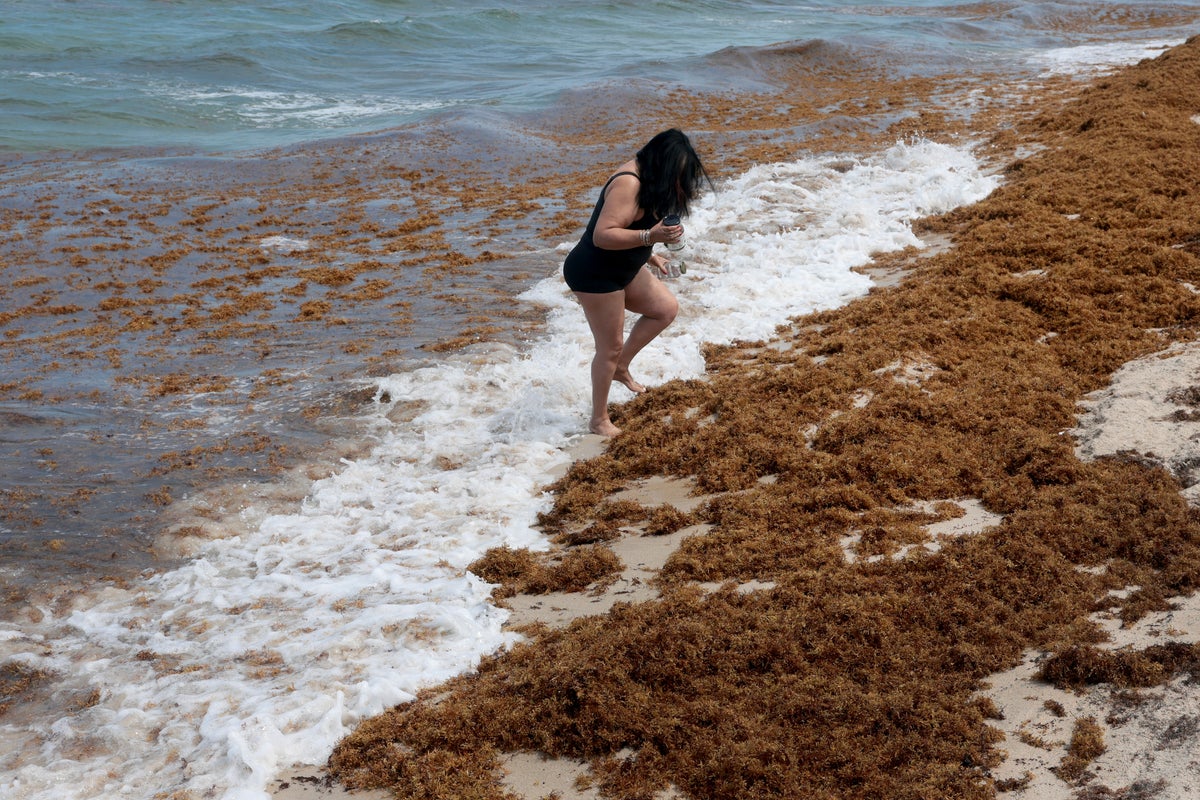
You step onto the sand expecting a fresh ocean breeze, but instead, your lungs fill with the overpowering stench of rotten eggs. If you visit a Florida beach this summer, that's exactly what you'll encounter.
Massive, tangled mats of brown sargassum seaweed are choking coastlines across the Sunshine State. The problem is so intense that researchers from the University of South Florida (USF) are tracking roughly 28.9 million metric tons of the stuff drifting across the Atlantic. It's a massive amount of biomass that is already setting records, and scientists warn that the problem is migrating far beyond Florida's typical hot spots.
If you think this is just a minor aesthetic nuisance for vacationers, you're missing the bigger picture. This seaweed influx represents a fundamental shift in our ocean chemistry, an expensive taxpayer burden, and a rising health concern that other coastal states need to prepare for immediately.
Why the Atlantic Seaweed Belt is Growing Out of Control
Sargassum isn't inherently evil. Out in the open ocean, it forms a vital ecosystem. It drifts in massive, floating patches that provide food, shelter, and breeding grounds for juvenile sea turtles, crabs, and dozens of fish species. The trouble starts when the balance tips from a healthy habitat into a runaway environmental crisis.
Scientists at USF’s College of Marine Science note that before 2011, major blooms were largely contained to the Sargasso Sea in the North Atlantic. That year, everything changed. A massive expansion created the Great Atlantic Sargassum Belt, a carpet of weed stretching all the way from the coast of West Africa to the Gulf of Mexico.
The explosion isn't an accident or a mystery. It's fueled directly by human activity. Millions of tons of agricultural fertilizers containing nitrogen and phosphorus wash down major river basins like the Amazon and the Orinoco in South America. When these nutrient-heavy chemicals dump into warm tropical waters, they act like high-powered plant food. Combined with climbing ocean temperatures that extend the seaweed's growing season, you get a self-sustaining growth loop that expands by double digits nearly every year.
The Toxic Reality on the Sand
The real nightmare begins about 48 hours after the seaweed hits the shore. Out on the water, the living mats are relatively odorless. Once stranded on dry land under the baking sun, the algae dies and begins to rot.
The decomposition process releases a cocktail of gases, including ammonia, methane, and hydrogen sulfide. Hydrogen sulfide is the culprit behind that sickening rotten-egg smell. While short-term exposure won't kill you, the Florida Department of Health explicitly warns that these fumes can cause serious eye, nose, and throat irritation. For locals or tourists with underlying respiratory issues like asthma, spending an afternoon downwind of a sargassum pile can trigger severe breathing distress.
The health hazards don't stop with the air quality. As the thick brown carpets rot on the shoreline, they transform into ideal breeding grounds for bacteria and biting insects. Stepping into a pile of old seaweed puts you at risk of encountering sea lice, larvae, and trapped jellyfish that can leave you with painful stings and blisters.
Other Coastal States are Next in Line
If you live in Texas, Louisiana, or even up the Eastern Seaboard, don't assume this is just Florida's problem to solve. Shifting ocean currents and changing wind patterns mean these massive blooms are expanding their territory.
According to recent oceanographic data models managed by NOAA’s Atlantic Oceanographic and Meteorological Laboratory, the risk of coastal inundation is climbing rapidly throughout the entire Gulf of Mexico. Scientists who oversee NOAA’s Sargassum Inundation Risk tool have upgraded their systems to provide daily, high-resolution tracking because the seaweed fronts are moving faster and shifting paths more unpredictably than ever before.
Louisiana’s wetlands and the tourist-heavy beaches of the Texas Gulf Coast are directly in the crosshairs of current drift patterns. When these massive mats migrate into calmer, shallow bay waters, they don't just ruin a beach day—they block sunlight from reaching native seagrass beds and coral reefs. As the massive volume of algae decays in shallow water, it strips the dissolved oxygen right out of the aquatic environment, creating localized "dead zones" that lead to massive fish kills.
The Millions of Dollars Washing Ashore
Cleaning up this mess is an logistical nightmare that strains municipal budgets. You can't just send standard bulldozers onto the sand to scoop it up.
In Miami-Dade County alone, sargassum removal eats up roughly $9 million of the annual beach maintenance budget. Crews have to deploy specialized, lightweight tractors to rake the shoreline daily. Because the arrival of the seaweed overlaps perfectly with sea turtle nesting season, workers from local conservation programs have to manually scout the beaches every single morning to mark nests and protect hatchlings before the heavy raking equipment can even start its engines.
Some cities are trying to find creative workarounds. Fort Lauderdale Beach uses a system that transports collected seaweed to inland facilities where it can decompose safely into nutrient-rich compost, saving the city about $100,000 a year in landfill dumping fees. But when millions of tons keep arriving every 12 hours, composting can't scale fast enough to keep up with the sheer volume of the incoming tide.
What You Should Do on Your Next Coastline Visit
Dealing with a sargassum surge requires changing how you plan and execute your beach trips. If you want to avoid a ruined vacation or an unexpected trip to an urgent care clinic, keep these immediate steps in mind:
- Check the daily trackers before booking: Don't rely on generic tourism photos. Use NOAA’s active Sargassum Inundation Risk map or check crowdsourced platforms like Sargassum Monitoring to see real-time, daily field photos of the specific beach you plan to visit.
- Stay upwind if you have respiratory issues: If you suffer from asthma or allergies, keep a safe distance from large banks of decomposing seaweed. If you can smell the rotten-egg odor clearly, you're close enough to inhale irritating levels of hydrogen sulfide.
- Keep kids and pets out of the seaweed piles: Avoid letting children play in or near the shoreline accumulation. The thick mats conceal biting insects, jellyfish fragments, and high concentrations of bacteria.
- Pivot to alternative coastal activities: If your favorite beach gets hit by a major inundation event, skip the saltwater swim. Move your plans toward inland freshwater springs, pool complexes, or sound-side zones that are protected from open-ocean currents.
The expanding seaweed belt is a clear symptom of a changing global ocean, and it's a reality that coastal communities will be managing for the foreseeable future.