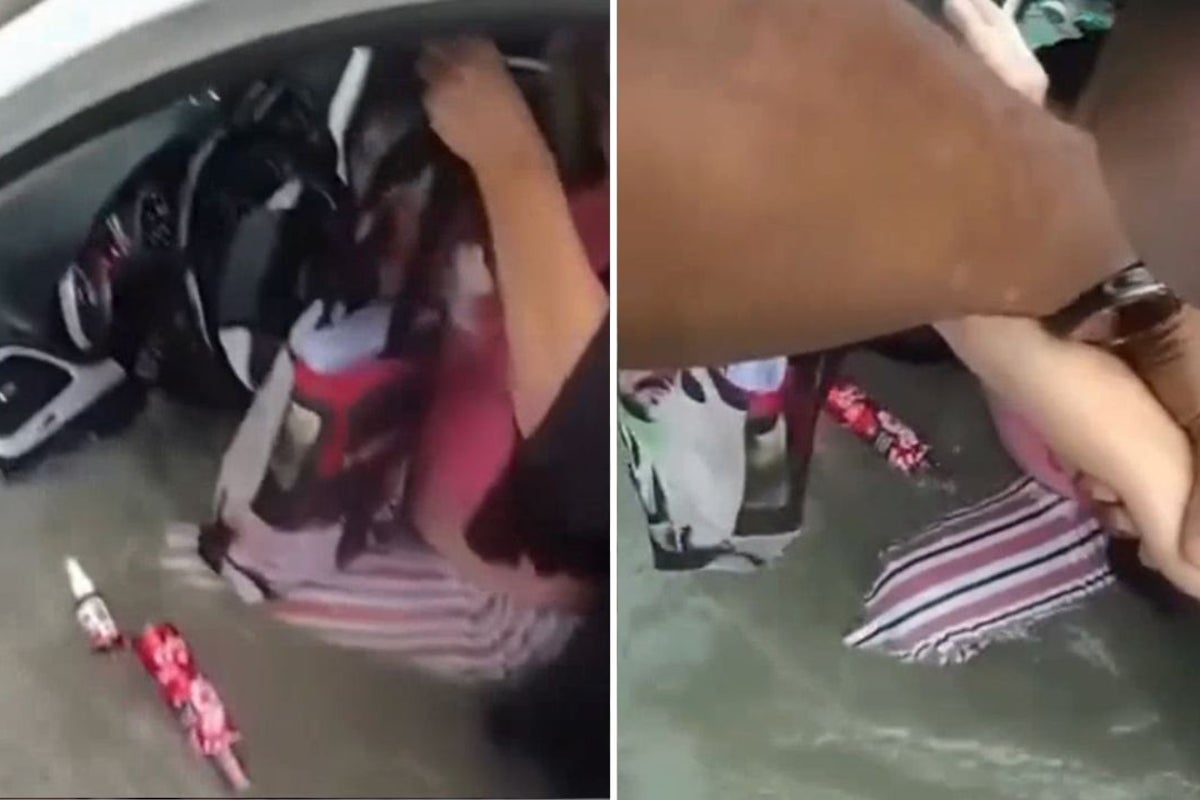
When a viral video hits your feed showing a car nose-down in a flooded pit, it is easy to look at it as just another piece of passing internet drama. You watch it for ten seconds, marvel at the chaos, and scroll on. But the terrifying reality behind the recent submerged car rescue in Virginia deserves more than a quick swipe. It happened right in the middle of a Tuesday afternoon rush hour in downtown Norfolk, turning a routine commute into an absolute fight for survival.
The incident occurred at the busy intersection of East City Hall Avenue and Saint Paul's Boulevard, just off the Interstate 264 West exit ramp. A massive underground water main break combined with severe, blinding rainstorms to hollow out the earth right beneath the asphalt. Within minutes, a 7-foot-deep, water-filled crater opened up on the roadway. An unsuspecting driver plunged straight into it. Her SUV instantly became trapped as rushing, muddy water filled the cabin. In similar news, read about: Why The Tourist Camp Attack Accusations Change Everything.
This was not a slow-moving event where people had time to map out a perfect strategy. It was a chaotic crisis that required split-second decisions. Understanding what really happened during this rescue reveals the hidden dangers of our aging city infrastructure and how fast things can go south when you are behind the wheel.
http://googleusercontent.com/lmdx_content/gAWQSeSCwMFLoJzpAMxHuEDxCuvQwgGTyAhEAEBqhwvlyubRsaQuGsrMZRcitegZByUOKatTdCexeJTwWfRJoeHjzPyPMIxXrYXgbgLMXoEeLiiWvCBLkIsRZSazKZxhpgCkRLHdCRMQWTiOwXSpdNVyJSwCQVqhfcALKihLOzYDTRdKERdOKkKSHwtNdWwCqXPSaiH28432 USA Today has provided coverage on this critical topic in extensive detail.
Anatomy of a Underground Crisis
Most people assume sinkholes only happen in rural areas with heavy limestone deposits. That is a huge misconception. Urban sinkholes are an entirely different beast, often triggered directly by utility failures. In this case, city officials later confirmed that an older pipeline tied to a 16-inch water main gave way.
When a large water pipe bursts under pressure, it behaves like a high-powered pressure washer beneath the street. It rapidly erodes the supportive soil and sand layers beneath the concrete and asphalt. The road looks perfectly solid from above, but it is actually a hollow shell. Add the immense weight of modern vehicles and the stress of a sudden torrential downpour, and the entire structure collapses without warning.
The driver of the white SUV had no chance to swerve or brake. One second she was navigating the heavy storm on her way to a work-related court appearance, and the next, the front end of her vehicle dropped into a roaring torrent.
Seconds Count When the Water Rushes In
When a car plunges into water, the pressure dynamics change instantly. Norfolk Police Officer AJ Stevenson arrived at the scene near the I-264 ramp around 3:30 p.m. to find a horrific sight. The vehicle was tilting forward dangerously. Muddy water was rapidly rising around the doors, making it impossible for the driver to push her door open against the external hydro-static pressure.
Water weighs roughly 62.4 pounds per cubic foot. When a vehicle is submerged up to the window line, thousands of pounds of pressure push against the exterior door panels. A human being simply cannot overpower that force. The driver was trapped inside a sinking metal box while water forced its way through the seals and air vents.
Officer Stevenson did not wait for specialized rescue teams or tactical backup. He recognized that the vehicle was tilting further into the seven-foot cavern and could completely submerge at any moment. He stepped directly into the churning water, risking his own safety to reach the driver’s side of the vehicle.
The Forgotten Variable of Bystander Intervention
We live in an era where the default reaction to a crisis is often to pull out a smartphone and start recording. This rescue bucked that trend in a beautiful way. Bodycam footage and citizen recordings captured a vital dynamic that saved lives that afternoon. Everyday citizens stepped up to form a human anchor.
As Officer Stevenson leaned deep into the sinkhole to grapple with the jammed door and pull the panicking motorist out, the current threatened to sweep him under as well. A bystander named Brennan Feldman, along with several other strangers, rushed into action. They did not stand on the sidewalk and watch. They grabbed the officer’s heavy duty belt and anchored him to the solid ground above.
This collective effort highlights something psychological experts call the bystander effect, or rather, the breaking of it. When one person takes decisive action, it shatters the collective paralysis of a crowd. By securing the officer, these citizens allowed him to use his full physical strength to free the driver from the cabin just as the interior began to flood heavily.
The Immediate Response and Aftermath
Once freed from the driver's seat, the woman was pulled up the muddy slope of the crater to safety. Norfolk Fire-Rescue personnel immediately evaluated her at the scene. Miraculously, despite the sheer terror of the event and the physical toll of being dragged from a sinking vehicle, she did not require hospitalization.
While the human drama concluded successfully in a matter of minutes, the structural crisis paralyzed the city for days. The westbound lanes of City Hall Avenue were completely shut down from Tidewater Drive all the way to Saint Paul's Boulevard. State Police and the Virginia Department of Transportation had to close Exit 10 off I-264 West entirely, forcing thousands of daily commuters to reroute through Waterside Drive and Brambleton Avenue.
Fixing a crater of this magnitude is not as simple as dumping gravel and pouring a fresh layer of asphalt. Emergency contractors and city utility crews had to bring in heavy excavation machinery to stabilize the surrounding soil, pump out hundreds of thousands of gallons of escaping water, isolate the broken 16-inch main, and rebuild the subterranean pipeline infrastructure from scratch.
What to Do If Your Car Plunges Into Water
This event serves as a stark reminder that you need to know how to save your own life if you ever find yourself in a similar nightmare. Waiting for an officer like AJ Stevenson is a luxury you might not have. If your vehicle ever enters a sinkhole or deep floodwaters, you must act before the electrical system fails.
Remember the acronym SEAL to guarantee your escape.
- Seatbelts off. Unbuckle yourself immediately, and then unbuckle any passengers starting from the oldest to the youngest.
- Exteriors open. Roll down your windows right away. Do not try to open the doors. Opening a door lets water rush in faster and is often impossible due to water pressure.
- Assist others. Help children or passengers clear their seatbelts and move toward the open windows.
- Leave the vehicle. Climb out through the window as fast as possible. Move to the roof of the car if the water is deep or swim toward the nearest stable surface.
If your windows will not roll down because the water shorted out the power windows, you must use a dedicated window breaker tool to smash the tempered side glass. Strike the glass in the extreme corners where it is most vulnerable. Never try to smash the front windshield. It is made of laminated safety glass and is nearly impossible to break through from the inside.
Managing the Hidden Danger of Urban Sprawl
The Norfolk incident is a textbook warning about infrastructure vulnerabilities across the country. Many city pipe networks were laid down decades ago and are reaching the end of their structural lifespans. When heavy climate events hit, these older networks face unprecedented stress.
Staying safe means keeping your eyes on the road and avoiding large patches of standing water during heavy downpours. You never know if that puddle is two inches deep or a seven-foot crater waiting to swallow your vehicle whole. Trust your gut, take the long detour, and never try to drive through flooded roadways.
To protect yourself and your family moving forward, take these immediate actions:
- Purchase a high-quality window escape tool and mount it within arm's reach of the driver's seat using velcro or a bracket. Do not store it in the glovebox where you cannot reach it while suspended by a seatbelt.
- Regularly check your local city utility reports or traffic apps during heavy storms to identify known water main vulnerabilities or sudden road closures before you head out.
- Practice the mental rehearsal of unbuckling and identifying your escape windows so that your brain can bypass panic and move directly into action if an emergency ever occurs.