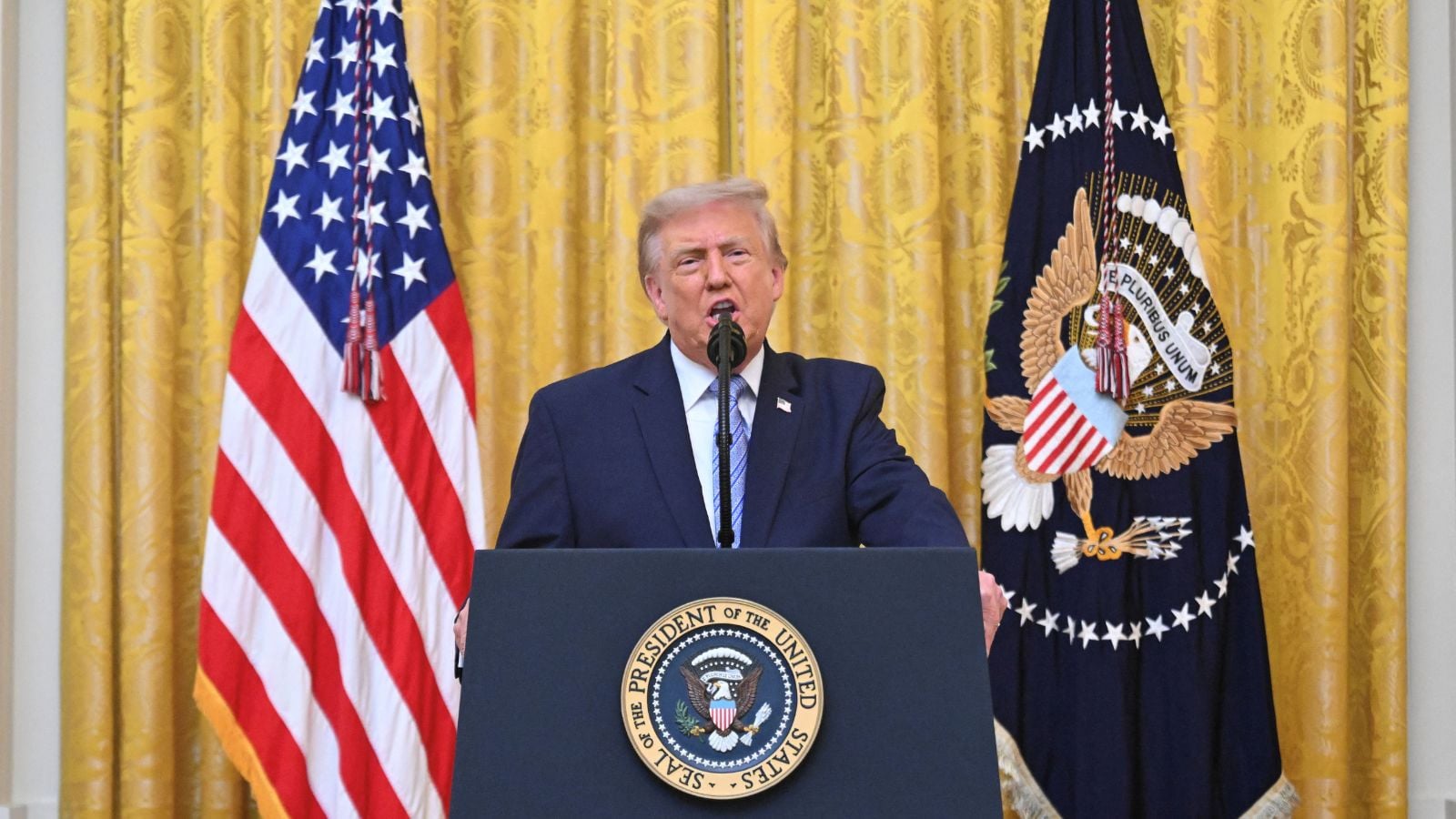
When Donald Trump blames Canada for wildfire smoke and threatens to weaponize trade policy over drifting ash, it is easy to dismiss it as standard political theater. The skies across the American Midwest and Northeast are currently choked with a gray, acrid haze. Air quality alerts have flashed warning signs for over 100 million Americans from Minnesota down to Virginia. In the middle of this environmental crisis, the White House dropped a political bombshell on Truth Social, declaring the smoke an "unnecessary invasion" and blaming Ottawa for "willful negligence" in managing its forests. The prescription from Washington? Tack the multi-billion-dollar cost of dealing with the pollution directly onto Canadian tariffs.
This is not just an angry social media rant. It is a highly strategic piece of political leverage that exploits real economic frustrations, supply chain vulnerabilities, and ongoing trade disputes between the two largest trading partners in North America. If you think this is simply about bad air, you are missing the underlying economic battle. The administration is using an environmental disaster to rewrite the rules of cross-border commerce at a time when the United States-Mexico-Canada Agreement (USMCA) sits in total limbo. Also making headlines recently: Why The End Of Duration Of Status Changes Everything For Indian Students In America.
Understanding what is actually happening requires looking past the sensational headlines. This dispute involves complex environmental realities, major constraints on executive tariff powers, and a deeply personal clash between Trump and newly minted Canadian Prime Minister Mark Carney.
The Core Conflict Behind Why Trump Blames Canada For Wildfire Smoke
The immediate spark for this latest trade row came on Friday, when Trump publicly took aim at the Canadian government's environmental record. He claimed that Canada's failure to properly clear brush and maintain its vast timberlands has resulted in dangerous, unhealthy air blowing south. He estimated that the resulting economic damage costs the United States billions of dollars. To recover those losses, Trump asserted that these expenses must be added to the tariffs Canada is already paying on its exports to the US. More information regarding the matter are detailed by Reuters.
The political response inside the United States was immediate and coordinated. Congressional Republicans quickly lined up behind the president. Ohio Senator Bernie Moreno went so far as to announce upcoming legislation aimed at penalizing Canadian officials, proposing higher tariffs, sanctions, and even a victims' fund for Americans affected by the smoke. Lawmakers from Michigan issued their own public warnings, suggesting the US might take unilateral action to protect its citizens if Ottawa fails to step up its forest management practices.
Across the border, Canadian officials are fighting back against the narrative. Prime Minister Mark Carney has noted that fighting climate change is a global responsibility rather than Canada's sole burden. Others have been much more direct. Ontario Premier Doug Ford pushed back hard, telling American politicians that if they want fewer fires, they should send firefighting aircraft and crew members instead of complaints. Ford point blank reminded Washington that Canadian crews have frequently crossed the border to help suppress massive blazes in places like Los Angeles. Canada’s Minister of Emergency Management, Eleanor Olszewski, released data showing that Canada has poured 12 billion Canadian dollars into forest sustainability and fire prevention since 2020.
Why Trimming Trees Cannot Stop A Continental Climate Reality
The core of the American complaint rests on the idea that Canada can simply log, clear, or groom its way out of wildfire seasons. This argument ignores the sheer scale of the North American wilderness. Canada is home to nearly 350 million hectares of forest, which makes up roughly nine percent of all the forest cover on Earth. Much of this land is remote, untouched wilderness where fires have been a natural, regenerative part of the ecosystem for thousands of years.
No government possesses the manpower or the money to clean up hundreds of millions of acres of wild timberland. The reality is that longer, hotter summers and persistent droughts are drying out the northern forests at an unprecedented pace. When a single lightning strike hits a remote patch of parched woods in northwest Ontario, a fire can grow completely out of control before human crews can even reach the area via aircraft.
The finger-pointing ignores the massive fires burning inside the United States. Right now, smoke is a two-way street. A massive wildfire in northern Minnesota has consumed over 63,000 acres, throwing plenty of its own smoke into the atmosphere. Active blazes are also ripping through heavy timber in Oregon, Washington, and Idaho. Total US wildfire acreage is running significantly above its ten-year average. The amount of American land scorched by fires annually has more than doubled over the last thirty years. Wildfires do not stop to check passports or respect international borders. Smoke travels wherever the wind blows it, meaning both nations regularly swap polluted air during severe fire seasons.
The True Target Is Trade And The USMCA Renegotiation
To understand why a forest fire is suddenly causing a trade war, you have to look at the current state of US-Canada commercial relations. Ever since Trump returned to office, his administration has pursued an aggressive tariff policy. He hit Canadian imports with swift duties shortly after taking office, which led the Canadian government to retaliate with its own countermeasures.
The timing of this wildfire argument is critical. The White House recently declined to renew the landmark USMCA trade pact in its current form. This decision has thrown the entire future of cross-border trade into chaos. By linking wildfire smoke to tariffs, the administration is creating a brand-new bargaining chip. They want to force Canada to make deep concessions on long-standing trade disputes, particularly concerning Canadian lumber exports and automotive jobs.
The administration's trade strategy faces a massive roadblock at home. A recent US Supreme Court ruling heavily curtailed the president's ability to use emergency powers to slap sudden tariffs on foreign nations. Because of that legal defeat, the White House has been forced to rely on much slower, bureaucratic legal mechanisms. These alternative paths require formal agency investigations and extended public comment periods before any new duties can actually take effect.
By framing drifting wildfire smoke as a literal "invasion" and an act of "willful negligence," the White House is trying to build a legal loophole. They are laying the groundwork to argue that environmental pollution constitutes an existential national security threat or a direct economic assault. If they can make that definition stick, they might circumvent the Supreme Court's restrictions and push through immediate unilateral tariffs.
Moving Past The Political Blame Game
The ongoing battle of words might rally political bases, but it does absolutely nothing to clear the air or protect public health. If the United States and Canada want to protect their economies and their citizens, they have to abandon unilateral threats and focus on practical, collaborative steps.
First, both nations must dramatically scale up their joint firefighting infrastructure. The US and Canada have a decades-long history of sharing resources, personnel, and communications during peak fire seasons. Instead of cutting off cooperation with tariffs, the two governments should establish a permanent, well-funded continental wildfire task force. This means standardizing equipment, expanding shared satellite detection networks, and building joint training bases along the border to deploy hotshot crews instantly, regardless of which side of the line the fire starts.
Second, the two countries need to integrate their forest management data. Rather than arguing over who grooms their brush better, the US Forest Service and Natural Resources Canada should pool their research on controlled burns, historical fuel loads, and drought monitoring. Developing a unified, cross-border strategy for managing shared eco-regions will do far more to reduce smoke than any trade penalty ever could.
Finally, trade negotiations must be decoupled from unpredictable weather events. Using seasonal environmental crises as leverage during trade talks sets a dangerous precedent that destabilizes supply chains and harms businesses in both countries. The upcoming meetings between American and Canadian leadership—including expected face-to-face discussions at the FIFA World Cup final in New Jersey—must focus on establishing a stable, predictable framework for the USMCA rather than litigating atmospheric wind patterns.
Punishing Canadian businesses with tariffs will not change the direction of the wind, nor will it stop a lightning bolt from striking a tree in Ontario. True border security in the modern era requires acknowledging that some challenges cannot be kept out by economic walls. Facing a changing climate demands shared intelligence, shared resources, and a realization that both nations breathe the exact same air.