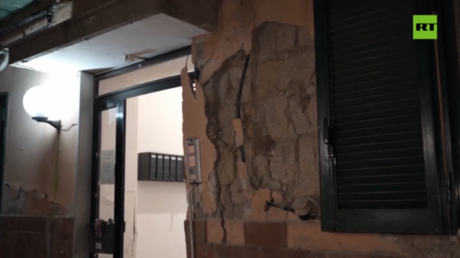
Two dead. Medical warehouses reduced to smoldering rubble. Another hospital infrastructure crippled while diplomatic talks hover in uncertain limbo.
If you look past the standard breaking news tickers, the reality on the ground inside the bande de Gaza reveals a persistent cycle of destruction that contradicts every narrative of imminent diplomatic resolution. While international announcements swirl about potential frameworks to end hostilities, civilians continue to absorb the immediate shock of targeted operations.
Here is what is actually happening behind the headlines, and why these recent hospital warehouse strikes matter so much for the enclave's survival.
The Anatomy of the Latest Strikes
The numbers reported by local health authorities and hospital registries point to a grim routine. A series of coordinated military actions recently struck multiple sectors across the territory. In Gaza-city, an initial blast claimed a life, sending casualties directly to the overwhelmed Al-Chifa medical complex. Simultaneously, another attack hit Deir al-Balah, registering a fatality received by the Al-Aqsa hospital.
The most alarming development, however, wasn't just the human toll—it was the logistics of healing that took a direct hit.
A storage facility designated for essential medical supplies within the Al-Aqsa hospital perimeter was heavily damaged. According to the local ministry of health, large quantities of vital goods, medicines, and clinical reserves are now completely unusable. When an integrated medical depot burns or collapses under an airstrike, the impact stretches far beyond the immediate blast radius. It affects hundreds of patients who rely on those specific reserves for chronic and acute care.
Why Hospital Infrastructure Remains a Focal Point
You might wonder why storage warehouses attached to medical centers keep ending up in the crosshairs. The official military stance often points toward specific security justifications or targeted threats within urban grids. Yet, humanitarian monitors and health organizations emphasize a different reality.
When supply hubs are destroyed, the fragile safety net protecting the remaining population frays entirely.
- Medical stockrooms hold more than just bandages. They store cold-chain items, trauma kits, and therapeutics that cannot be easily replaced given ongoing border restrictions.
- Surrounding clinics face secondary structural damage from shockwaves, rendering outpatient departments unsafe for operation.
- Evacuation pathways and emergency logistics grind to a halt when medical logistics centers become active combat zones.
The physical degradation of medical facilities means that even minor injuries carry severe risk. There is no surplus capacity left to absorb these shocks.
The Disconnect Between Diplomacy and Reality
These developments don't occur in a vacuum. They happen against a backdrop of intermittent diplomatic maneuvers. Announcements regarding potential cessation frameworks or phased military withdrawals regularly make international news. Yet, the experience of residents on the ground tells a starkly different story.
Diplomacy moves at a conference-room pace, while airstrikes operate on a split-second timeline.
When high-level talks propose future roadmaps, they rarely halt the immediate mechanics of urban warfare. For the doctors working inside Al-Aqsa or Al-Chifa, peace accords are abstract concepts. Their daily reality is defined by smoke, depleted intravenous fluids, and the constant scramble to find functioning equipment.
Looking at the Broader Humanitarian Impact
The long-term outlook for the territory remains grim. Rebuilding a functioning healthcare grid requires predictable access, open borders, and absolute protection for civilian installations—none of which are guaranteed under current conditions.
Every time a warehouse or a clinic takes a direct hit, the timeline for any future recovery stretches further into the future. The international community faces a widening chasm between political negotiations and the unyielding humanitarian catastrophe unfolding block by block.
Keep an eye on the actual logistics on the ground rather than just the diplomatic press releases. That is where the true trajectory of this conflict is decided.