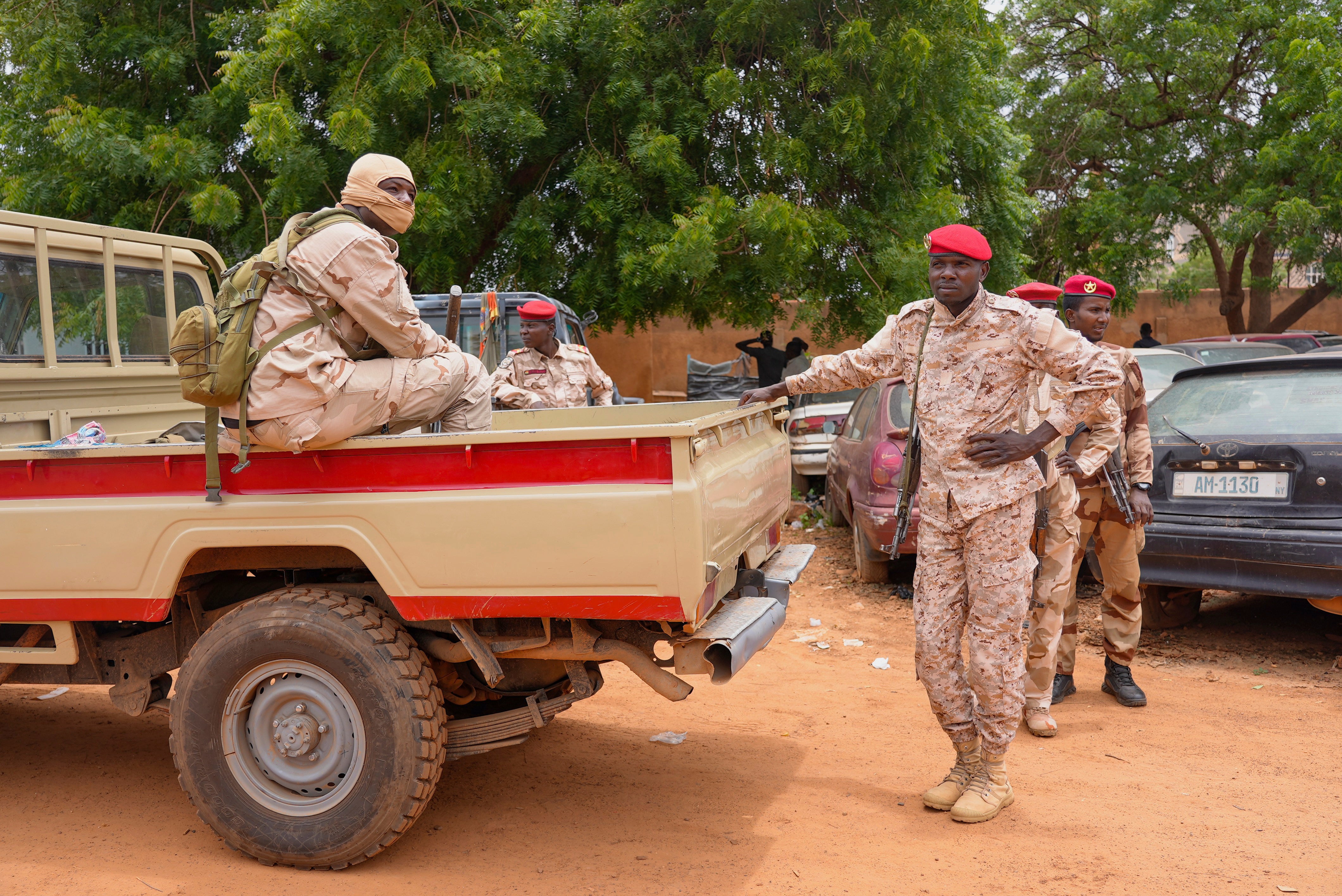
Power rarely shifts quietly in Niamey. When heavy gunfire and sudden explosions shook Niger's capital during the early hours of August 29, 2026, it became clear that General Abdourahamane Tiani’s military government faced an urgent internal threat.
Mutinous soldiers—calling themselves the Armed Forces for the Restoration of the Fatherland—made a bold move. They targeted sensitive nodes across the city, including the presidential palace, state broadcasting facilities, and Diori Hamani International Airport. Specifically, they seized control of Air Force Base 101, an installation embedded within the airport complex that hosts critical regional command centers and foreign military personnel.
For anyone tracking Sahel geopolitics, this wasn't just a random flare-up. It exposed deep fractures within the nation's security apparatus.
Inside the Battle for Base 101
Why target Base 101? Because it serves as a massive strategic hub. Beyond housing the command center for the Alliance of Sahel States—which groups Niger, Mali, and Burkina Faso—the base also accommodates the operational footprint of Russia's Africa Corps.
When the mutineers struck, reports indicated they managed to capture military personnel and temporarily restrict operations. But the junta's loyalist units reacted quickly. Backed by the elite Presidential Guard and crucial ground and aerial coordination from Russian forces, the government counter-attacked. By Saturday evening, officials confirmed that the military air base was recaptured, dozens of rebelling soldiers were detained or killed, and state television returned to the air to declare stability restored.
Defense Minister General Salifou Mody appeared on national media to project control, while regional allies like Algeria swiftly signaled strategic support by deploying fighter jets to the capital.
Why This Mutiny Changes the Security Calculus
Most mainstream coverage stops at the surface-level reporting of a failed coup attempt. Look closer, and you'll see a stark reality about modern governance in the Sahel.
Ruling by military decree is a high-stakes gamble. Since the 2023 coup that ousted former president Mohamed Bazoum, Tiani's administration has struggled to balance internal military loyalty. The gap between average armed forces units and the favored Presidential Guard creates constant institutional friction. When young officers decide they've had enough, they strike at the symbols of state power.
Yet, external alliances dictate outcomes now more than ever. The rapid intervention involving Russian paramilitary elements underscores how deeply entangled foreign security partners have become in Niger's domestic survival. It's a clear signal that the ruling junta relies heavily on external muscle to weather internal storms.
If you are analyzing the stability of West Africa's military regimes, look past the official press releases about total calm. Watch the barracks, monitor the distribution of elite privileges, and keep a close eye on how quickly foreign security pacts can be activated when the capital goes dark.
The immediate threat in Niamey has receded, but the underlying tensions remain entirely unresolved.
Niger mutiny: What happened and what happens next
This video provides an in-depth breakdown of the mutiny in Niamey and evaluates what the failed coup attempt means for Niger's military government moving forward.