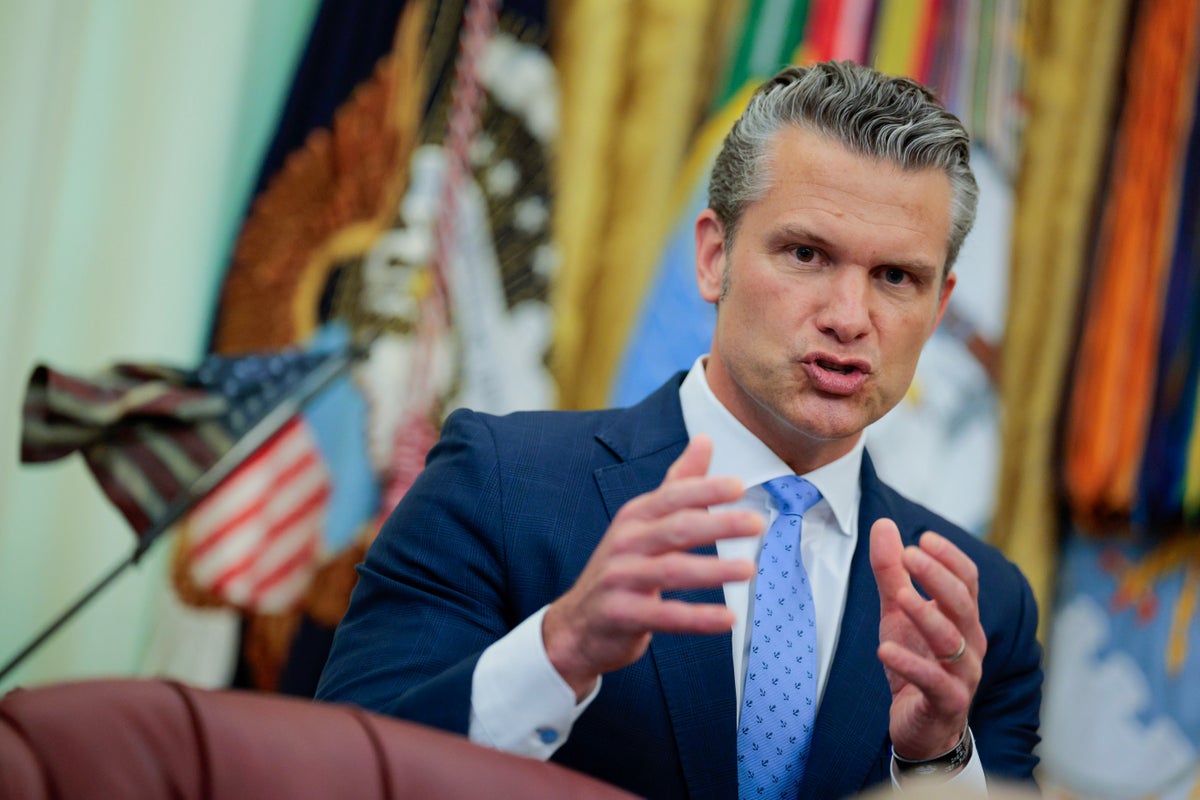
Security clearances are weapons now. Defense Secretary Pete Hegseth just proved it by stripping former Air Force Secretary Frank Kendall of his classified access.
The penalty arrived fast. Pentagon spokesperson Sean Parnell took to social media to announce that Kendall's eligibility for sensitive information was gone. Why? The administration claims Kendall leaked classified details about the presidential aircraft to the press.
It is a massive escalation in Washington's ongoing war against unauthorized disclosures. But look closer at the timeline, and you will see a trail of political retaliation, awkward legal battles, and deep hypocrisy.
The Qatari Air Force One Controversy
The entire feud traces back to a very specific piece of aviation hardware. The Qatari royal family gifted a Boeing 747-8 to the United States for use as Air Force One. Sounds generous on paper. Security analysts took one look and panicked.
Last month, reports exposed major vulnerabilities on the newly converted jet. According to investigations, the Qatari-provided plane lacked critical, highly complex engineering modifications found on traditional American presidential aircraft. Doors were narrower. Built-in hull stairs were missing. Most importantly, it lacked the advanced antimissile defense systems that keep commanders-in-chief safe in hostile airspace.
Frank Kendall—who served as Air Force Secretary under Joe Biden—talked to reporters about these gaps. He pointed out obvious shortfalls and argued that using the jet added a measurable layer of risk.
The Pentagon heard those public criticisms loud and clear. They did not like what Kendall said. So, the security clearance axe fell.
The Hypocrisy of Washington Leak Crackdowns
When Kendall learned his clearance was revoked, he told reporters he was completely mystified. He insisted he never uttered a classified word and stayed strictly within the bounds of public safety analysis.
Critics were quick to point out the blatant double standard at play. Defense Secretary Pete Hegseth has spent months campaigning against Pentagon leaks. He even teamed up with the Department of Justice to launch a joint task force aimed squarely at prosecuting people who share sensitive details with journalists.
Yet, Hegseth has a messy security footprint of his own. An inspector general review previously found that Hegseth used the unapproved messaging app Signal on his personal phone to transmit non-public plans regarding U.S. airstrikes in Yemen. Investigators concluded that his digital habits put active-duty pilots at direct operational risk.
Hegseth kept his job and his authority. Kendall lost his clearance over a conversation about an airplane.
DOJ Subpoenas and Press Freedom Collateral Damage
Before Kendall's clearance vanished, the administration tried a different tactic to plug the leak. The Justice Department subpoenaed phone records from journalists at The New York Times and even targeted their family members.
That heavy-handed move backfired in federal court. U.S. District Judge Arun Subramanian grilled government attorneys over the legality and sloppy execution of the subpoenas. Backed into a corner, the Justice Department quietly withdrew them.
Unable to jail reporters or force them to burn their sources, the Pentagon turned inward. Stripping Kendall of his credentials serves as a warning shot to every other retired defense official thinking about speaking to the media. Cross the administration, and your career credentials evaporate overnight.
This pattern is becoming standard operating procedure. When Hegseth took office, he immediately pulled security protections and clearances from high-profile figures like retired Gen. Mark Milley. Dissenting voices are systematically losing their voice and their credentials.
The Qatari jet remains parked or heavily scrutinized, but the real damage is to the traditional boundary between national security oversight and political retaliation. Clearances used to be about protecting secrets. Now, they protect narratives.