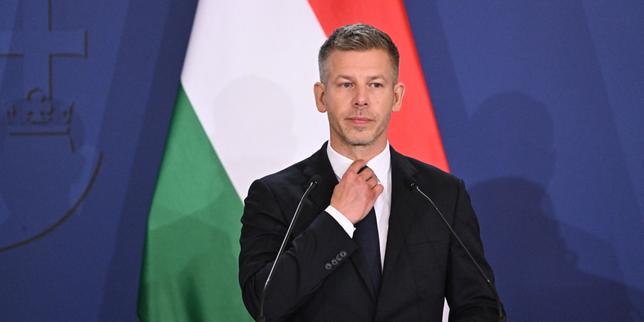
Power changes hands quickly in Budapest, but dismantling a sixteen-year-old political fortress is proving to be a messy business. When Péter Magyar took over as Prime Minister of Hungary, he didn't just inherit an administration; he stepped into a state apparatus meticulously engineered by Viktor Orbán to withstand ordinary democratic pressures. Now, months into his term, the pace of the sweeping overhaul has triggered a wave of anxious questions. Is the new administration rushing to fix the system by breaking the very rules that kept the old one afloat?
Speed is the weapon of choice for the new executive branch. Supporters call it decisive leadership. Critics, however, are starting to wonder if rushing structural changes risks replacing one form of centralized control with another. When you try to undo a decade and a half of entrenched illiberal governance overnight, shortcuts become tempting. Those shortcuts are precisely what has Budapest's legal and political observers biting their nails.
The Speed Trap of Institutional Overhaul
Fixing a captured state takes time, or so conventional democratic theory suggests. Magyar’s government is testing a different hypothesis. Armed with public exhaustion over years of corruption and economic stagnation, they are pushing reforms through parliament at breakneck speed.
Take the recent presidential nomination. Choosing Andras Baka—the former Supreme Court president once ousted by Orbán for judicial defiance—sends an unmistakable signal. It is a poetic act of historical correction. Yet, fast-tracking institutional vengeance or corrective appointments without slow, deliberate consensus-building opens the door to accusations of procedural shortcutting.
You cannot easily preach the rule of law while bending institutional timelines to bypass bureaucratic resistance. That tension lies at the heart of the current unease in Hungary. People want justice, but they also want to know the new guard won't weaponize the exact same levers tomorrow.
Can You Outlaw an Illiberal Machine Without Becoming It?
Orbán didn't build his political ecosystem overnight. He used complex webs of media ownership, targeted public procurement contracts, and loyalists planted deep inside independent regulatory bodies. Tearing that down requires deep institutional surgery, not a sledgehammer.
Magyar’s team faces a harsh reality. If they follow every traditional democratic procedural safeguard, loyalists of the former regime can bog down reforms indefinitely using the very legal tripwires left behind. But if the government bypasses those safeguards to accelerate the cleanup, they hand ammunition to critics who claim the new administration is just authoritarianism in a different colored suit.
Honesty matters here. The public wanted a clean break. They voted for a total systemic reset. They didn't vote for endless committee meetings that allow old networks to regroup. Yet, rushing appointments and rewriting structural rules without broad cross-partisan debate creates dangerous precedents.
The Economy Doesn't Care About Political Purges
While politicians fight over institutional remodeling, ordinary citizens face tough economic realities. Real wages have stuttered, and inflation worries haven't vanished just because a new face sits in the prime minister's office.
When a government spends all its political oxygen on rapid institutional de-orbánisation, economic execution sometimes takes a back seat. People cannot pay rent with symbolic institutional reversals. If Magyar fails to deliver tangible relief while moving at breakneck speed on structural politics, public patience will evaporate faster than it was earned.
The stakes go far beyond Hungarian borders, too. Brussels is watching closely. European Union funds frozen during the height of the Orbán era depend on credible, lasting anti-corruption guarantees. The EU wants reforms that stick, built on solid legal foundations, not rushed decrees that could easily be overturned if the political pendulum swings back.
What Happens When the Dust Settles
Hungary sits at a historical crossroads. The desire to purge the state of systemic patronage is completely understandable. Sixteen years of dominance left deep scars on the nation's civic fabric.
Yet, transforming a state requires more than replacing top officials and rewriting laws before sunrise. It demands an unglamorous commitment to institutional integrity that survives even when it slows things down.
Watch the coming months carefully. The true test of this administration won't be how fast they can dismantle the past. It will be whether the democratic structures they build can survive the next transition of power intact.
Stop expecting clean, cinematic political revolutions. Real governance is messy, slow, and full of compromises. Magyar is about to find out if his fast-track strategy leaves a healed country or just a fractured one ready for the next strongman.


