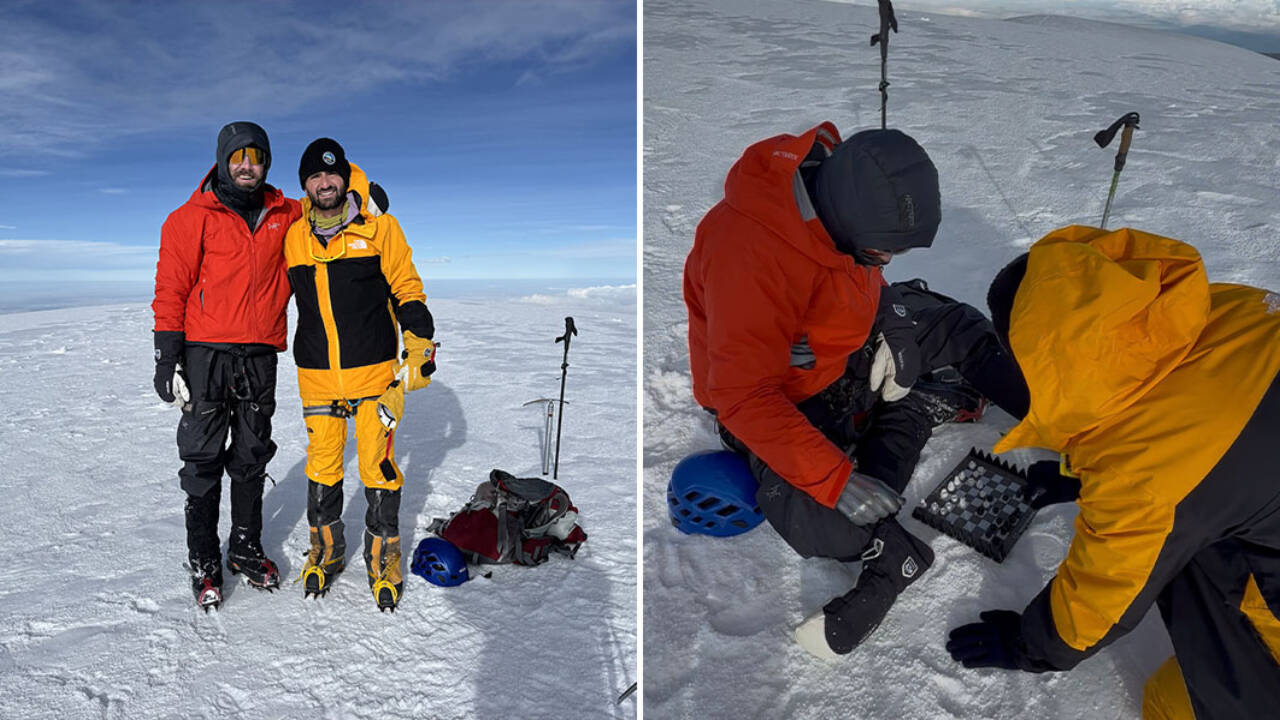
Playing chess at 20,593 feet above sea level sounds like a quirky pub bet until you factor in freezing air, thin oxygen, and a volcano that already turned you back once. On March 31, American friends Adam Wininger and Joshua Host reached 6,277 meters on Ecuador's Chimborazo volcano and finished a game of chess there, a feat Guinness World Records later confirmed as the highest-altitude board or party game ever played.
Honestly, most coverage treats stunt records like novelty trivia. You read a headline, grin at two guys moving pawns in sub-zero air, and move on. That misses what actually happens to a human brain and body at over 20,000 feet when you ask them to calculate tactics instead of just putting one crampon in front of the other.
Why Chimborazo Changes the Math of Altitude
People often assume Mount Everest is the furthest point from the center of Earth because it has the highest elevation above sea level. Chimborazo sits in Ecuador's Bolivar province near the equator, where Earth bulges outward due to its rotation. Because of that equatorial bulge, Chimborazo's summit reaches the point on Earth's surface farthest from the planet's center, even though its sea-level height is lower than Everest's.
That geography matters for anyone planning a high-altitude push. You aren't walking up a gentle slope with a coffee shop at the top. You're climbing a massive glaciated stratovolcano where weather turns fast, crevasses open up without warning, and sub-zero temperatures punish bare skin.
Wininger, 32, and Host, 44, didn't walk straight into a record on their first try. An earlier attempt on Chimborazo failed due to bad weather, forcing them to eat the setback and come back prepared for a harder push. When they finally succeeded on March 31, they beat the prior mark set by Tim Maw and Neil Laughton, who played a board game at 6,216 meters (20,393 feet) on Nepal's Putha Hiunchuli on September 17, 2024, edging the bar up by roughly 200 feet.
What Happens When Chess Meets Hypoxia
Chess is already brutal on decision fatigue after a long day. Add extreme elevation, and every calculation gets heavier. At over 20,000 feet, barometric pressure drops sharply, meaning each breath delivers far less oxygen than at sea level.
From my own experience watching people try complex mental tasks at high elevation, overconfidence is the first trap. Climbers feel fine sitting down for a minute, then miss a basic tactical threat three moves later because mental stamina and working memory degrade under hypoxia. You might spot the obvious check, yet miss the quiet defense two plies deep.
Then there are the physical annoyances nobody puts in a brochure. Wininger and Host had to play wearing gloves because the cold made handling chess pieces too painful or awkward. Try picking up small pieces on uneven ground with bulky gloves while your fingers are numb and your breathing is labored. A simple blunder can come from a stiff hand just as easily as a bad positional plan.
According to reports on the expedition, Wininger—an ultra-marathon athlete—ended up winning the match against Host. Endurance conditioning helps you arrive with more gas left in the tank after an exhausting ascent, though at extreme altitude, individual acclimatization and clear-headedness still matter hugely. Meanwhile, the two friends were treated to sunrise views and Chimborazo's triangular shadow stretching across the landscape, a reward that makes even a failed first attempt feel worthwhile.
Common Misconceptions About High-Altitude Stunt Records
- It's just carrying a board up a hill: Getting to 20,593 feet on a glaciated volcano requires real mountaineering fitness, route-finding around crevasses, and willingness to turn around when weather turns hostile.
- Chess stays the same at extreme elevation: Cold hands, wind, uneven footing, and low oxygen turn clean calculation into grind-it-out survival thinking.
- One failed attempt means the idea is dead: Turning back in bad weather isn't failure in high-altitude climbing; coming back on March 31 to get the job done is what separates finishers from wishful thinkers.
Practical Next Steps If You Want to Attempt Something Similar
If Wininger and Host's record makes you want to combine a mental game or creative project with a serious mountain objective, don't start with a 20,000-foot volcano. Start smart so you actually come home safe:
- Build real mountain and endurance baseline first: Train aerobic capacity and hike or climb at moderate elevations first so you know how your body handles fatigue and thin air.
- Respect weather and acclimatization: Never force a summit window in bad weather, and give your body time to adjust rather than rushing elevation gains.
- Test your gear with gloves on: If you plan to play a board game, take notes, or operate a camera in the cold, practice doing it with thick gloves before leaving home.
- Check Guinness World Records rules early: If official recognition matters to you, review exact evidentiary requirements—such as verified elevation data, witnesses, and activity rules—well before you step onto the trail.
Even if you never set foot on Chimborazo, the takeaway is pretty simple. Pick a challenge you genuinely care about, respect the environment you're in, and don't let a weather setback convince you to quit before you're ready.