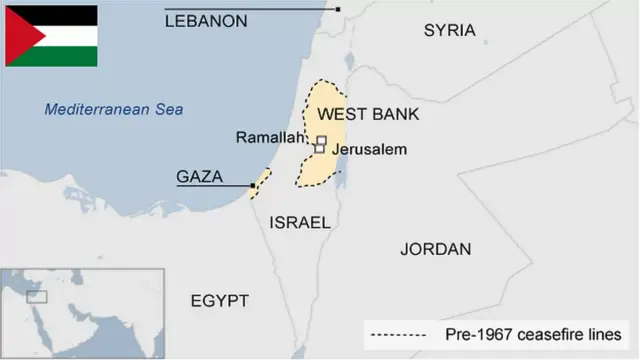
When government ministers openly advocate for clearing out an entire population, the political discourse shifts into dangerous territory. You can't just ignore these statements as fringe rhetoric anymore. High-ranking officials within the Israeli political establishment have increasingly pushed narratives centered around the forced transfer or depopulation of Gaza, turning once-taboo ideas into mainstream talking points.
Let's look at what's actually driving this shift. It's not happening in a vacuum. Years of escalating conflict, hardened ideological factions inside the ruling coalition, and a complete breakdown of diplomatic trust have created an environment where extreme proposals are aired publicly without immediate political suicide. Ministers from right-wing factions frequently argue that permanent military control or mass displacement offers the only viable security framework. But security is often just a convenient wrapper for long-standing territorial ambitions. You might also find this connected article useful: Why Cognitive Decline And Shoplifting Are Unravelling Longtime Politicians.
International bodies and human rights organizations have repeatedly flagged these proposals as severe violations of international law. Forced displacement constitutes a war crime under the Geneva Conventions. Yet, domestic political survival in Israel often rewards hardline stances. When coalition partners threaten to collapse the government unless radical measures are embraced, moderate voices get sidelined.
The consequences stretch far beyond local borders. Neighboring countries like Egypt and Jordan have explicitly rejected any scenario involving the mass influx of displaced Palestinians from Gaza, viewing it as an existential threat to their own regional stability and a permanent erasure of Palestinian statehood claims. As discussed in latest articles by Al Jazeera, the effects are notable.
Understanding this dynamic requires looking past the sanitized press releases. The rhetoric coming from certain cabinet members signals a calculated strategy to normalize permanent demographic engineering. Whether these plans translate into full operational reality remains a subject of intense geopolitical debate, but the very fact that they are voiced at the highest levels of government changes the entire landscape of the Middle East conflict.
Pay close attention to how diplomatic alliances respond. Condemnations are common, but concrete preventive actions are rare. If international pressure fails to impose real diplomatic or economic costs, extreme political rhetoric risks hardening into irreversible state policy on the ground.