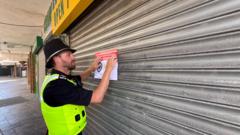
Walk down almost any struggling British high street and you'll spot them. The brightly lit mini-marts with sparse shelves, generic names, and rows of cheap vapes in the window. To the casual passerby, they're just struggling convenience stores. But a major undercover operation by the BBC recently exposed a much uglier reality. Dozens of these storefronts are functioning as blatant, over-the-counter dispensaries for organized crime groups.
We aren't talking about discreet, coded transactions or back-alley handoffs. Undercover researchers easily bought cocaine, cannabis, nitrous oxide, and illicit prescription pills directly from shop counters across towns in the West Midlands like Dudley, Cradley Heath, Lye, and Brierley Hill. The scale isn't isolated either. Similar operations link back to more than 70 properties stretching from Devon right up to Belfast. Meanwhile, you can find other developments here: How Carney Signs Strategic Pact With Philippines During Marcos Visit To Canada To Reshape Trade.
While councils and Trading Standards have stepped up raids, the immediate problem isn't just catching the criminals. It's keeping them from opening right back up the next day.
The Loophole Keeping Criminal Fronts Alive
When local authorities catch a shop selling illicit goods or Class A drugs, they usually lean on anti-social behaviour legislation to issue a closure order. It sounds tough on paper. But under the current framework in England and Wales, a standard closure order only lasts for three months, with a maximum extension of up to six months. To understand the full picture, we recommend the recent article by Reuters.
For multi-million-pound organized crime syndicates, a three-month pause is just a minor cost of doing business. Gangs have built highly adaptable networks. The moment a mini-mart gets boarded up in Dudley, the exact same crew often shifts operations to another empty unit just a few doors down. They cycle through different landlords, use shell companies, and exploit a desperate commercial property market where landlords are eager to accept quick cash to avoid empty business rates.
The trade bodies aren't staying quiet about it. The British Independent Retailers Association (BIRA) and the Association of Convenience Stores (ACS) are sounding the alarm. Legitimate business owners are facing an impossible, unfair fight.
The Devastating Toll on Independent Traders
This isn't a victimless black-market economy. Honest, hard-working shopkeepers are getting actively pushed out by criminal intimidation. Take the local independent traders who have invested their life savings into their shops. When a drug-dealing front sets up nearby, the local high street quickly turns hostile.
Business owners have reported targeted harassment, late-night vandalism, and blatant scare tactics. In one shocking case highlighted during the wider investigation, a salon owner had her shop windows smashed with bricks four separate times in the early hours of the morning. Shortly after, thugs visited her to intimidate her into giving up the lease so they could install their own front.
When these criminal enterprise units flood a local market with cut-price, illegal goods, legitimate convenience stores can't compete on margins. Honest retailers lose their livelihoods, foot traffic plummets because residents feel unsafe, and the high street slips further into decline.
Beyond the Counter: Exploitation and Lookouts
If you take a closer look at how these illicit mini-marts operate, the level of organization is staggering. It goes way beyond a rogue cashier making extra money on the side.
- The Sentry Network: Criminal gangs deploy "spotters" on the pavements outside the shops. These lookouts monitor the street constantly, filming or photographing anyone who looks like plainclothes police, Trading Standards officers, or investigative journalists.
- Human Trafficking: The staff behind the counter are frequently vulnerable migrant workers, sometimes brought into the country illegally by international smuggling networks. They are forced to staff the storefronts 24/7, often living in squalid, unsafe conditions inside the back rooms or upstairs flats of the shops themselves.
- The Product Mix: While Class A drugs like cocaine fetch high prices, these shops survive day-to-day by shifting massive volumes of illicit, untaxed vapes and counterfeit cigarettes. This creates a steady stream of untraceable cash that masks the heavier criminal operations.
What Needs to Change Legally
The government recently acknowledged that the current three-month closure window is a broken tool. Home Secretary Shabana Mahmood noted plans to alter the law, potentially doubling the maximum closure time to a full year for shops linked to organized crime, immigration offenses, and drug dealing.
It's a step in the right direction, but legal experts and trade groups argue that longer closures are only half the battle. If we want to clean up the high street for good, enforcement requires a structural overhaul.
Landlord Accountability
Property owners must be held responsible for who occupies their buildings. BIRA has strongly advocated for mandatory, rigorous background and money-laundering checks on commercial tenants before leases are signed. If a landlord repeatedly ignores massive red flags just to collect cash rent, they should face severe financial penalties.
Funding for Trading Standards
Local councils have been hollowed out by a decade of budget cuts. Trading Standards teams are doing incredible work—Dudley's enforcement teams alone successfully closed dozens of rogue shops over the past year—but they are completely outnumbered. The ACS has called for dedicated enforcement funding, including over £100 million specifically tasked with dismantling the illicit tobacco and vape trades that fund these gangs.
Coordinated Intelligence
Police forces can't just treat this as localized anti-social behaviour. A drug-selling storefront in the West Midlands is often connected to the same supply chain as a rogue shop in Norfolk or Wales. It requires a national, intelligence-led crackdown hitting the gang leadership, rather than just arresting the exploited workers behind the counter.
If you suspect a business in your community is operating as a criminal front, don't confront the workers or try to investigate it yourself. These groups are dangerous and highly protective of their patches. Instead, log the specific times, dates, and vehicle registrations of suspicious deliveries, and report the details securely to your local Trading Standards department or anonymously via Crimestoppers on 0800 555 111. High streets won't recover until the financial incentives for these gangs are completely wiped out.