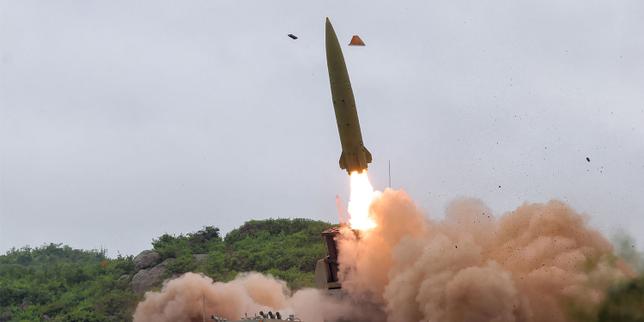
Pyongyang just shook the regional status quo again. The South Korean military confirmed that North Korea fired a ballistic missile toward the sea east of the Korean Peninsula. It's a familiar script, but the timing and underlying geopolitical friction continue to worry defense analysts from Seoul to Washington.
If you track East Asian security trends, you know these launches rarely happen in a vacuum. They serve distinct tactical and domestic messaging purposes for Kim Jong Un's regime. Let's look past the breaking news alerts to understand why these missile tests persist and how neighboring powers respond.
The Immediate Details of the Launch
State intelligence services in Seoul and Tokyo picked up the telemetry almost instantly. The projectile launched by North Korea headed toward the sea of Japan, triggering rapid threat assessments from Japanese defense officials.
Short-range and mid-range ballistic missile tests usually aim to test new guidance systems, solid-fuel engines, or warhead separation capabilities. Pyongyang doesn't spend scarce resources on random fireworks. Every test feeds data back into a heavily sanctioned weapons development program that has accelerated over recent years, aided notably by closer military alignments with Moscow.
Why the Timing Matters
You have to look at the broader diplomatic board. North Korea rarely launches weapons when the geopolitical stage is quiet. Whenever joint military exercises occur between South Korea and the United States, Pyongyang reacts with aggressive posturing.
Beyond joint drills, domestic factors in North Korea play a massive role. Economic hardships persist under heavy international sanctions, and the regime frequently relies on external provocations to manufacture a sense of existential threat. This external pressure helps consolidate internal loyalty around the leadership.
The Regional Reaction and Defense Posture
Tokyo and Seoul condemned the action immediately. Japan's government routinely highlights these launches as violations of United Nations Security Council resolutions. Meanwhile, South Korea's joint chiefs of staff maintain a heightened state of readiness, promising a firm response to any direct military adventurism.
Washington backs its allies with ironclad defense commitments, frequently deploying strategic assets like nuclear-capable submarines or stealth aircraft to the region. Yet, deterrence hasn't stopped the testing cycle. Each side remains locked in a security dilemma where defensive preparations look like offensive threats to the other.
What Happens Next
Expect more rhetoric, emergency security meetings, and counter-drills. The international community has limited diplomatic leverage left, given that traditional sanctions pathways are largely deadlocked at the UN level due to shifting veto dynamics involving Russia and China.
Keep an eye on upcoming defense pacts and intelligence-sharing agreements between Japan, South Korea, and the United States. Those partnerships represent the primary counterweight to Pyongyang's growing missile inventory.