Security breaches at vital military installations rarely happen in a vacuum. When a series of arrests unfolds around an active military base housing strategic bombers, people start paying attention. That is exactly what happened following a high-stakes security incident at RAF Fairford in England, dragging international intelligence agencies, foreign state threats, and diplomatic friction right into the headlines.
If you think this is just another local trespassing case, you're missing the bigger picture. British counter-terrorism police didn't sweep into central London and arrest a dual UK-Iranian national on a whim. This arrest ties directly into a rapidly escalating threat landscape where foreign powers reportedly use local proxies to target critical infrastructure on Western soil.
Let's look at what actually happened, why U.S. and British officials are clashing behind closed doors, and what this means for modern security protocols.
Inside the RAF Fairford Security Incident
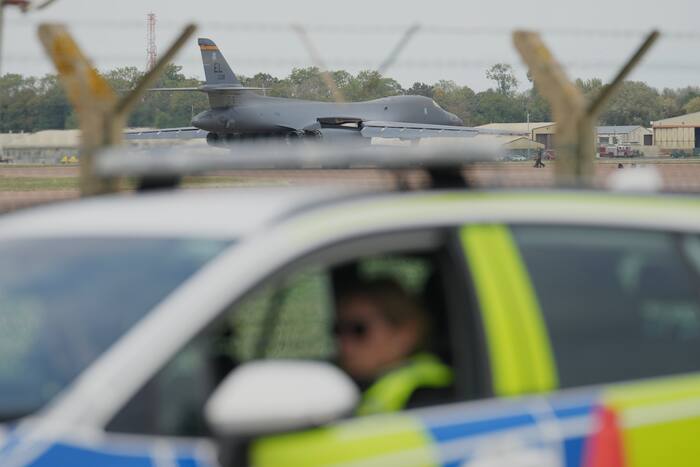
RAF Fairford sits roughly 100 miles west of London. For decades, it has served as a key launchpad for American bombers during conflicts in the Middle East, including recent operations involving Iran. Because of this strategic role, the base represents a high-profile target.
The trouble began in the early hours of a Sunday morning. Armed police officers and army bomb-disposal experts descended on the rural area surrounding the base. Scores of local residents faced emergency evacuations from their homes as authorities locked down the perimeter.
Police later recovered a quantity of gasoline from three vans linked to five suspects. While initial searches didn't uncover conventional explosives, the presence of accelerants near a military airfield housing strategic assets triggered immediate alarm bells. Five men—all British nationals in their twenties from London—were arrested on suspicion of terror and explosive offenses.
However, the situation took a controversial turn when those initial five suspects were released on bail. That decision immediately drew open frustration from across the Atlantic.
The Transatlantic Friction Over Bail Decisions
When British authorities released the initial group of suspects on bail, top U.S. officials didn't hide their reactions. President Donald Trump publicly stated he was surprised by the decision, noting that he wouldn't have handled it that way, while acknowledging respect for Scotland Yard's operational experience. Secretary of State Marco Rubio echoed those sentiments, pointing out that many observers found the move disturbing.
British officials pushed back, maintaining that investigators have the case under tight control. Prime Minister Andy Burnham defended the handling of the operation, stressing that British authorities maintained close communication with American counterparts throughout the week to explain their tactical decisions.
In counter-terrorism operations, releasing suspects on bail doesn't mean the investigation is over. Intelligence agencies often monitor bailed suspects to map out wider networks, identify handlers, and gather crucial digital intelligence. Still, the public friction highlights the delicate balance between foreign policy expectations and domestic legal procedures in multi-jurisdictional terror investigations.
The Growing Threat of State-Backed Proxies in the UK
The arrest of a 25-year-old dual UK-Iranian national in central London on suspicion of plotting a terror attack brings the focus squarely back to state-sponsored sabotage. Counter Terrorism Policing confirmed they are actively pursuing multiple lines of inquiry, explicitly including foreign state involvement.
British intelligence services have warned repeatedly that hostile states like Russia and Iran increasingly rely on domestic proxies to carry out operations on British soil. Official data reveals that national security cases involving hostile state activity jumped by fifty percent over a recent six-month period.
Instead of deploying trained intelligence officers under diplomatic cover, modern state actors often recruit local criminals, disaffected individuals, or ideologically motivated actors via encrypted messaging apps. These proxies carry out arson, surveillance, or sabotage tasks, giving the foreign government plausible deniability.
Iran has consistently denied involvement in the Fairford incident, maintaining its long-standing stance that any military base used to attack its territory is a legitimate target. Yet British security officials point to a pattern of proxy-driven arson attacks across Europe and the UK, many designed to sow widespread fear and target specific communities.
What Happens Next
The escalation around RAF Fairford demonstrates that geopolitical conflicts in the Middle East or Eastern Europe no longer stay thousands of miles away. They bleed directly into the domestic security fabric of Western nations.
Protecting critical military infrastructure requires adapting to decentralized threats where the attacker might be a local resident radicalized online or hired through a digital dead drop. As British counter-terrorism units continue searching properties and analyzing digital forensics from these arrests, the pressure is on to prove whether these incidents represent isolated cells or part of a wider, coordinated campaign by Tehran.
Keep a close eye on how intelligence sharing evolves between London and Washington as the investigation progresses. The outcome will shape how Western nations defend their most sensitive installations against asymmetric, proxy-driven threats for years to come.