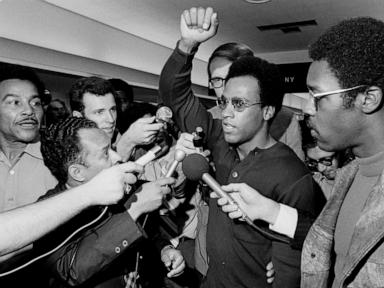
Sixty years after Huey P. Newton and Bobby Seale walked onto the streets of Oakland, California, and established the Black Panther Party for Self-Defense, the popular memory of the organization remains deeply distorted. Mainstream media often reduces the group to leather jackets, berets, and armed patrols monitoring local police officers. But that narrow framing entirely misses the engine that kept the party alive: its community survival programs.
Veterans and original stalwarts of the Black Panther Party gather in downtown Oakland for a multi-day conference and gala to mark the 1966 founding, shifting the spotlight back to what the group actually built for everyday people. Long before government agencies or modern nonprofits stepped into the vacuum, Panthers were feeding hungry kids, running health clinics, and demanding structural accountability. Meanwhile, you can find similar developments here: How Extreme Online Radicalization Led A Teen To Target An Illinois Hindu Temple.
If you want to understand why these survival programs shaped modern community organizing, you have to look past the historical noise and examine how ordinary people met desperate needs when institutions failed them.
Feeding the Neighborhood Before Breakfast Was a Standard Policy
Children were walking to school hungry in low-income neighborhoods across Oakland and beyond during the mid-1960s. The state wasn't feeding them. Local charities weren't covering the scale of the need. To explore the complete picture, we recommend the detailed report by Wikipedia.
In response, local chapters launched the Free Breakfast for Children Program. By 1969, thousands of kids sat down every single morning to hot meals cooked and served by party members before heading to class. It wasn't just a charitable handout. It was a direct political statement about the failure of the social safety net.
Surviving members note that the state watched these programs with intense suspicion. Police harassed organizers, raided distribution sites, and tried to shut down kitchens, recognizing that feeding children built powerful community trust that no amount of negative press could dismantle.
Healthcare as a Human Right
Police brutality catalyzed the initial formation of the party, but healthcare inequality nearly matched it in daily urgency. Families living in impoverished urban centers couldn't afford doctor visits, and hospitals routinely turned away Black and low-income patients.
The party didn't wait for policy reform. They opened free medical clinics across multiple cities, offering comprehensive checkups, preventative care, and critical testing. For example, medical institutions established during that era—such as Seattle's Carolyn Downs Family Medical Center—grew directly out of these early survival initiatives and still serve thousands of patients today.
These clinics relied on grassroots fundraising, volunteer doctors, and community donations. They proved that grassroots communities could organize complex medical infrastructure independently.
The Organizing Blueprint We Still Use Today
When modern activists mobilize around food insecurity, tenant rights, or police accountability, they are often walking a path cleared in Oakland six decades ago. The Ten-Point Program laid out concrete demands: full employment, decent housing, meaningful education, and an end to police violence.
The core lesson from the founders and surviving stalwarts isn't about romanticizing the past. It’s about recognizing that institutional neglect requires direct action. People didn't wait for permission to care for their neighbors then, and waiting for systemic benevolence doesn't work now.
Take a close look at the issues facing your own community today. Food deserts, underfunded schools, and inadequate healthcare persist. The real takeaway from the Black Panther Party's founding isn't found in history textbooks gathering dust on a shelf. It's found in the active, hands-on work of building mutual aid networks that keep people alive when the system looks away.
Start local. Build networks of care. Address immediate needs in your neighborhood instead of waiting for someone else to fix them.