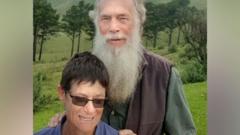
The wheels of justice in South Africa don't grind slowly; sometimes it feels like they don't grind at all. But a Durban High Court judge just handed down multiple life sentences to the three people who kidnapped, tortured, and murdered world-renowned British-South African botanists Dr. Rodney Saunders and his wife, Dr. Rachel Saunders.
It took more than eight grueling years to get here. Eight years of agonizing delays, bizarre courtroom antics, and a terrifying look into how local criminal networks can twist into international terror cells.
If you're tracking international crime or just wondering why a simple seed-collecting trip ended in a horror show, this verdict cuts through the noise. It exposes a dark underbelly of systemic instability, but it also provides a rare moment of accountability in a country where high-profile murders frequently go unsolved.
Here's the raw reality of what happened to the Saunders couple, how the state built its case, and why this verdict matters far beyond the borders of KwaZulu-Natal.
The Fatal Hunt for Rare Seeds in the Ngoya Forest
Rodney and Rachel Saunders weren't typical tourists. They were legendary figures in the global botanical community. For decades, they traveled to the most remote corners of South Africa to find, catalog, and preserve rare plant seeds through their Cape Town-based business, Silver Hill Seeds. They knew the risks of rural travel. They weren't reckless.
In early February 2018, they had just finished filming an episode for the BBC iconic TV show Gardeners' World in the dramatic peaks of the Drakensberg mountains. It was supposed to be a high point in their careers, showcasing South Africa's stunning biodiversity to millions of viewers worldwide.
After the camera crews packed up and left, the couple drove their Toyota Land Cruiser toward the Ngoya Forest in Zululand. They were searching for a highly specific, rare species of gladiolus. They never made it out of those woods alive.
On February 8, 2018, a radicalized local cell ambushed the couple.
Sayefudeen Aslam Del Vecchio, his wife Fatima Bibi Patel, and their associate Musa Jackson targeted the botanists. They didn't just want the vehicle. They wanted everything. They hijacked the Land Cruiser, threw the elderly couple in the back, and began a week-long nightmare of extortion and physical brutality.
The attackers used the couple's own mobile phones to log into their banking applications. Over several days, they systematically drained more than R700,000 (roughly $37,000) from the botanists' accounts through cash withdrawals and point-of-sale transactions.
Once they had the money, they decided the victims couldn't leave to tell the story.
The killers beat, tortured, and stabbed the elderly couple to death. Then they drove to the banks of the Tugela River—a massive, muddy waterway known for high concentrations of crocodiles—and dumped the bodies into the current.
A Grim Forensic Puzzle and a Flawed Hunt
When the Saunders disappeared, their family and friends immediately sounded the alarm. The initial police response was agonizingly slow, a common frustration for anyone dealing with missing persons in South Africa.
By the time specialized crime units and digital forensics teams tracked the stolen bank cards to Del Vecchio and Patel, the trail had grown cold. Police raided a homestead in rural KwaZulu-Natal, arresting the trio, but the victims were nowhere to be found.
Fishermen pulled badly decomposed, partially eaten human remains out of the Tugela River days later. The damage from the water, time, and scavengers was so severe that local authorities couldn't tell who they were looking at.
It took months of painstaking work by a team of three independent forensic experts and detailed dental record matching to definitively prove those bodies belonged to Rodney and Rachel Saunders.
The physical evidence was horrifying. The trauma on the remains proved they didn't drown; they were savagely executed before they ever hit the water.
The Extremist Angle Nobody Wants to Talk About
This wasn't just a robbery gone wrong. This case sent shockwaves through international intelligence agencies because of who the killers were.
Del Vecchio and Patel weren't desperate back-alley thieves. They were deeply embedded in hardline extremist ideology. During the raids on their property, investigators uncovered a massive stash of weapons, bomb-making components, and digital documents explicitly linked to the Islamic State (ISIS).
The state presented chilling digital footprints during the trial. Text messages between the accused openly discussed "killing the kuffar" (non-believers) and plotting to target foreigners in the region.
The attack on the Saunders couple perfectly aligned with the opportunistic, high-reward financial targeting that extremist groups use to fund their local infrastructure.
Independent terrorism analysts inside South Africa argue that the state actually missed a major opportunity here. The prosecution chose to focus primarily on the murder, kidnapping, and robbery charges because they carried guaranteed maximum penalties and were easier to prove under standard criminal law.
While it secured the convictions, it soft-pedaled the broader systemic threat of domestic terror networks operating inside the country's rural provinces.
Why the Trial Dragged on for Nearly a Decade
The fact that the killers of a British couple in South Africa were sentenced to life only now, in mid-2026, highlights the profound administrative failures of the local legal framework.
Eight years is an unacceptable timeline for justice. The defense used every trick in the book to stall the proceedings. They challenged the validity of digital forensic evidence, disputed the chain of custody for the recovered bank records, and cycled through multiple legal representatives to force restarts.
The behavior of the accused inside the courtroom showed absolute contempt for the process. Del Vecchio and Patel routinely refused to leave their holding cells below the Durban High Court, forcing judges to delay hearings or hand down rulings to empty chairs. They pleaded not guilty and maintained a wall of absolute silence throughout the multi-year trial, offering zero closures or explanations to the surviving family members.
When the final sentences came down on July 2, 2026, the relief in the courtroom was palpable, but it was heavily shadowed by the years of institutional foot-dragging.
The Broader Implications for Global Travelers and Researchers
If you are a scientist, an overlander, or a researcher planning to operate in remote areas of South Africa, you need to understand what this case teaches us about field safety.
The Ngoya Forest is beautiful, but isolation is a double-edged sword. You can't rely purely on the assumption that a lack of dense population equals safety.
Criminal operations in rural areas look for soft targets—people with high-value gear, reliable vehicles, and minimal backup. The Saunders had a vehicle packed with expensive research equipment and camping supplies, making them highly visible targets from the moment they entered the province.
If you're planning field operations in remote regions, change how you work.
- Never travel into isolated reserves as a single vehicle unit.
- Set up automated satellite tracking check-ins that alert contacts outside the country if you miss a window by even an hour.
- Keep your banking profiles locked behind secondary biometric walls that aren't tied directly to your primary device.
- Liaise directly with local farming networks and private security forums before entering an area; they always have better ground-level intelligence than official provincial travel advisories.
The Verdict and What Happens Next
The Durban High Court sentenced Del Vecchio, Patel, and Jackson to multiple life terms without the realistic possibility of early parole.
Del Vecchio also picked up extra years for malicious damage to property after the state proved he systematically burned down millions of rands worth of commercial sugarcane crops out of sheer spite when a local agricultural company refused him access to their land.
This case won't fix South Africa's terrifyingly high violent crime statistics overnight. It won't bring back two brilliant scientists who dedicated their entire lives to preserving the unique natural heritage of the African continent.
But it does prove that when the state is forced under an international spotlight, it can preserve forensic chains of evidence, hunt down violent actors, and secure definitive convictions.
The message to criminal networks operating in the provinces is clear. The state might take eight years to catch up with you, but when it does, you're never getting out of a maximum-security cell.
If you are managing operations or travel in the region, take this case as a stark reminder to overhaul your remote communication protocols today. Don't wait for provincial infrastructure to protect you. Ensure your team has independent satellite tracking and dedicated security checkpoints active right now.