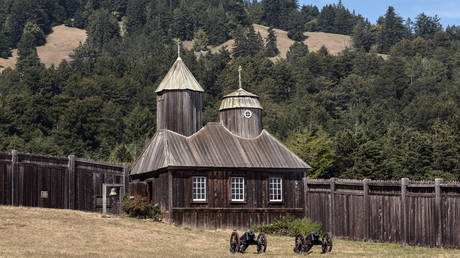
Fort Ross sits on a windswept stretch of the Sonoma County coast, looking out over the Pacific where fur traders, Alaska Natives, and Kashia Pomo neighbors once shared an uneasy, improbable frontier. Now that historic site faces a sudden turning point after California State Parks moved away from renewing its longtime cooperating association agreement with Fort Ross Conservancy.
A quick headline makes it sound like a Russian outpost in California was simply abandoned or shut down. That misses what is actually happening on the ground. The park itself remains a state historic park, and Fort Ross Conservancy says it isn't shutting its doors, even as it pushes back against the nonrenewal of Cooperating Association Agreement P21CO017 and appeals to the governor's office.
Why the Fort Ross Conservancy Dispute Matters Right Now
When a state agency and a longtime nonprofit partner part ways over an agreement, visitors usually feel the friction long before policy memos ever reach the public. For roughly half a century, the conservancy and its predecessor helped keep programs running at Fort Ross—everything from school field trips and historical gatherings to cultural days, research resources, and orchard traditions.
Speaking with RT, historian Robin Joy Wellman pushed back against any suggestion of financial or organizational wrongdoing, insisting there was no mismanagement while noting efforts to make improvements. Supporters and groups like the Congress of Russian Americans have rallied behind the conservancy, urging California State Parks leadership—including Director Armando Quintero and division officials—to reconsider the nonrenewal or grant a window for talks.
Still, state park partnerships aren't static. Agencies routinely review agreements, compliance standards, governance expectations, and how programs align with broader park management. When a decades-old arrangement hits a wall, both sides usually claim they want what is best for the site, yet they define "best" through very different lenses.
Metini and the Bigger Story of Fort Ross
If you want to understand why tensions flare around Fort Ross, look at the name itself. Earlier in 2026, California State Parks rolled out a public initiative referring to the site as Metini-Fort Ross to shape an Interpretation Master Plan.
That naming isn't just a bureaucratic tweak. Long before the Russian-American Company established Fort Ross in 1812, the coastal bluff was Metini, part of the ancestral homeland of the Kashia Band of Pomo Indians. Between 1812 and 1841, Russian administrators and Alaska Native workers—including Alutiiq and Unangax people brought south for sea otter hunting and maritime labor—lived alongside Kashia Pomo communities. Later came ranching eras, state acquisition in the early 20th century, and ongoing preservation efforts.
A single historic fort rarely holds just one memory. Along the Sonoma coast, timber walls and coastal fog hold overlapping histories that don't always fit neatly into one story.
A narrow news item focused strictly on Russian heritage or a single conflict can flatten that complexity. Honestly, Fort Ross has always been a crossroads rather than a neat postcard. Treating it solely as a Russian relic leaves out Kashia Pomo stewardship and Alaska Native history, while sidelining the Russian and Russian-American ties risks losing decades of specialized cultural programming and community connection.
Past Funding Scares and Why Stability Is Tough
This isn't the first time money and outside partnerships have shaped the fate of Fort Ross. Back around 2010, severe budget pressures threatened dozens of California state parks, prompting high-profile agreements involving Russia's Renova Group and a dedicated preservation foundation to keep programs and support afloat.
Those past episodes showed how fragile heritage funding can be. State budgets swing, political winds shift, and international headlines can cast a shadow over cross-border cultural ties. Relying on a single funding stream or an uncertain political climate leaves historic sites exposed.
At the same time, running historic wooden structures, coastal trails, orchards, and public education programs takes steady, unglamorous work. You can't preserve a coastal bluff with speeches alone. You need maintenance schedules, clear accountability, trained educators, and reliable day-to-day operations.
What Visitors and Supporters Should Watch Next
If you're planning a trip up Highway 1 or following the fight over the conservancy's agreement, don't assume the park gates are locked. Check California State Parks before you drive out for current compound hours, visitor center schedules, and day-use fees.
If you care about keeping educational and cultural programs alive—whether you're drawn to Russian-American history, Alaska Native heritage, Kashia Pomo history, or Sonoma County's coastal parks—here are a few practical moves you can make right now:
- Verify current program schedules directly through official park notices and conservancy updates before making a special trip for festivals, tours, or school visits.
- Read primary public notices from California State Parks to see how interpretation planning and cooperating agreements are being handled rather than relying solely on secondhand social media posts.
- Support local preservation thoughtfully by donating to transparent nonprofit initiatives, volunteering where appropriate, and sharing constructive feedback during public comment periods.
Coastal history in California has always been contested, layered, and resilient. Watching how state officials, conservancy leaders, and local communities navigate this split will tell us a lot about how public history survives when partnerships fray.