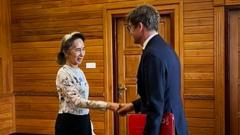
For years, the outside world knew almost nothing about what was happening behind closed doors in Myanmar. Rumors swirled, family members pleaded for answers, and the military junta stayed tight-lipped. That silence finally broke when detained former leader Aung San Suu Kyi met with a representative from the International Committee of the Red Cross.
If you've been following the crisis in Myanmar since the 2021 military coup, you know that physical isolation has been one of the regime's primary weapons. Now, official photographs and confirmed outside contact have given millions of observers a clearer picture of her current reality. Let's break down what this means, why it happened now, and what the future holds for the country's most prominent political figure.
Breaking the Silence After Years of Isolation
Aung San Suu Kyi has spent years cut off from independent observers, family, and foreign diplomats. Her son, Kim Aris, waged an international campaign demanding basic proof of life, repeatedly voicing fears that her health was deteriorating rapidly in detention.
When the Myanmar military junta released photographs alongside confirmation that ICRC resident representative Arnaud de Baecque had met with her, it marked a massive shift. In the published images, the 81-year-old Nobel laureate appeared remarkably healthy and composed.
Of course, we have to look at these state-released images with a healthy dose of skepticism. Authoritarian regimes don't release media without a specific political motive. Even so, the meeting itself provides undeniable confirmation that she is alive, accessible to specific international organizations, and functioning.
The Context Behind the Red Cross Meeting
Why would a military junta that spent years hiding a prisoner suddenly allow an ICRC delegation visit? Politics rarely operates on coincidence.
Myanmar has been locked in a devastating civil war since the 2021 coup deposed the democratically elected government. The conflict has displaced millions and cost countless lives, pushing the national economy to the brink of total collapse. Regional bodies like ASEAN have continually pressured the regime for concessions, human rights accountability, and a pathway toward stability.
Allowing a Red Cross visit serves a dual purpose for the ruling generals. It acts as a pressure valve against fierce international condemnation while signaling a controlled willingness to engage with humanitarian groups. Still, don't mistake this single meeting for a sign of impending democratization. The structural realities of military rule in Myanmar remain firmly intact.
What Happens Next for Myanmar and Its Ousted Leader
Supporters and analysts are currently asking whether this visit signals a broader shift in how the regime plans to handle her sentence. Suu Kyi has faced dozens of politically motivated criminal charges, resulting in a lengthy prison term that was later partially reduced alongside transfers to house arrest environments.
Despite the physical proof that she's weathering her detention well, her political future remains locked down. The military continues to control the political machinery, and true freedom for her remains a distant prospect.
Keep an eye on how international bodies respond to this opening. If the ICRC gains regular access, it could pave the way for medical checkups, legal counsel, or even limited communication with her family abroad. Until then, this brief glimpse behind the curtain remains a rare milestone in an otherwise bleak political landscape.
Myanmar's Aung San Suu Kyi found guilty of inciting dissent
This video provides important archival context on the legal charges and political trials that initially targeted Aung San Suu Kyi following the 2021 military coup.