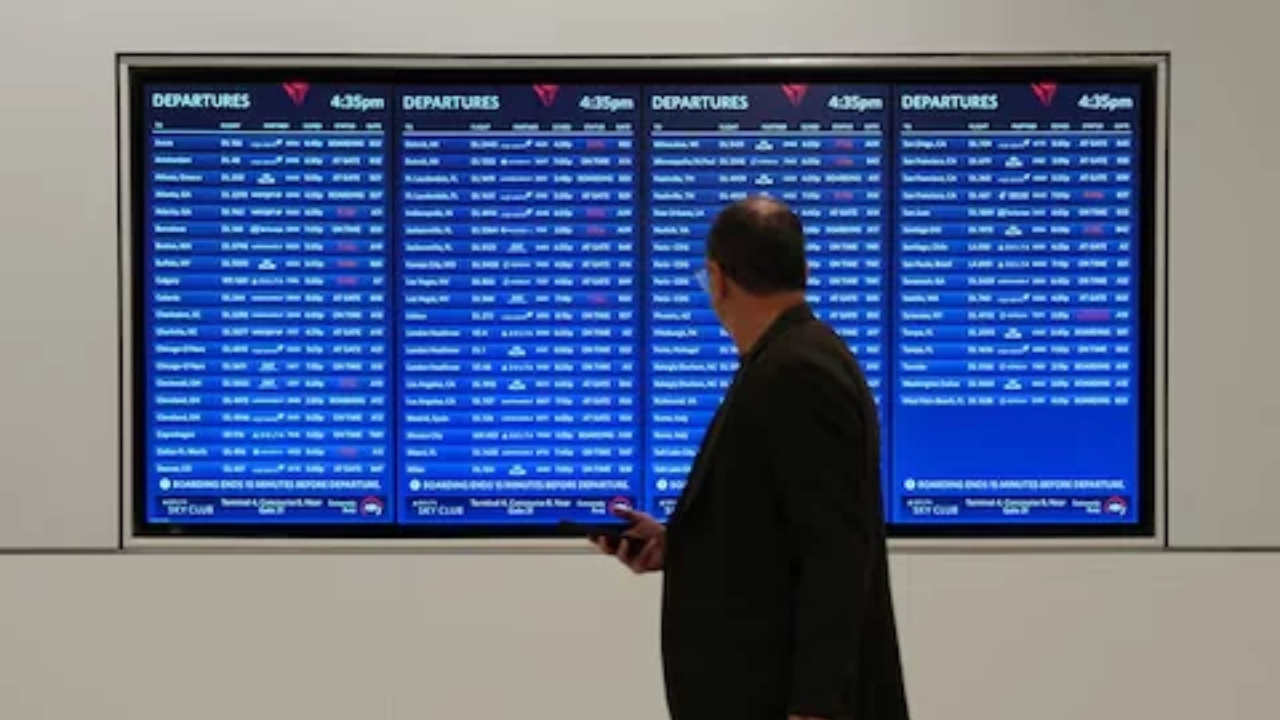
If you tried catching a flight across the United States recently, you probably spent hours staring at a departure board that looked like a bad video game glitch. Over 6,500 flights were canceled and thousands more delayed after a sudden telecommunications failure forced the Federal Aviation Administration to slam the breaks on the entire national airspace. It was only the third nationwide ground stop in American history outside of the 2001 terrorist attacks and a smaller computer glitch back in 2023.
When the dust settled, officials pointed fingers at overloaded routers and aging legacy infrastructure. But patching code won't fix a system that is fundamentally past its expiration date.
What Actually Triggered the Ground Stop
The chaos started when regional air traffic control centers experienced severe data inconsistencies and radar communication dropouts. Transportation Secretary Sean Duffy pointed straight at the hardware during a briefing, noting that old network switches and routers buckled under data overloads.
For roughly four hours, departures came to a complete halt while more than 3,500 planes currently airborne had to be guided down using manual procedures and intermittent radio contact. Homeland Security officials quickly clarified there was zero evidence of a cyberattack or foul play, though investigations into a potential software update conflict remained open.
The scary part isn't that the system failed. It's that everyone inside the aviation industry knew it eventually would.
The Real Cost of Delaying Infrastructure Upgrades
For years, lawmakers have kicked the modernization can down the road. While commercial airlines fly high-tech jets equipped with next-gen avionics, the ground infrastructure talking to them often relies on decades-old networking components.
The Trump administration has requested a massive $50 billion emergency funding injection from Congress to completely overhaul air traffic management. Officials claim that modern upgrades are actively overwhelming older legacy systems as new patches are forced onto decaying architecture.
When you underfund the invisible plumbing of the sky, you aren't saving money. You are just borrowing time against the safety and patience of millions of travelers.
Why Recovery Takes Days Longer Than the Outage
A four-hour ground stop doesn't just evaporate when the FAA turns the green light back on. Aviation runs on an intensely synchronized clock. If a plane sits in Chicago instead of Dallas, the crew scheduled to fly it tomorrow morning is stranded out of position.
Airlines spent days working through massive backlogs, prioritizing long-haul international routes and smaller regional hops just to stitch their schedules back together. If you're flying this season, don't expect a seamless experience just because the FAA lifted the restriction.
How to Protect Your Travel Plans Right Now
If you have upcoming trips, stop assuming the system will behave normally.
- Track your aircraft early: Use apps like FlightAware to see if your incoming plane is already delayed before you head to the airport.
- Avoid tight connections: Give yourself at least a three-hour buffer if you are changing planes at major hubs like Chicago O'Hare or JFK.
- Download airline apps: Keep push notifications turned on so you can grab rebooking options instantly if a cancellation hits your route.
The system will limp back to full capacity eventually. Until Congress funds a total structural rebuild, plan for turbulence.