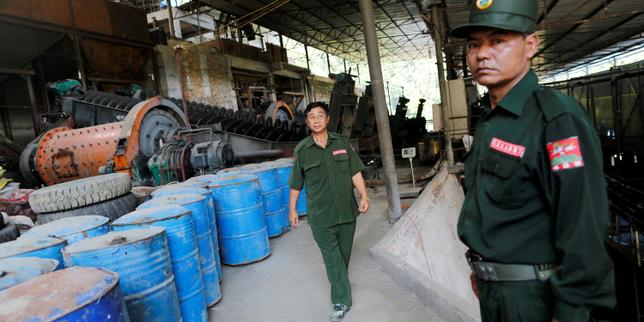
Supply chains are fragile things. When a single industrial pit in the mountains of eastern Myanmar shut down back in 2023, most casual observers didn’t bat an eye. But inside the global semiconductor industry, panic quietly set in.
That pit is the Man Maw mine, the crown jewel of global tin production, sitting deep within the autonomous Wa State. Now, after a three-year hiatus that starved global markets, operations are finally spinning back up. According to recent data from the International Crisis Group, ore is moving across the border into China once again.
If you think this only matters to geologists or commodity traders, look closer at your desk. Without tin, modern technology stops dead.
The Quiet Metal Driving the Artificial Intelligence Boom
You can't build an artificial intelligence data center without tin. It is the foundational ingredient for solder, the metallic glue that secures microchips to circuit boards and powers enterprise servers.
An AI server demands more than triple the amount of tin compared to a legacy server. As hyperscale data centers expanded aggressively over the last few years, demand skyrocketed. The timing of the Man Maw closure could not have been worse. It collided head-on with the generative AI explosion, pushing tin prices to record-shattering heights above $53,000 to nearly $59,000 per metric ton.
China handles roughly half of the world's refined tin production, but it relies heavily on raw ore imports. Before the 2023 suspension, Myanmar supplied the vast majority of those imports, acting as an upstream lifeblood for Chinese smelters. When Man Maw went dark, a massive chunk of global supply evaporated overnight.
Inside the Autonomous Wa State Enclave
Controlling the largest tin mine in the region isn't done by a standard multinational corporation. The Man Maw facility operates under the watchful eye of the United Wa State Army (UWSA), a formidable non-state militia boasting over 20,000 fighters.
This border enclave operates with a high degree of autonomy from the central military junta in Myanmar, maintaining a delicate, long-standing ceasefire. Because of the region's complex geopolitical landscape and historic international sanctions against militia leadership, operations here face scrutiny that few other mining districts experience.
Yet economic gravity always wins. The temptation of high commodity prices and hungry markets across the Chinese border has forced a restart, visible clearly through satellite imagery showing renewed night-time illumination and infrastructure activity.
What Comes Next for Tech Manufacturers
Don't expect prices to plummet overnight just because trucks are rolling again. While Chinese customs data shows imports from Myanmar surging past previous totals for the first half of the year, output at Man Maw remains well below its peak pre-suspension capacity.
A slow ramp-up means the market will remain tight. Manufacturers relying on stable semiconductor components must continue navigating elevated input costs. Supply chain resilience isn't just about diversifying chip fabrication; it requires tracking raw materials all the way back to remote conflict zones.
Keep a close eye on export volumes out of Wa State over the next two quarters. That metric alone will dictate whether hardware margins stabilize or face another squeeze.
Wa State Man Maw Tin Mine Restarts Operations
This video provides an overview of the recent resumption of operations at the Man Maw tin mine and its direct connection to global semiconductor manufacturing.
http://googleusercontent.com/youtube_content/1