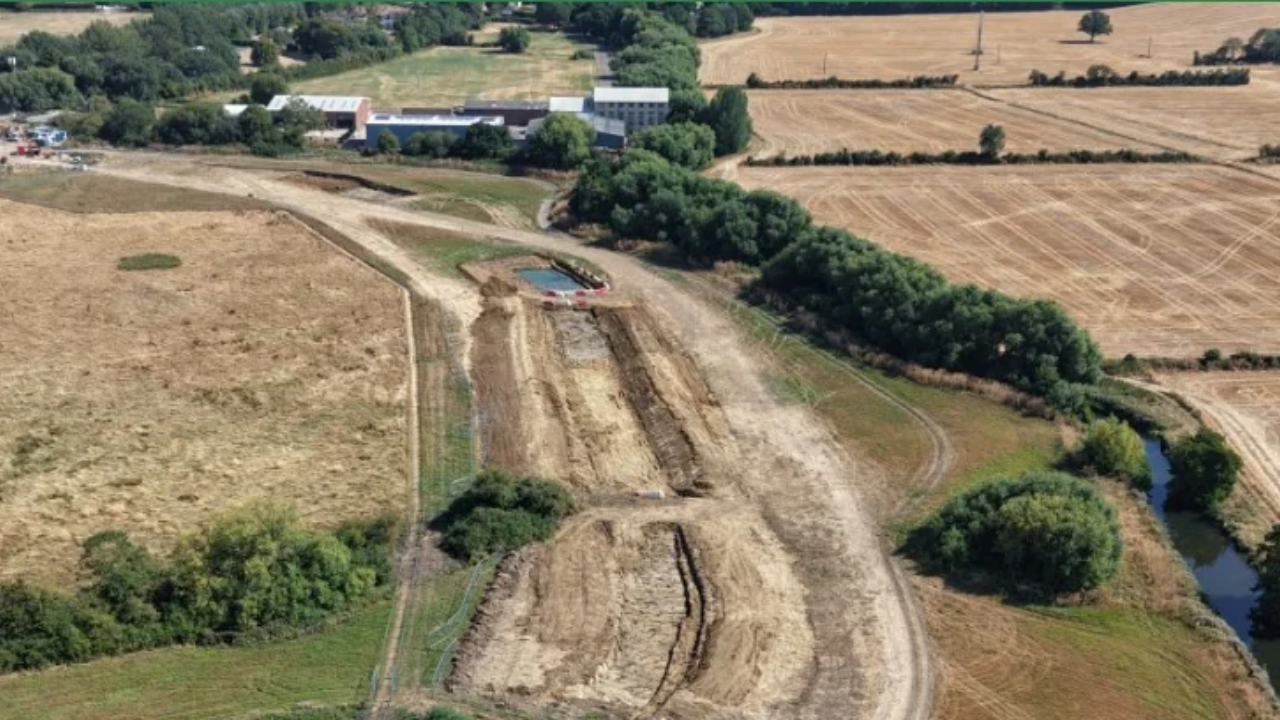
You can't just clear weeds from an old canal and call it open when an active oil pipeline sits in the way. That's the exact reality facing the Stroudwater Navigation, a historic British canal that opened in 1779, suffered formal abandonment in 1954, and is now climbing back toward life in Gloucestershire.
In November 2026, volunteers with the Cotswold Canals Trust began preparatory work near Occupation Bridge at Fromebridge to tackle a major bottleneck: a fuel pipeline operated by Exolum. Instead of leaving the line where it blocks future boats, engineers and crews are setting up to lower a replacement section deeper beneath the canal bed, with work targeted for early 2027. If you enjoyed this post, you might want to look at: this related article.
Big headlines make canal restoration sound romantic. Spades in the mud, birds returning to the reeds, narrowboats gliding past stone walls. Honestly, it's way messier than that. Restoring a waterway that lost its legal status over seventy years ago means fighting modern infrastructure, flood hydraulics, road builders from the 1970s, and tight public budgets all at once.
Why the Stroudwater Navigation Was Built and Why It Stalled
Back in the late eighteenth century, moving heavy freight across the Cotswolds meant wrestling rough roads or relying on fickle river flows. Opened in 1779 at a reported cost of £40,930, the eight-mile Stroudwater Navigation gave local woollen mills a dependable link toward the River Severn and eventually connected with the Thames and Severn Canal at Wallbridge. Coal, timber, grain, and stone moved along the cut, keeping valley industry supplied. For another perspective on this event, see the recent coverage from USA.gov.
Railways changed the math in the nineteenth century. Faster trains chipped away at freight volumes, even though the company paid dividends to shareholders into the 1920s. Tolls ended in 1941, and the Stroudwater Navigation Act 1954 stripped away navigation rights across much of the route so road builders could swap narrow canal crossings for motor traffic.
Once a canal loses legal protection, weird things happen to its footprint. Culverts go in. Roads get widened. Pipelines get laid right across what used to be open water. Looking at the lock gates and restored channel on the Stroudwater Navigation shows how much painstaking stonework and water control is needed just to hold water at the right level.
Lowering an Active Oil Pipeline Under a Canal Bed
Lowering an operational fuel line isn't a weekend DIY job with a mini-digger. At Fromebridge near Occupation Bridge, the pipeline crossing the alignment sits too high for boats once the canal is watered and open.
According to the Cotswold Canals Trust and Stroud District Council, the plan relies on a division of labor. Volunteers handle key preparatory and site clearance tasks, while pipeline owner Exolum brings the specialist engineering required to expose, disconnect, and replace the section deeper below the future canal bed, followed by pressure testing before normal service resumes in early 2027.
That partnership matters because amateur enthusiasm alone can't move high-consequence energy infrastructure. If you're working near a live fuel line, safety rules are non-negotiable, schedules depend on specialist crews, and public towpath access has to be managed around active works. It's a classic example of why modern canal revival looks less like 1770s navvies and more like complex civil project management.
Digging Through the Missing Mile Beneath the M5
If the Fromebridge pipeline is one hurdle, the so-called "Missing Mile" is the heavy-hitting engineering test of Phase 1B. Back in the early 1970s, building the M5 motorway buried a stretch of the canal route.
After six years of planning, construction kicked off in summer 2026 along a 3.7-mile (6 km) Phase 1B corridor stretching from Saul Junction on the Gloucester and Sharpness Canal toward the new Ocean Railway Bridge at Stonehouse. Crews are excavating roughly 750 metres of new canal from John Robinson Lock toward the motorway, building two new locks, flood banks, a towpath, and a channel alignment interacting with the River Frome.
Look closely at what that involves:
- River and flood management: In August 2026, Stroud District Council confirmed the River Frome was diverted through an existing culvert under the M5 so construction could proceed safely.
- Sheet piling: Specialist contractor Suttle Projects was brought in to install temporary and permanent sheet piling for river diversion, dewatering, and separating the canal from the River Frome.
- Bigger corridor goals: Beyond boats, planners are aiming to create a connected blue-green corridor for walkers, cyclists, and wildlife beneath a major motorway.
Here's a detail many casual readers miss: restoring an old canal isn't just about digging a trench. You have to control how rivers and streams enter and leave the channel without flooding neighboring land. Earlier work on the Cotswold canals already proved how tricky flood flows can be when streams share or cross a historic waterway corridor.
Money, Timelines, and What Could Still Slip
Grand restoration targets sound great in press releases, yet timelines in heritage infrastructure always carry risk. Backers are targeting reopening of the 3.7-mile Phase 1B stretch by 2029, supported by £6.46 million in additional funding announced in November 2025 alongside £15.4 million from the National Lottery Heritage Fund for the broader Cotswold Canals Connected programme.
Even with serious money in place, there's plenty to watch. Earthworks in wet British autumn and winter weather can slow digging. Utility relocations, bridge reinstatements, lock builds, and a planned canal basin near the A38 all have to line up. And while Phase 1B will reconnect isolated stretches to the Gloucester and Sharpness Canal, full end-to-end revival of every historic link between the Severn and Thames remains a multi-decade ambition rather than an overnight fix.
Some critics naturally ask whether spending millions on historic waterways makes sense when public budgets are tight everywhere. Supporters point to tangible returns: flood resilience work, green corridors, local tourism, and thousands of volunteer hours that build skills and community pride. Both arguments deserve a fair hearing—heritage projects rarely pay for themselves through boat tolls alone, so their value rests on wider social, ecological, and economic benefits.
Practical Ways to Follow or Support the Revival
If you're following the Stroudwater Navigation project—or thinking about getting involved in waterway restoration—skip the vague armchair commentary and take concrete steps:
- Check live site updates before visiting: Construction around Fromebridge, John Robinson Lock, and the M5 corridor changes towpath diversions and safety closures, so check official Cotswold Canals Trust notices before planning a walk.
- Volunteer on practical tasks: Canal trusts rely on regular volunteers for vegetation clearance, towpath upkeep, lock maintenance, and site prep—no prior civil engineering degree required to start.
- Track Phase 1B milestones: Watch progress on the Fromebridge pipeline lowering in early 2027, the Missing Mile earthworks, and the 2029 target for the 3.7-mile stretch to see how real-world milestones hold up against plan.


