What makes someone a real American? Apparently, we are still arguing about this in the twenty-first century.
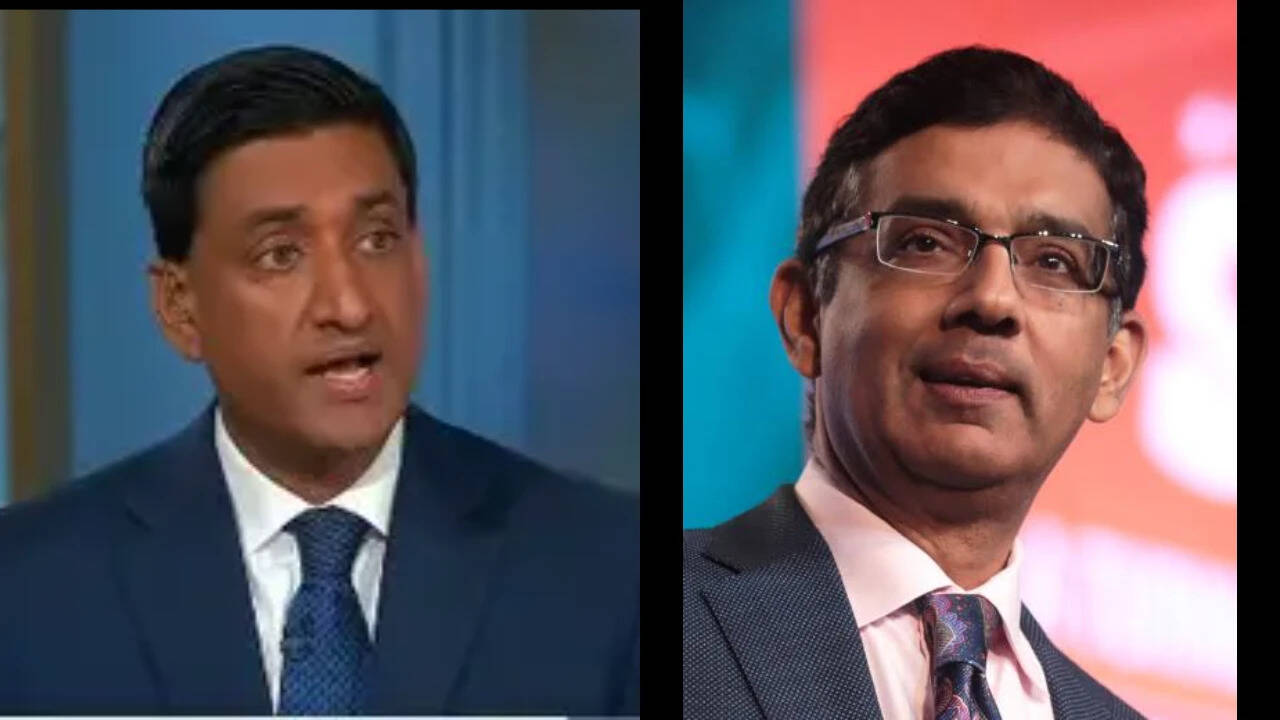
A digital brawl erupted recently between political commentator Dinesh D'Souza and Congressman Ro Khanna, exposing the fragile, shifting goalposts of identity politics in the United States. It started with a typical internet feud. Streamer Hasan Piker criticized Republican Representative Brandon Gill, pointing out that Gill's wife has Indian roots. Stepping in to defend his daughter, Dinesh D'Souza argued that Danielle D'Souza—married to Gill—is thoroughly American because she was born on US soil, is a Christian, and has a white mother. Building on this idea, you can also read: What Iran Military Warnings Mean For The Strait Of Hormuz Right Now.
That specific defense blew the doors wide open.
Enter Ro Khanna. The Democratic Congressman from California, who is Hindu and the son of Indian immigrants, fired back with a pointed public challenge. He asked D'Souza straight up: "Dinesh, like your daughter I was born in America & have an Indian immigrant father. I am Hindu and my mom is not white. Does that make me any less American or matter in any sense?" Experts at NBC News have shared their thoughts on this trend.
It is a sharp question that cuts through layers of partisan hypocrisy. But the entire exchange reveals a deeper cultural anxiety about who gets to claim ownership of the American dream.
The Dangerous Game of Cultural Checklists
We love our checklists. People want civic identity to be neat, tidy, and easily defined by ancestry or religious alignment. D'Souza’s defense of his daughter relied on traditional, almost tribal qualifiers: birthplace, Christian faith, and a white mother.
Think about how absurd that standard is in a modern democracy. If you start making Americanness conditional on maternal ethnicity or specific religious creeds, you exclude millions of citizens who hold US passports, pay taxes, and serve in public office.
Ro Khanna used Abraham Lincoln's 1858 Fourth of July speech to dismantle this narrow worldview. Lincoln argued that America isn't built on bloodlines or ancestral purity. Instead, it is anchored to a shared devotion to a set of political ideals found in the Constitution and the Declaration of Independence. When you believe in those founding principles, Lincoln suggested, you are spiritually linked to the architects of the revolution regardless of your ethnic background.
Yet, figures on various sides of the aisle constantly drift back to identity markers when it suits their political survival.
The Irony of Partisan Gatekeeping
The irony here is thick. D'Souza previously worked for Ronald Reagan—an administration that famously welcomed immigrants and celebrated cultural diversity. Khanna was quick to point out that Reagan’s White House routinely brought in people with thick immigrant accents and diverse backgrounds because they believed in the mission of the country, not because they checked demographic boxes.
When public figures lean into ethno-nationalist or exclusionary language to win short-term internet arguments, they undermine the very fabric that allows children of immigrants to thrive in the first place. You cannot champion conservative or progressive ideals while simultaneously gatekeeping who qualifies as a legitimate citizen based on skin color or family trees.
If birthplace and adherence to the law are the baseline, then citizenship shouldn't come with an asterisk.
Moving Past Performative Patriotism
We need to stop treating cultural background as a weapon in political cage matches. Whether it is streamer attacks trying to label political spouses as foreign or commentators narrowing the definition of belonging through religious and racial lenses, it is all a distraction.
Real patriotism isn't about proving your lineage or defending your family tree against internet trolls. It is about engaging with the messy reality of a pluralistic society. Khanna's pushback matters because it forces a confrontation with these recycled biases.
Stop looking for purity tests where they don't belong. Judge public figures by their policies, their actions, and their dedication to the republic, not by who their mother was or what holy book sits on their nightstand.