A locked door should never be a death sentence. Yet, for communities across rural British Columbia, a ticking clock dictates whether you live or die based on arbitrary operating hours.
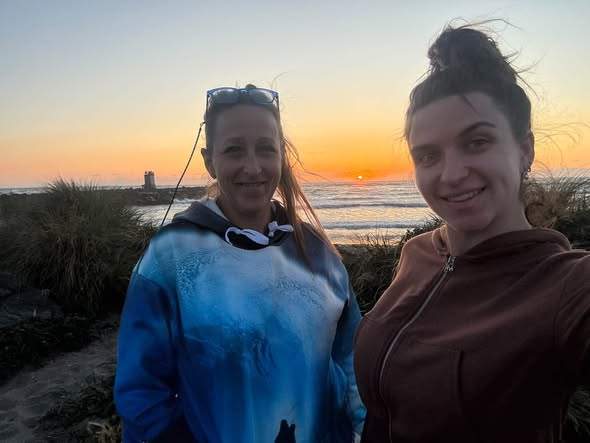
When 48-year-old Courtney McCowan suffered from a severe illness, a friend rushed her to the Port Hardy emergency room. They arrived just ten minutes past five in the evening. The doors were already locked, chaining shut the hope of immediate medical intervention. Paramedics performed CPR on the concrete sidewalk outside the front entrance for nearly 45 minutes, but it was too late. McCowan died outside a facility funded to serve her, abandoned by a system crippled by administrative failure.
Dr. Alex Nataros, medical director of the North Island Community Health Centre, didn't mince words when speaking out about the tragedy. He pointed straight at Island Health, arguing that the community has grown numb to a normalized decay of basic medical infrastructure.
The Reality of 5 PM Emergency Room Closures
Port Hardy's emergency room hasn't operated around the clock for years. Rolling closures started back in 2022, quietly stripping away 24/7 care under the guise of staffing shortages. But locals and frontline physicians argue that the crisis isn't a lack of human capital. It's a failure of organization and bureaucratic priorities.
Think about how administrative bloat functions in modern healthcare. Hospitals often employ more managers than specialized emergency room-trained nurses on site. When health authorities claim they cannot keep doors open because of missing staff, local doctors note a glaring disconnect. For instance, new housing units built specifically for healthcare workers in Port Hardy sat unoccupied for months after their ribbon-cutting ceremony. Bureaucracy moves at a glacial pace while patients bleed out on sidewalks.
When First Responders Bear the Psychological Toll
The human cost extends far beyond the immediate families of victims. Paramedics and local nurses suffer severe moral injury watching preventable tragedies unfold on their own doorsteps. First responders train to save lives, not to stand helpless outside a dark, locked hospital building because a shift schedule dictated closure at sundown.
When paramedics have to perform prolonged CPR on a sidewalk because the local emergency department shuts its doors at 5 p.m. daily, the system has fundamentally broken its social contract. First responders are traumatized by helplessness, forced into impossible scenarios where administrative policy outranks human survival.
Shifting Metrics From Dollars to Lives
For years, governments measure healthcare success using financial inputs. Politicians love to tout multi-million-dollar funding announcements, emergency funds, and recruitment packages as ultimate victories. Dr. Nataros argues that raw spending means nothing if the door remains locked when a dying patient needs it most.
The only valid metric for rural healthcare success is accessibility. If a hospital cannot guarantee care 24 hours a day, 7 days a week, financial injections are just performative spending. Health Minister Ryan Peterson confirmed that an investigation into McCowan's death is underway, while acknowledging that rural communities have faced unacceptable uncertainty for far too long.
Promises of future hiring and $50 million emergency funds won't bring Courtney McCowan back. Her family demands that her passing spark systemic reform rather than becoming another statistic swept under the rug of regional health authority memos. Real reform requires shifting focus away from office managers and back onto frontline clinical care. Stop treating rural lives as secondary casualties of bureaucratic inefficiency.