Vladimir Putin recently admitted what millions of Russian drivers already knew. The country is running low on gas. On state television, the Russian president downplayed the situation, describing it as a certain shortage that isn't critical.
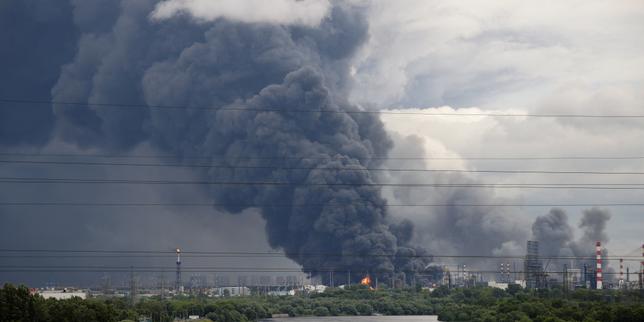
Don't believe the sanitized official lines. Russia is facing its most severe nationwide fuel crisis in decades. Drone strikes hit major refineries deep inside Russian territory, and the consequences are rolling into gas stations across the country.
This isn't just about an inconvenience at the pump. The internal logic of Russia's wartime economy is cracking under the pressure of a calculated infrastructure campaign. When the world's biggest fossil fuel exporter starts rationing its own product, something is broken.
The Reality Behind the Safe Headlines
Official statements try to make the empty pumps look like a distribution issue. It's not. Analysts track a massive domestic supply shortfall of around 15% after a wave of precise strikes. Over 50 Russian regions currently experience emergency fuel limits or localized dry spells.
Look at the regional restrictions. The Irkutsk region put local authorities on high alert. Major oil producers like Tatneft implemented strict caps at their stations. Pull up to a pump in Moscow, and you might find a hard limit of 30 liters per vehicle. If you can find fuel at all.
In occupied Crimea, the situation looks even more desperate. Civilians face completely dry stations because drone strikes severed the main supply routes and took out regional storage depots. Panic buying makes everything worse. Drivers cross regional borders into Krasnodar Krai just to fill up their tanks, dragging neighboring territories into the exact same mess.
How Drone Campaigns Crippled the Refineries
You can't understand the current Russian fuel shortages without looking at the scale of the refining losses. This isn't a minor setback. Drone operations knocked out roughly a quarter of Russia's total oil refining capacity.
The Kapotnya refinery provides a perfect example of how this happened. It sits right on the edge of the Moscow region and handles the bulk of the capital city's daily fuel demand. Striking it once caused serious headaches. Striking it twice in the same month forced operations to grind to a complete halt.
Repairing these facilities isn't a quick weekend job. Industry insiders report that Kapotnya will remain offline until at least the end of 2026. The sophisticated distillation units require complex parts. Because of international sanctions, sourcing those specific components on the global black market takes months, if not years.
The geographic reach of these operations changed the entire calculation for the Kremlin. A drone recently flew over 2,000 kilometers from the Ukrainian border to hit a major refinery facility deep in Siberia. No energy asset inside Russia looks safe anymore.
Lowering Quality to Keep Engines Running
The Kremlin's emergency playbook shows exactly how desperate the situation has become. Instead of fixing the root cause, the government is changing the rules of what can legally go into a fuel tank.
Russia officially authorized domestic refineries to produce lower-grade gasoline. They lowered environmental and technical standards to speed up production cycles at the surviving plants. It's a stopgap measure that helps in the short term but ruins car engines over time.
Beyond lowering quality, Russia is burning through its strategic federal reserves. They are also working to increase fuel imports from neighboring allies like Belarus. Relying on foreign energy imports is an embarrassing position for a petrostate that prides itself on fueling the world.
The Broken Infrastructure Math
The primary challenge isn't just making the gasoline. It's moving it. Russia depends heavily on its vast rail network to transport refined products from remote production zones to populated Western cities.
Military transport dominates the tracks right now. Moving troops, heavy armor, and ammunition to the frontline takes priority over civilian commercial goods. Refined fuel sits in storage tanks near remote fields because there aren't enough available trains to move it to Moscow or Saint Petersburg.
Air defense placement creates another bottleneck. Russia doesn't have enough sophisticated systems to protect every single piece of industrial infrastructure. The military must choose between guarding active frontlines, protecting military airfields, or keeping a civilian oil refinery safe from low-flying drones. Every choice comes with a cost.
What Happens Next on the Ground
If you want to track how this crisis evolves over the coming months, ignore the official press releases from Moscow. Watch these specific indicators instead.
Watch the harvest reports in major agricultural hubs like Rostov and Krasnodar. Farming equipment requires massive amounts of diesel to operate. If regional governments fail to secure dedicated fuel allocations for agricultural workers, food supply chains will suffer by autumn.
Keep an eye on domestic price caps. The government attempts to freeze retail prices to prevent public anger. But independent gas stations can't survive buying expensive wholesale fuel and selling it at a loss under state mandates. Watch for a wave of private station bankruptcies, which will leave state-owned chains as the only options available.
Track the volume of refined exports. Russia already cut its official fuel exports to preserve the domestic market. If those numbers drop even lower, it will squeeze the tax revenues that directly fund the state budget.
The domestic fuel crisis is no longer a distant problem for people living near the border. It's a daily reality affecting over half the country, and the government's temporary fixes are running out of time.