Moscow just pushed its maritime aggression dangerously close to NATO territory.
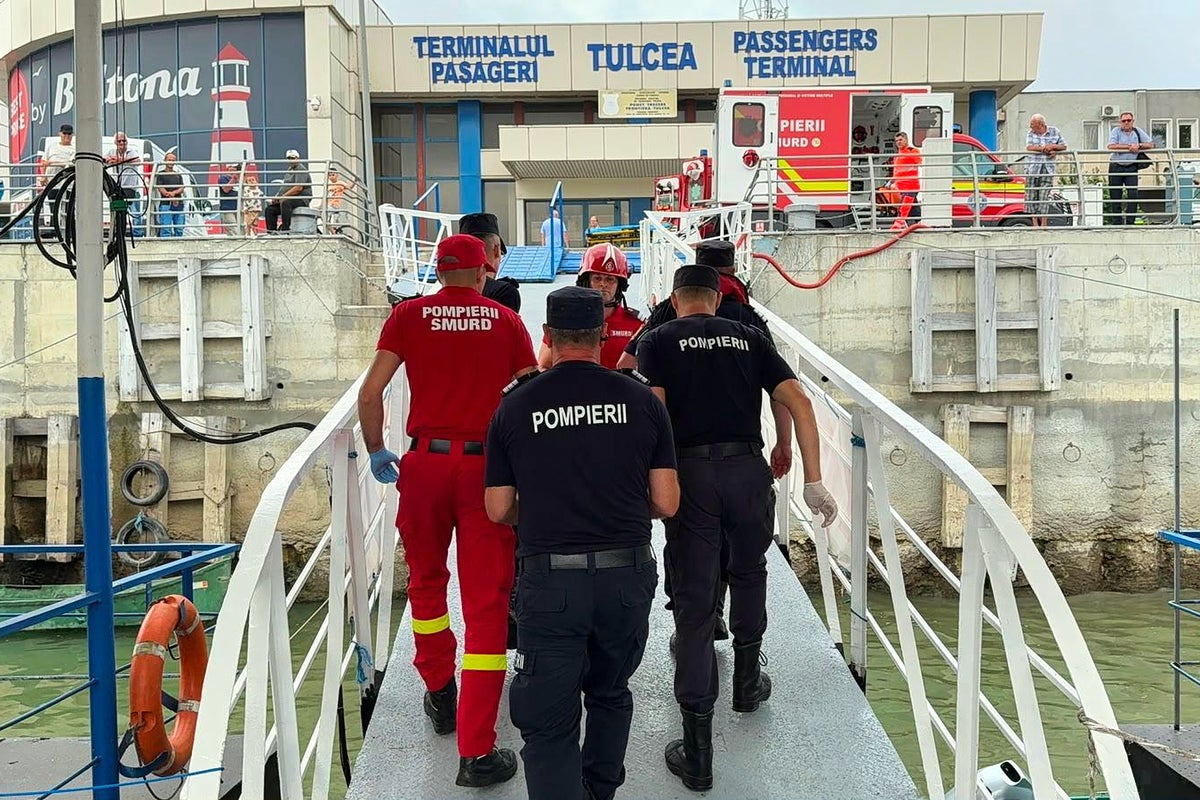
Late Monday night, a strike hit an LPG tanker carrying over 3,700 tonnes of highly flammable propane right in international waters off the Romanian coast. The Liberian-flagged vessel Gas Lisbon was making its way from Alexandria, Egypt, toward the Ukrainian port of Reni when a sudden explosion set its deck ablaze. Romanian emergency crews scrambled to evacuate 17 sailors, including three who suffered severe burns and shrapnel wounds.
The attack didn't happen in a vacuum. It happened barely 20 nautical miles from Romania, well inside the NATO member's Exclusive Economic Zone.
Romanian President Nicușor Dan didn't mince words, directly linking the assault to the Kremlin's widening war on commercial shipping. If you've been following the Black Sea standoff, you know this marks a dangerous turning point. Moscow isn't just targeting Ukrainian ports anymore. It's attacking neutral merchant ships carrying commercial cargo right on NATO's doorstep.
A Gas Tanker Explodes 20 Miles Off NATO Shores
The attack on the Gas Lisbon was precise and brutal.
Sailing under a Liberian flag, the ship was loaded with 3,790 tonnes of propane gas. Around 30 kilometers off the coast of Sulina, an explosion ripped through the deck. The fire spread fast. Trapped on board, the crew took shelter in a safe section of the vessel while emergency alerts flashed across Romanian maritime radio.
Bad weather grounded rescue helicopters. That meant the Romanian Agency for Saving Human Life at Sea had to send surface craft into rough waters.
Rescue boats SAR Apollo and SAR Artemis managed to reach the burning tanker, pulling all 17 crew members to safety. Three sailors required urgent hospitalization in Constanța for severe burn injuries and bleeding. Romanian authorities quickly dispatched a heavy tugboat to prevent the abandoned, burning hull from drifting into active shipping lanes.
Think about how close this was to a catastrophic environmental disaster. A damaged LPG tanker floating uncontrolled near European shores is a nightmare scenario for merchant traffic.
Escalation Beyond the Frontlines
This strike is part of a deliberate pattern. Kremlin spokesman Dmitry Peskov recently made it clear that Moscow views any vessel supplying Ukrainian ports as a legitimate military target.
Just days before the Gas Lisbon attack, a missile strike hit the cargo ship Golden Leo near Odesa. That attack killed six crew members and a Ukrainian maritime pilot, prompting India to summon Russia's top envoy after four Indian citizens died in the strike.
Russia wants to paralyze Ukraine's economy by making Black Sea trade uninsurable.
When freight insurance rates skyrocket, commercial fleets refuse to sail. It's an economic blockade disguised as tactical warfare.
Ukraine isn't taking these strikes sitting down. Ukrainian drone commander Robert Brovdi, known as "Magyar," recently coordinated massive long-range drone strikes in the Sea of Azov, damaging over a dozen Russian tankers and ferries. That campaign forced Moscow to temporarily suspend its own commercial shipping through the Don-Azov canal.
Ukraine hit back hard, targeting Russian fuel facilities in Syzran and Omsk, thousands of kilometers from the frontlines. In response, Moscow launched barrage after barrage of Iskander-M and hypersonic Zircon missiles against Kyiv and Ukrainian infrastructure.
The war at sea has become a tit-for-tat escalation where neutral sailors are paying the price.
The Escalating Economic Battle in the Black Sea
Why is Moscow willing to risk a direct clash with NATO by striking ships near Romania?
It comes down to leverage.
Ukraine depends heavily on river ports like Reni and Izmail along the Danube, as well as deep-water ports around Odesa, to export grain and import critical fuel supplies. Russia knows that if it can scare off commercial shipowners, it can cripple Kyiv's revenue faster than ground troops can advance in Donetsk.
Here's how the two sides stack up in this maritime trade fight:
- Targeting Commercial Routes: Russia uses cruise missiles and loitering munitions to strike commercial vessels bound for Ukrainian ports, aiming to drive up global insurance premiums and stop grain exports.
- Asymmetric Maritime Strikes: Ukraine relies on uncrewed surface vessels (sea drones) and long-range aerial drones to target Russia's shadow fleet and naval assets in the Sea of Azov and Black Sea.
- Geographic Vulnerabilities: Russian strikes now frequently touch NATO maritime zones near Romania and Bulgaria, while Ukrainian drone strikes regularly reach deep inside Russian industrial territory.
The strategy carries huge risks for the global economy. Grain prices spiked across international exchanges following the recent attacks on commercial freighters. When merchant vessels burn in international waters, global supply chains feel the impact almost immediately.
Why NATO Cannot Ignore This Pattern
When a Russian missile or drone hits a vessel 20 miles off the coast of a NATO member nation, the line between regional conflict and global war gets paper-thin.
Romania has already dealt with repeated airspace incursions from stray Russian drones along the Danube border. Now, with a commercial tanker burning in its Exclusive Economic Zone, Bucharest and its NATO allies face a serious dilemma. Allowing Russian strikes this close to European shores without a firm military response creates a dangerous precedent.
NATO's Eastern Sentry air defense initiative has already expanded surveillance over the Western Black Sea. But surveillance alone doesn't stop sea-skimming missiles or stray loitering drones from hitting international shipping.
What Maritime Shippers and Governments Must Do Next
The Black Sea is currently one of the most volatile shipping corridors on Earth. If you're involved in maritime logistics, energy trade, or regional security policy, here are the essential steps needed right now:
- Reroute Commercial Traffic Immediately: Shipping companies operating near the Western Black Sea should adjust navigation corridors closer to Bulgarian and Romanian territorial waters to maximize coastal defense radar coverage.
- Deploy Joint NATO Naval Escorts: NATO alliance members should consider establishing formal humanitarian shipping corridors in international waters to protect neutral commercial vessels carrying non-military goods.
- Upgrade Maritime Electronic Warfare: Merchant vessels operating near active conflict zones need updated AIS anti-jamming hardware and improved radio relay protocols to communicate during localized GPS disruptions.
- Enforce Strict Shadow Fleet Sanctions: Western governments must tighten sanctions on Russia's illicit oil tanker fleet, cutting off the revenue source funding these long-range missile strikes.
The attack on the Gas Lisbon proves that Russia's naval strategy has entered a reckless new phase. As Moscow steps up its assault on international trade routes, the boundary between Ukraine's defense and NATO's security is disappearing fast.



:max_bytes(150000):strip_icc():focal(999x0:1001x2)/rishi-sunak-akshata-murthy-10-78981f8236984c69b70bc15bcb3d49e9.jpg)