Don't expect Russian tanks to roll across the Polish border in a massive, World War III-style blitz. Moscow knows it would lose that fight. Instead, expect something much smaller, stranger, and harder to define.
Lithuania, Latvia, and Poland are sounding the alarm. Their intelligence agencies aren't worried about a full-scale invasion today. They are worried about a trap.
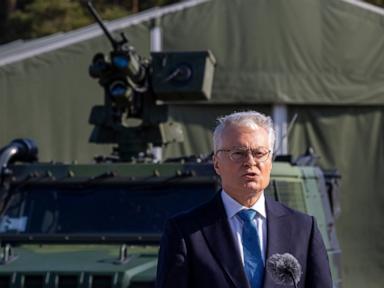
In mid-July 2026, Lithuanian President Gitanas Nauseda revealed that intelligence reports point to imminent, limited kinetic operations targeting critical energy and transport infrastructure in the Baltic states or Poland. These are targeted physical attacks designed to cause disruption without triggering an immediate, overwhelming military response from the West.
This isn't about capturing territory. It's about breaking NATO's mind.
Testing the Article 5 Gray Zone
If a hostile state launches a missile at Warsaw, NATO responds with overwhelming force. That’s the clarity of Article 5. But what happens if a few Russian soldiers "get lost" during a GPS-jammed patrol near the Belarus border? What if a drone mysteriously crashes into an electricity substation in Lithuania, and Moscow blames a technical error?
That is the gray zone.
Latvian President Edgars Rinkevics warned that Russia is actively looking to test these exact response mechanisms. The goal is to force a debate. If a NATO ally is targeted by a hybrid attack and the rest of the alliance spends days arguing over whether it constitutes an "armed attack," Russia wins. The moment NATO hesitates, the illusion of collective defense cracks.
The United States recently shared intelligence with Warsaw highlighting these exact scenarios. The reports outline brief border incursions, simulated air attacks to force the activation of air defenses, and targeted sabotage of energy pathways. Polish Prime Minister Donald Tusk didn't mince words, noting that the coming months are critical, particularly for the Baltic nations.
Cyber Sabotage and the Shadow War
We don't have to guess what this hybrid war looks like because it has already started.
In December 2025, a massive cyberattack targeted Poland’s power grid. It wasn't a standard data theft operation. Hackers attempted to deploy a destructive piece of malware known as DynoWiper to knock out communication between renewable energy hardware and power distribution operators. If it had succeeded, up to 500,000 Polish citizens would have lost heat and electricity in the dead of winter.
In July 2026, the UK and the European Union formally attributed that attack to Russia's Federal Security Service, specifically a signals intelligence unit known as Centre 16. Known in cybersecurity circles as Berserk Bear or Static Tundra, this unit is actively scanning Western critical infrastructure. They aren't looking for sophisticated zero-day exploits. They are looking for poorly configured, internet-facing routers with default passwords. Once inside, they wait. They map the network and wait for the right moment to strike.
Physical sabotage is the next step.
Lithuania is currently rushing to protect its transport links and electricity assets. The country is in the process of synchronizing its power grid with continental Europe, cutting off its legacy Soviet-era connection to Russia and Belarus. This transition is a prime target. Any disruption to these facilities threatens the stability of the entire Baltic energy system.
The Danger of the Kremlin Echo Chamber
Why would Vladimir Putin risk testing NATO now?
The answer lies in isolation. Latvian intelligence assessments suggest that the Russian decision-making process is becoming increasingly warped. Intelligence officers and advisers tell Putin exactly what he wants to hear, filtering out bad news. This echo chamber creates a massive risk of miscalculation.
Russia's war economy is under immense internal strain despite Moscow's public bravado. Western sanctions are limiting financial resources and forcing difficult trade-offs between military spending and domestic business survival. Putin needs a way to force Western allies to stop supporting Ukraine. A controlled, deniable provocation on NATO's eastern flank is a high-stakes gamble to force the West to the negotiating table on Moscow's terms.
If Poland or the Baltics react slowly, or if Western Europe pressures Warsaw to show restraint after a border incident, Putin gets his proof that NATO is a paper tiger.
How NATO Must Respond Right Now
Defending against an army of tanks is straightforward. Defending against a deniable, slow-burn hybrid campaign requires a completely different playbook.
Here is what needs to happen immediately to blunt this threat.
Hardening the Network Perimeter
Critical infrastructure operators must treat every internet-facing device as a primary target. Relying on default credentials or legacy protocols like SNMPv1 is an open invitation to Russian state hackers. Organizations must disable insecure protocols, enforce strict multi-factor authentication, and isolate administrative interfaces from the public internet.
Clear Red Lines for Hybrid Actions
NATO needs to establish clear, public thresholds for hybrid warfare. If a nation-state intentionally targets a civilian energy grid via cyber sabotage, it must be treated as a kinetic attack under Article 5. Ambiguity only invites further aggression.
Joint Border Patrols and Rapid Attribution
Lithuania, Latvia, Estonia, and Poland must continue to increase physical security around key transit corridors, especially those bordering Belarus and Kaliningrad. Rapid, joint forensic investigation of any border incident is vital to shut down Russian disinformation before it can sow division among allies.
The message from Warsaw to Moscow is simple and direct: the West is watching, and the playbook of plausible deniability will no longer work.
To understand how these border tensions are manifesting on the ground and how Allied intelligence is tracking these moves, watch this report on how Russia might test NATO's resolve. This video details the exact tactical scenarios, including potential incursions and GPS disruptions, that have Polish security forces on high alert.