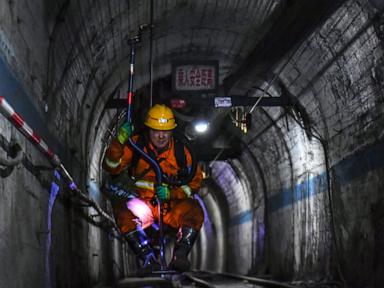
Eighty-two miners died in a horrific gas explosion in Shanxi province, and the people paid to prevent it were looking the other way.
If you want to understand how a disaster of this scale happens, you don't look at the broken equipment. You look at the bank accounts of the people running the regulatory agencies. On Monday evening, China’s Central Commission for Discipline Inspection announced that Hu Haijun, the top mine safety official and Communist Party chief for the Shanxi Bureau of the National Mine Safety Administration, is officially under investigation for "serious violations of discipline and law". That is Beijing's standard euphemism for corruption.
Hu is the highest-ranking bureaucrat to fall so far in a sweeping investigation that is tearing through the country's coal-producing heartland. His downfall follows the arrests of lower-level inspectors, including Hu Huisong and Yu Zhangqing from the local enforcement office.
This isn't just a story about a bad apple. It reveals why China's massive industrial safety apparatus keeps failing despite decades of promises to clean it up. When the people in charge of enforcing safety are in bed with the companies running the operations, the rules become entirely meaningless.
The Fake Walls of Liushenyu
The explosion happened on May 22 at the Liushenyu Coal Mine in Qinyuan county, operated by the Shanxi Tongzhou Coal Group. It was the deadliest mining disaster China has seen in over a decade.
The details that emerged from the subsequent investigation show how deep the rot goes. This wasn't an unpredictable accident. It was a calculated, criminal enterprise designed to maximize profit at the expense of human lives.
According to state media reports, the mine operators constructed literal fake walls inside the tunnels. They used wire mesh and plastic sacks sprayed with mortar to mimic the appearance of regular rock walls. Whenever official inspectors were scheduled to visit, these doors were shut tight and smeared with coal ash to blend in.
Behind those fake walls lay illegal, unapproved shafts worked by outsourced, unregistered contractors.
Out of the 247 workers underground during the explosion, nearly half—123 miners—were not carrying mandatory location trackers. They weren't even logged on the official entry records. When the explosion occurred, rescue teams had no idea how many people were down there or where they were trapped. Many didn't die from the immediate blast; they suffocated in the toxic dark because no one knew where to dig.
Why the Tech Failed
The most damning part of the Liushenyu disaster is that China actually has advanced safety technology. Over the past decade, the central government mandated a fully networked, automated gas monitoring system. Carbon monoxide and methane levels are tracked in real-time, streaming data from local shafts up to city, provincial, and national databases.
On the night of May 22, the sensors worked perfectly. They triggered automated alarms indicating that carbon monoxide levels had spiked way past legal limits.
Yet, nothing happened.
Experienced mine managers point out that when operators secretly dig illegal tunnels, they completely ruin the calculated ventilation systems. Airflow gets split up. Methane pockets build up to explosive levels in the unmonitored blind spots.
The tech caught the danger, but the human system failed completely. The national database flagged a hazard, but the local regulators who were supposed to halt production did nothing. You can install all the high-tech sensors you want, but they are useless if the guy monitoring the dashboard has a pocket full of bribe money.
The Irony of the Watchlist
What makes Hu Haijun's investigation particularly sickening is that the Liushenyu mine wasn't a hidden, unknown operation. In 2024, the National Mine Safety Administration—the exact agency Hu ran in Shanxi—explicitly placed this specific mine on an official list of facilities with severe safety hazards.
It was red-flagged as a disaster-prone site. Everyone knew it was a ticking time bomb.
Despite being blacklisted, the mine kept running at full throttle. It continued outsourcing work to unregistered crews and using fraudulent blueprints to bypass safety checks. The only way a blacklisted mine stays open while systematically faking its internal architecture is with high-level protection from the top regional regulator.
Beijing’s current anti-corruption campaign loves to highlight the capture of "tigers and flies"—meaning both high-ranking officials and low-level bureaucrats. Hu is a tiger in the regional energy sector. But weeding out one corrupt official won't solve the structural problem. The economic pressure on coal provinces like Shanxi is immense. When Beijing demands high energy output to fuel the economy, local officials face a conflicting mandate: meet production quotas or strictly enforce safety rules that slow things down. Production almost always wins.
What Needs to Change Right Now
If China wants to stop these mass casualties, treating these disasters as isolated criminal cases isn't enough. The government must implement structural changes that break the financial cozy relationship between coal operators and local regulators.
- Remove local regulatory funding from regional GDP performance. As long as a local government's budget and promotions rely on the economic output of regional mines, officials have a built-in incentive to protect bad operators.
- Enforce independent, third-party digital audits. The automated sensor network should trigger automated, unannounced shutdowns managed by independent agencies outside the local jurisdiction. Local bureaus shouldn't have the power to override or ignore automated safety red flags.
- Whistleblower protections for miners. The families and miners at Liushenyu knew about the fake walls and hidden shafts long before the blast, but reporting it meant instant dismissal or worse. Workers need anonymous, direct channels to central authorities to report safety violations without fear of losing their livelihoods.
Chasing down corrupt officials after 82 people die is a reactive fix. True safety requires removing the human element of corruption from the enforcement loop entirely.


